
Ancient Fortresses and Museums of Western Uzbekistan

Ancient earthen fortresses and the museum collections of Nukus form a distinctive part of western Uzbekistan archaeological and museum tours. A ring route proposed on Aug 5, 2025 linked Turkmenistan, Khorezm, Karakalpakstan and Kazakhstan. Its Uzbek destinations included Toprak-Kala, Ayaz-Kala, Kyzyl-Kala, Chilpyk, the Sultan Uvays area and the Savitsky Museum. The proposed international loop and the individual Uzbek sites have separate visitor arrangements.
The proposal connected destinations across several countries, but its Uzbek section can also be understood through a more focused subject: the relationship between archaeological landscapes and the objects collected in a regional museum. A fortress remains in its landscape; an excavated object may be studied or displayed elsewhere. Both contribute to the history of western Uzbekistan, with different kinds of evidence.
A proposed corridor and its Uzbek destinations
The proposed ring included Merv, Darvaza and Kunya-Urgench in Turkmenistan; Itchan Kala and Dishan Kala in Khiva; archaeological sites and the Savitsky Museum in Karakalpakstan; and landscape and religious destinations in Kazakhstan. The proposal joined places across several countries. Its Uzbek section includes both the Khorezm oasis and sites farther into Karakalpakstan, with different transfers between settlements, museums and open archaeological remains.
A regional itinerary sets the sequence of sites, transport and overnight stays. The proposed international ring connects places across several national territories, while the Uzbek section can link Khiva, the fortresses and Nukus. Each transfer occupies a separate stage of travel. Entry arrangements apply to border crossings, and local access arrangements apply to the particular archaeological or museum stop.
This article concentrates on the Uzbek archaeological and museum stops. Khorezm's oasis cities and the desert fortresses of Karakalpakstan occupy different settings. Nukus adds a museum environment in which paintings, archaeological material and Karakalpak crafts can be encountered together. These places can be linked in a western journey without suggesting that every named fortress belongs to the same period or function.
Itchan Kala has its own defined UNESCO World Heritage listing. Other stops in the proposed corridor have their individual histories and heritage designations, where applicable. The cross-border ring is a tourism route proposal rather than a single heritage property. Its destinations include built urban fabric, desert landscapes, archaeological remains and museum collections, each occupying a different place within the journey.
Toprak-Kala and the remains of a palace landscape
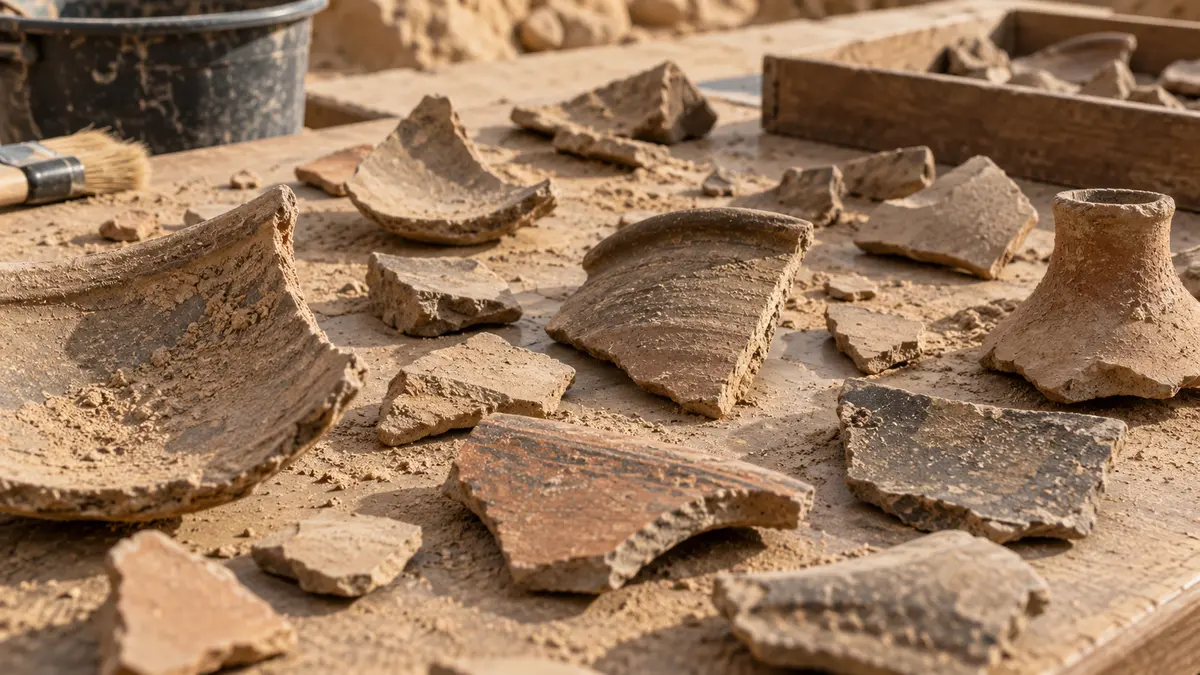
Toprak-Kala stands in the Ellikkala area and contains an ancient settlement with a palace complex. Sergei Tolstov’s archaeological expedition discovered the site in 1938. Earthen walls and rooms survive above ground, while excavations recovered materials from the settlement. The site’s layout and the objects found within it provide different forms of evidence about its construction, occupation and material life.
Toprak-Kala contains defensive walls, towers, streets and rooms. Excavated material includes paintings, sculpture, pottery and written fragments. Streets organise movement between parts of the settlement, while rooms contain evidence of interior use and decoration. A vessel or sherd has its own material and form alongside the architectural setting in which it was found. The palace area adds another part of the settlement’s layout.
An excavated object's location is important to its interpretation. A vessel found in a room has a recorded context that differs from a similar vessel obtained without that information. Archaeological study concerns both the object and its relationship with the layers, structures and other material around it. Removing an object without recording those relationships loses information beyond the object itself.
The earthen architecture also requires a different visual reading from a complete tiled monument. A surviving wall may represent only part of its former height. A room can be recognized through its plan even when its roof is gone. A raised palace area can be understood through the organization of its remains, rather than imagined as a fully preserved building.
For a visitor, the archaeological interpretation should therefore accompany the view. The visible remains supply scale and landscape context, while published plans and excavation records explain the functions and sequence that cannot be identified from appearance alone. A modern reconstruction drawing is an interpretation of evidence, not another surviving wall.
Ayaz-Kala: separate sites within one name
Ayaz-Kala comprises three fortress complexes on separate elevations near the Sultan Uvays ridge, northeast of Toprak-Kala. The shared name covers several structures rather than one continuous building. Each component occupies its own ground and has an individual plan. A visit across the group therefore involves separate views of walls, entrances and elevated sites within the wider archaeological landscape.
Defensive architecture organizes entrances, walls and changes of level. A tower projects from a wall for a particular spatial purpose; a gateway controls access; an elevated site relates the built structure to the surrounding ground. Studying those elements does not require assuming that every visible feature was constructed or used at the same time.
One Ayaz-Kala complex has mudbrick walls, semicircular towers and a southern entrance. Archaeological investigations in 1939–1940 recovered objects including arrowheads, knives and spearheads. These finds form part of the material recovered from the site, alongside its defensive architecture. Their recorded position and archaeological context are relevant to studying use and occupation within the remains.
The Ayaz-Kala group contains components with different plans and proposed construction periods. Its archaeological history includes investigations and dating of individual structures. Mudbrick walls, towers and entrances survive on separate elevations, with the surrounding ground connecting them geographically. A site visit can follow the named components and their visible arrangement alongside the archaeological interpretation supplied for each.
Landscape is an important part of the encounter. Several separate ruins can be visible from the same area, while the ground between them belongs to the journey. The view from one structure should not be described as access to all the others. A route has to identify which remains are being visited and how they are reached.
Other names on the western archaeological route
The announced corridor also included Kyzyl-Kala and Chilpyk. These names belong to specific sites and should remain separate from Toprak-Kala and Ayaz-Kala in a route description. The common appearance of earthen construction does not establish identical function, chronology or conservation needs. A fortress, a settlement and a ritual structure call for different historical explanations.
The Sultan Uvays area adds a landscape and pilgrimage dimension. A regional route can pass through hills and religious places as well as archaeological ruins. That geographical connection does not mean the entire ridge is a single excavated site or that every stop shares the same access arrangements. The itinerary's named location is the appropriate unit for a practical visit.
Reading a desert site description
- Separate the site's present name from the names of individual structures.
- Keep the excavated date range distinct from a modern discovery or survey date.
- Distinguish surviving fabric, restoration and hypothetical reconstruction.
- Read finds together with their recorded archaeological contexts.
- Check whether an access description refers to one complex or several.
Kyzyl-Kala, Chilpyk, Toprak-Kala and Ayaz-Kala identify separate places in the western route. Their surviving structures occupy their own terrain and have different histories of use. The regional journey moves between those named sites rather than through one continuous compound. Their layouts, entrances and walls provide subjects for architectural observation alongside their excavation histories.
The Savitsky Museum in Nukus
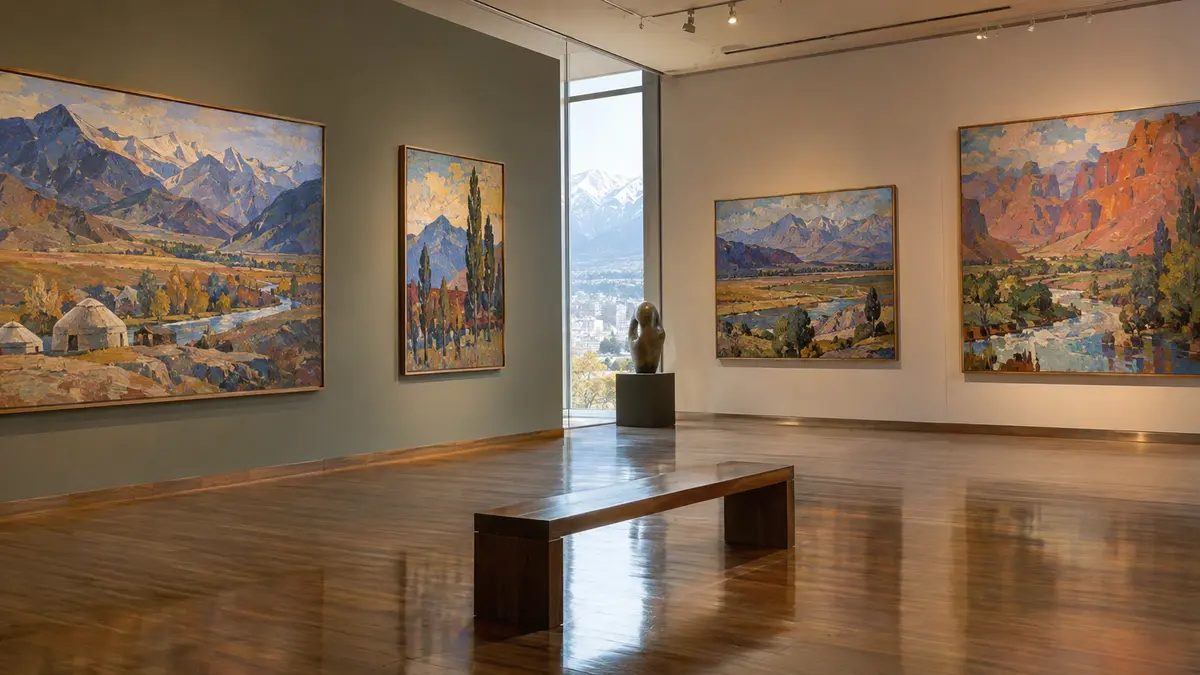
The Savitsky Museum in Nukus was founded in 1966. Igor Savitsky arrived in the region in 1950 and became closely associated with the collection’s development. The museum brings together Karakalpak art and craft, archaeology and Russian avant-garde painting. These collection areas span different materials and periods, presenting regional objects alongside works connected with wider artistic movements.
These collection areas require different kinds of interpretation. A painting has an artist, title, medium and artistic context. An archaeological object has a material and a find context. A craft object may have a maker, place of production and use within daily or ceremonial life. Their presence in the same museum does not make their histories interchangeable.
The avant-garde collection is particularly associated with the museum's international reputation. The label avant-garde concerns artistic experimentation and historical movements; it should not be applied indiscriminately to every work held by the institution. A museum collection can include works from several periods and practices, while a particular gallery selects a portion for display.
Karakalpak craft objects and Russian avant-garde paintings belong to different parts of the Savitsky collection. Textiles, ornaments and other objects can be studied through their materials and techniques, while a painting has its own maker, composition and artistic context. The museum’s collection includes these distinct fields within one institution. Its galleries present selected works rather than a ranking against other museums.
A collection total also differs from the number of works visible on a given day. Museums rotate displays, conserve objects and lend material. The current exhibition and visitor information belong to the operator's programme. A historical account of the museum's founding cannot establish the contents of every later gallery arrangement.
Karakalpak craft, archaeology and performance
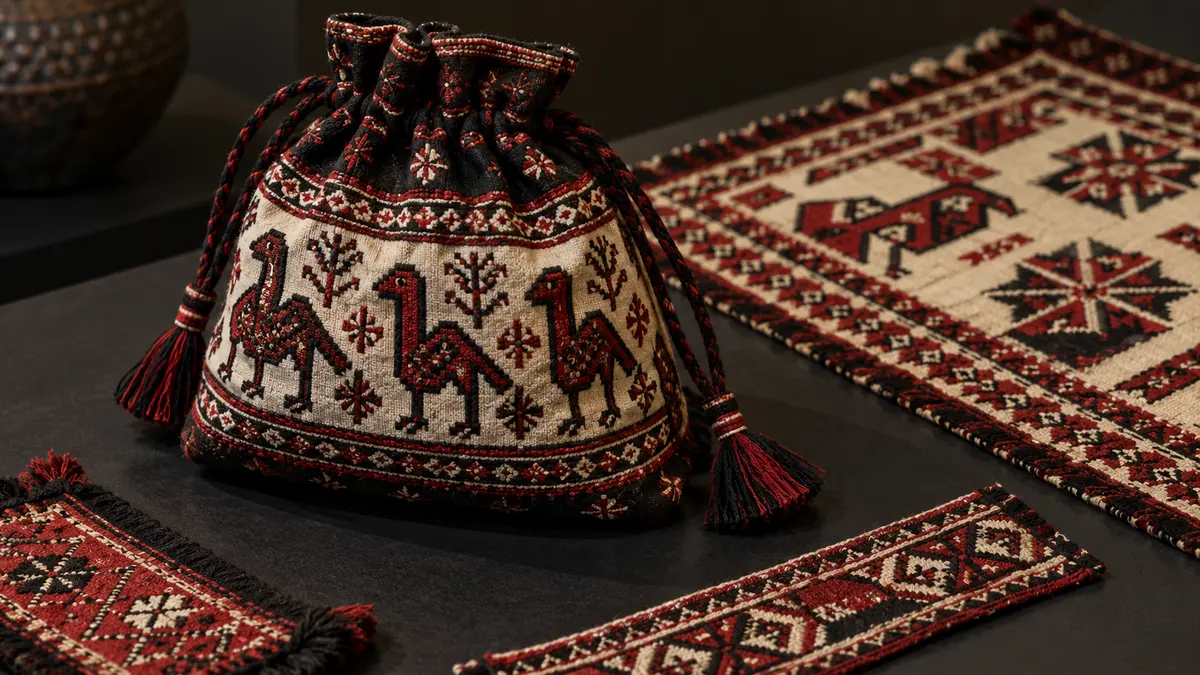
The museum's Karakalpak holdings provide a regional context beyond the Russian painting collection. Jewellery, textiles and other craft objects can be studied through their materials and uses. Their place in the museum connects collecting with the practices of communities whose history is represented there. A regional object should be identified through its label rather than assigned a meaning from its appearance alone.
Craft and archaeological material also have different relationships with time. An excavated object belongs to a documented archaeological context. A collected textile may have been made for use, preserved within a household and later acquired by the museum. Their routes into a collection are part of the historical record, and not all objects enter through excavation.
Western Uzbekistan also has living performance traditions. UNESCO's description of Khorezm's Lazgi dance refers to movement, rhythm and interaction between dancers, singers and musicians. It connects the tradition with regional history, including imagery from Toprak-Kala. That connection introduces another form of cultural evidence, but a contemporary performance is not a direct reenactment of a single excavated scene.
The distinction between tangible and intangible heritage is useful here. A fortress wall, a vessel and a painted canvas are physical objects. A dance practice includes learned movement, musical relationships and performance settings. A journey through the region may encounter both, with different custodians and different ways of explaining how knowledge is preserved.
Lazgi is a living dance practice associated with Khorezm and recognised by UNESCO’s intangible heritage programme. Its learning and performance take place through communities and practitioners. Archaeological sites, museums and scheduled cultural events provide different settings within a western journey. A dance presentation has its own performers and date, while a fortress visit concerns the landscape and surviving built structures.
Seeds and animal bones were recovered at Toprak-Kala alongside pottery and inscriptions. These materials extend the archaeological subject beyond palace rooms and decoration. Plant and animal remains can be examined for evidence of settlement activity, while written fragments introduce a different form of material. Identification and excavation context connect individual finds with the place from which they were recovered.
The museum and landscape visits can consequently examine several kinds of surviving evidence: construction, decorated interiors, everyday objects and biological material. A route focused only on the outline of walls would encounter a narrower part of the archaeological record than one that also considers excavation and collections.
Placing the fortresses and Nukus in a journey
A western Uzbekistan route combines different environments. Nukus is an urban museum destination. The fortresses are landscape sites where exposed ground, distance and the condition of the remains affect the visit. Khiva is an oasis city with a preserved inner town. The sequence between them is a geographical journey, not simply movement between similar galleries.
The difference affects the time needed at each stop. A gallery visit includes looking at works and reading labels. An archaeological visit includes reaching the remains and understanding their layout. A city visit includes streets, courtyards and several buildings. The name of a destination alone does not describe the duration or physical demands of the encounter.
Transfers link the fortresses with towns and museum visits across the western region. A route can include open archaeological ground, arrival in Nukus and time in the Savitsky galleries. The international ring proposed on Aug 5, 2025 adds destinations in neighbouring countries to that Uzbek section. Its border crossings and travel services require arrangements for the particular journey and its dates.
Toprak-Kala and Ayaz-Kala introduce ancient settlement and defensive architecture. In Nukus, the Savitsky Museum presents collected archaeological objects, regional craft and paintings. Karakalpak textiles and Khorezm performance add living practices from the wider area. These subjects occupy different settings, from earthen remains in open ground to galleries and organised cultural presentations within towns.
The proposed corridor places named fortresses, museums and landscapes within a western regional journey. Its international loop remains the dated proposal announced in August 2025. ABA Travel’s western and in-depth itineraries include Uzbek destinations such as Khiva and Nukus. Archaeological visits, museum time and travel between those places give the western section its own sequence within a longer tour.
Latest Reports
Ancient Fortresses and Museums of Western Uzbekistan

Qatar LNG expansion: readiness, financing and the production test

Tianwan 7: first electricity and commissioning

Genentech breaks ground on its Hillsboro expansion

RZD changes return fees for tickets purchased from December
Why available capital does not close every defence supply gap
Partner reports
 Imam al-Bukhari’s Heritage and Samarkand’s Pilgrimage Landscape
 Tashkent’s Museums, Mahallas and New Cultural Spaces
 One Day in Kasri Orifon: Bukhara’s Pilgrimage Village
 Rishtan’s Craft Neighbourhood and the Fergana Valley
 Khiva’s Walled City: Architecture, Palaces and Living Traditions
 Uzbekistan's Tourism Expansion: Heritage Cities, Living Crafts and Regional Routes
 Bukhara’s Biennale: Contemporary Art in Historic Spaces
 Uzbekistan’s Western Rail Corridor and the Journey to Khiva
 Parkent’s Chashma Village: Folk Traditions Near Tashkent
 Ancient Fortresses and Museums of Western Uzbekistan
 Nilu and Sangardak: Village Tourism in Surkhandarya
 Uzbek Food and Cultural Traditions: From London’s Festival to Regional Tables
Leave a comment