
Surprise Acceleration: India's GDP Grows 7.8% in the June Quarter, a Five-Quarter High
India's gross domestic product (GDP) grew 7.8% year on year in the April-June quarter of FY26 - the fiscal year that runs from April 1, 2025 to March 31, 2026 - marking a five-quarter high, according to data released by the National Statistics Office (NSO) on Friday, August 29, 2025. The acceleration beat every market forecast and came just before the full effect of Washington's tariff escalation is expected to show up in trade data.
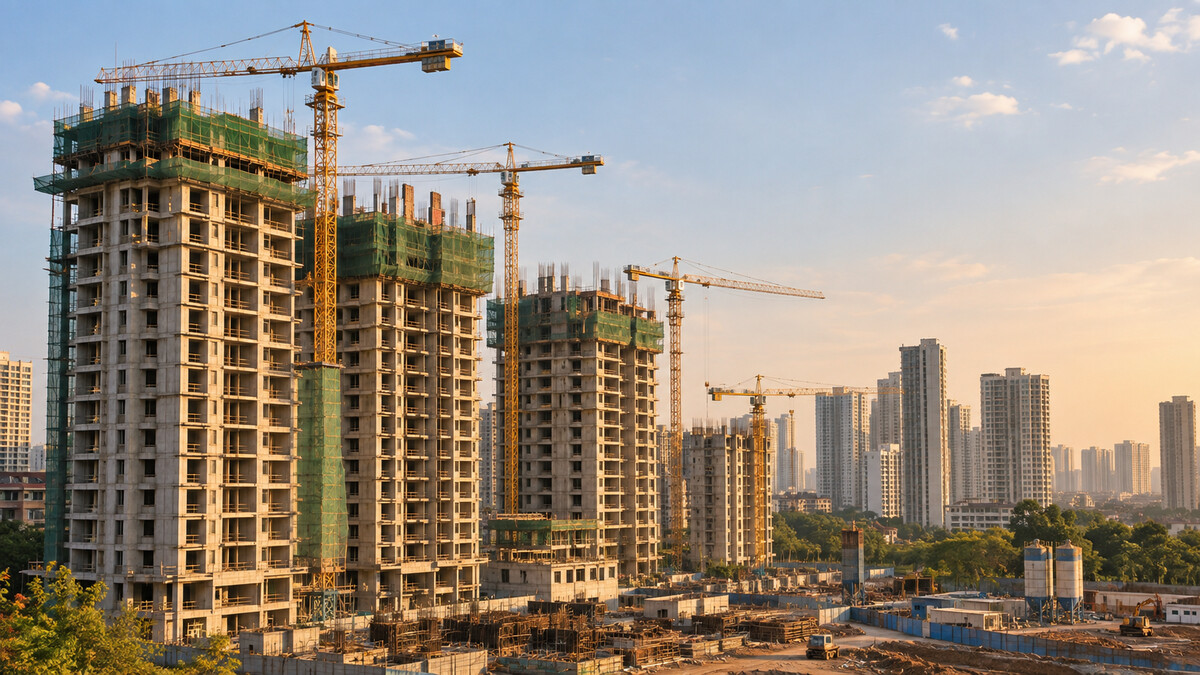
A print that beat every forecast
An ET survey of 14 economists had projected first-quarter growth between 6.3% and 7%, with a median estimate of 6.7% - broadly in line with the Reserve Bank of India's (RBI) forecast of 6.5%. A year earlier, the same quarter had slipped to a 15-month low of 6.7%. The headline numbers from the official press release:
- real GDP at constant prices: 47.89 lakh crore rupees (about 47.9 trillion rupees, since one lakh crore equals one trillion) versus 44.42 lakh crore rupees a year earlier - growth of 7.8%;
- nominal GDP at current prices: 86.05 lakh crore rupees versus 79.08 lakh crore rupees - growth of 8.8%.
The full sectoral breakdown and economists' commentary were carried by The Economic Times.
Services and construction did the heavy lifting
The tertiary sector expanded 9.3% annually, while the primary sectors - agriculture and mining together - grew 2.8% after 2.2% in the corresponding quarter of FY25. The sectoral scoreboard:
- trade, hotels, transport, communications and broadcasting-related services: +8.6%, up from +5.4% a year earlier;
- financial, real estate and professional services: +9.5%, versus +6.6%;
- public administration and defence: +9.8%, versus +9%;
- manufacturing: +7.7%, roughly matching the 7.6% of the year-ago quarter, while the secondary sector (manufacturing and electricity) grew 7% after 8.6%;
- agriculture rebounded to +3.7% from +1.5%, while mining contracted 3.1% after growing 6.6%.
Public spending leads the way
The central government's capital expenditure rose 52% year on year in the first quarter, emerging as the key growth driver. Construction and agriculture performed strongly, while aviation cargo traffic, goods-and-services tax (GST) collection and steel production also showed an uptick.
What economists say
"GDP growth is expected to be supported by robust public spending, improving rural demand and a resilient services sector," said Rajani Sinha, chief economist at CareEdge Ratings. Sakshi Gupta, principal economist at HDFC Bank, pointed to construction and agriculture as the two sectors where the bank had pencilled in higher growth, adding that exports of goods and services rose 5.9% in the June quarter, aided by front-loaded demand from economies such as the United States.

The tariff overhang
Momentum now faces an external test. The initial 25% US tariff on Indian imports was later raised to as much as 50% with an additional levy, and economists expect the drag to become visible in the coming quarters. Barclays economist Aastha Gudwani estimated that persisting higher rates could shave 30 basis points off India's full-year growth - while arguing the impact should stay contained. "Given the relatively closed nature of the Indian economy, wherein domestic demand is the mainstay of growth, we do not see this 25% tariff threat impacting GDP growth meaningfully," she said.
What supports growth next
Three domestic cushions could offset the trade headwind: a likely GST rationalisation, further interest-rate cuts steered by the RBI's monetary policy committee, and a favourable monsoon supporting rural consumption. For FY26 as a whole, the World Bank and the International Monetary Fund project growth of 6.3% and 6.4% respectively - keeping the country among the world's fastest-growing major economies.
Latest Reports

Ancient Fortresses and Museums of Western Uzbekistan
Qatar LNG expansion: readiness, financing and the production test
Tianwan 7: first electricity and commissioning
Genentech breaks ground on its Hillsboro expansion

RZD changes return fees for tickets purchased from December
Why available capital does not close every defence supply gap
Partner reports
 Ageas agrees Esure acquisition to widen UK insurance distribution
 Uzbekistan’s Western Rail Corridor and the Journey to Khiva
 Imam al-Bukhari’s Heritage and Samarkand’s Pilgrimage Landscape
 Nilu and Sangardak: Village Tourism in Surkhandarya
 One Day in Kasri Orifon: Bukhara’s Pilgrimage Village
 Bukhara’s Biennale: Contemporary Art in Historic Spaces
 Khiva’s Walled City: Architecture, Palaces and Living Traditions
 Parkent’s Chashma Village: Folk Traditions Near Tashkent
 Uzbek Food and Cultural Traditions: From London’s Festival to Regional Tables
 Tashkent’s Museums, Mahallas and New Cultural Spaces
 Uzbekistan's Tourism Expansion: Heritage Cities, Living Crafts and Regional Routes
 Ancient Fortresses and Museums of Western Uzbekistan
 LH Marthinusen opens R32 million Germiston fan factory
 Rishtan’s Craft Neighbourhood and the Fergana Valley
Leave a comment