
Hertz Turns Back: 20,000 EVs Leave the US Fleet as Gasoline Cars Return
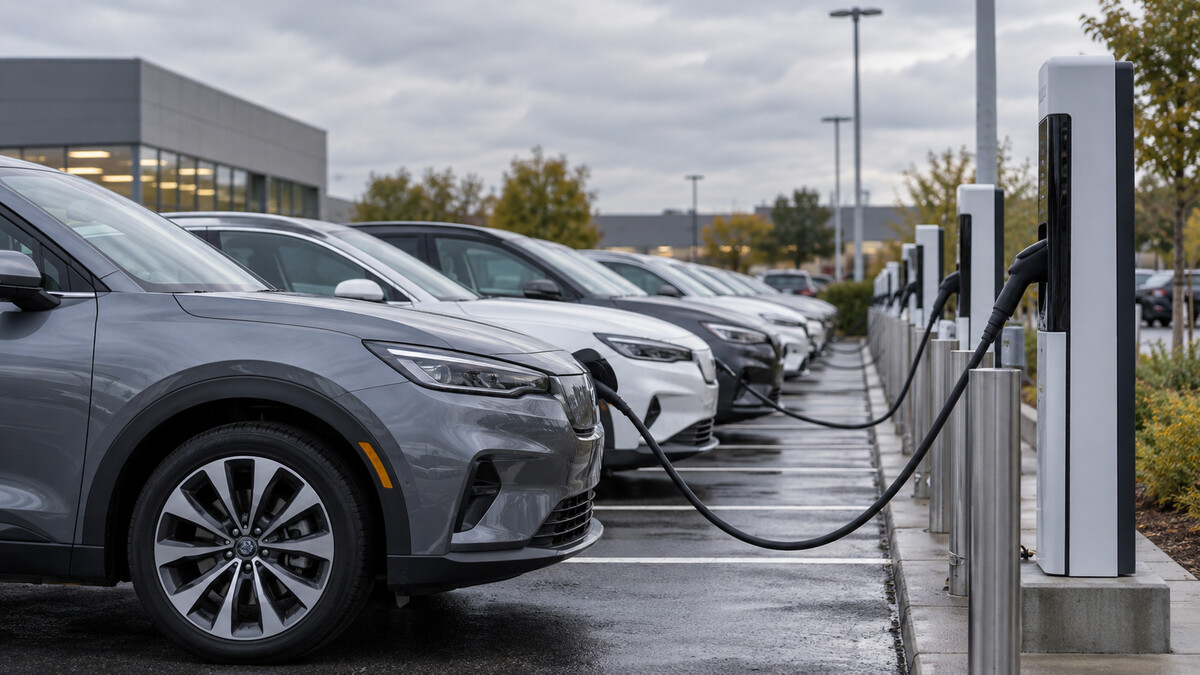
On January 11, 2024, Hertz Global Holdings Inc. told investors it would sell roughly 20,000 electric vehicles - about a third of its United States EV fleet - and reinvest part of the proceeds in gasoline-powered cars, a retreat from the electrification strategy the rental company launched with its order for 100,000 Tesla vehicles in 2021. The disposals began in December 2023 and will run through 2024, and Hertz said it will record a non-cash charge of about $245 million in its fourth-quarter results, tied to incremental net depreciation expense on the vehicles being sold.
What the regulatory filing says
- volume: about 20,000 EVs, roughly one third of the US electric fleet; the sales started in December 2023 and continue through 2024;
- charge: a non-cash hit of about $245 million in the fourth-quarter results, related to incremental net depreciation expense;
- reinvestment: part of the proceeds goes into gas-powered vehicles; "The company expects this action to better balance supply against expected demand of EVs," the filing said;
- order book: the agreements to buy 175,000 EVs from General Motors Co. over four years and another 65,000 from Polestar may now take much longer to complete, Chief Executive Stephen Scherr said.
Why Hertz is turning back
Demand and cost both worked against the fleet. US EV sales growth slowed sharply over 2023, rising just 1.3% in the final quarter as consumers were put off by high costs and interest rates. Tesla's price cuts over the past year lowered the value of the cars in Hertz's own fleet, and with new-car demand cooling it is not clear whether used buyers will absorb the vehicles. Repair bills added pressure: EVs come with higher collision and damage costs than the rest of the fleet, a factor that played a big role in Hertz missing third-quarter earnings estimates. "The elevated costs associated with EVs persisted," Scherr said in an interview. "Efforts to wrestle it down proved to be more challenging."
The 2021 bet, in numbers
By October 2023, when Scherr first signalled the scale-back, EVs made up 11% of Hertz's total fleet and Teslas represented 80% of that electric share - the legacy of the October 2021 announcement that Hertz would buy 100,000 Tesla vehicles, at the time the largest order of its kind.

The market's verdict and the cash math
Hertz shares fell 4.3% to $8.95 as of 10:01 a.m. in New York on the announcement, extending a 32% decline over 2023. Management framed the retreat as earnings repair rather than abandonment: by year-end 2025 the company expects improved financial results driven by higher revenue per day and lower depreciation and operating expenses, with incremental free cash flow of as much as $300 million in aggregate over 2024 and 2025. Scherr also pointed to cheaper electric models on the horizon - a future redesign of the Chevrolet Bolt, which sold for under $30,000 before production ended in 2023, and the $35,000 Chevrolet Equinox going into production - as vehicles that could be easier to rent profitably.
Committed, but slower
"We're committed to the strategy," Scherr said of electrification. "It will take more time to execute it." Hertz will keep a close eye on EV demand both at dealerships and within its own operations before deciding on further electric purchases - a watchful pause that leaves the company's next big fleet decision open. The full account by David Welch and Rick Clough of Bloomberg News was published by Fortune on January 11, 2024.
Latest Reports

Ancient Fortresses and Museums of Western Uzbekistan

Qatar LNG expansion: readiness, financing and the production test

Tianwan 7: first electricity and commissioning

Genentech breaks ground on its Hillsboro expansion

RZD changes return fees for tickets purchased from December
Why available capital does not close every defence supply gap
Partner reports
 Ageas agrees Esure acquisition to widen UK insurance distribution
 Uzbekistan’s Western Rail Corridor and the Journey to Khiva
 Imam al-Bukhari’s Heritage and Samarkand’s Pilgrimage Landscape
 Nilu and Sangardak: Village Tourism in Surkhandarya
 One Day in Kasri Orifon: Bukhara’s Pilgrimage Village
 Bukhara’s Biennale: Contemporary Art in Historic Spaces
 Khiva’s Walled City: Architecture, Palaces and Living Traditions
 Parkent’s Chashma Village: Folk Traditions Near Tashkent
 Uzbek Food and Cultural Traditions: From London’s Festival to Regional Tables
 Tashkent’s Museums, Mahallas and New Cultural Spaces
 Uzbekistan's Tourism Expansion: Heritage Cities, Living Crafts and Regional Routes
 Ancient Fortresses and Museums of Western Uzbekistan
 LH Marthinusen opens R32 million Germiston fan factory
 Rishtan’s Craft Neighbourhood and the Fergana Valley
Leave a comment