
A Half-Point Reset: The Fed Opens Its First Rate-Cut Campaign in Four Years
On September 18, 2024, the United States Federal Reserve enacted its first interest rate cut since the early days of the pandemic, lowering the federal funds rate by half a percentage point to a range of 4.75%-5%. Outside the emergency reductions of the pandemic era, the last time the Federal Open Market Committee (FOMC) cut by half a point was in 2008, during the global financial crisis - an aggressive start to the first easing campaign in four years.
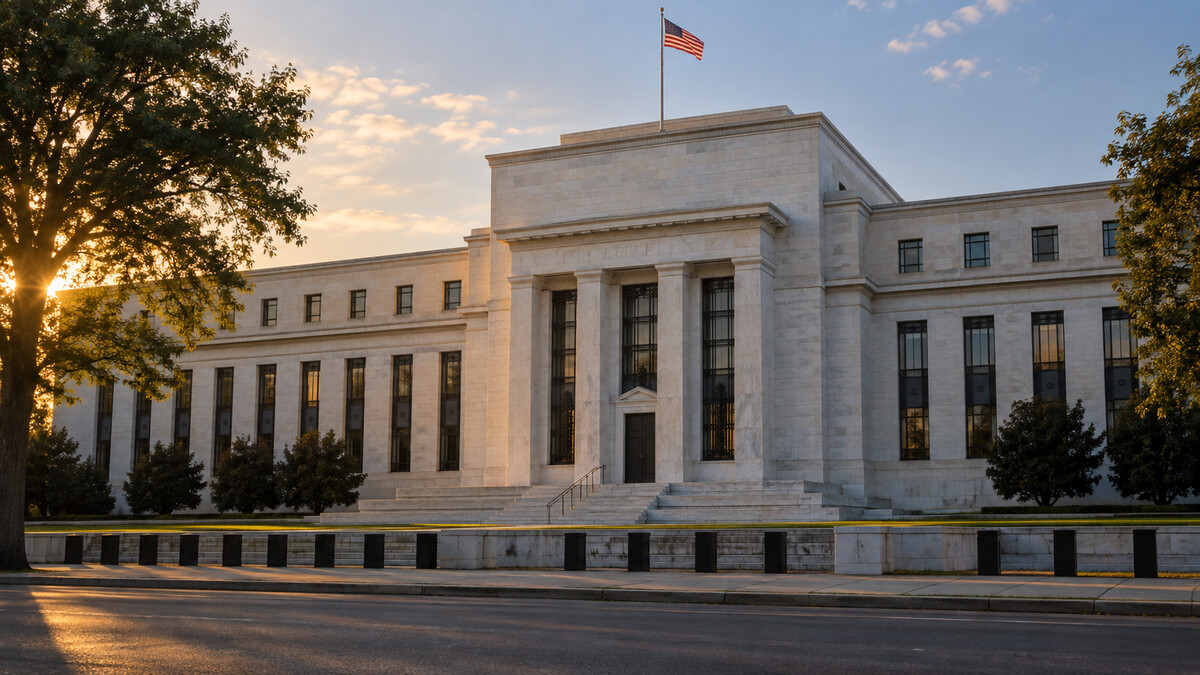
What the committee decided
The move affirmed market expectations that had shifted in the final week before the meeting: according to the CME Group's FedWatch gauge, the probability of a 50 basis point cut stood at 63% just before the decision came down. The key parameters:
- target range: 4.75%-5%, down 50 basis points in a single step;
- the vote: 11-1, with Governor Michelle Bowman preferring a quarter-point move - the first dissent by a Fed governor since 2005;
- quantitative tightening left in place: the balance sheet stood at $7.2 trillion, about $1.7 trillion below its peak, with up to $50 billion a month in maturing Treasurys and mortgage-backed securities allowed to roll off, down from the initial $95 billion cap;
- the rationale, in the statement's words: the committee "has gained greater confidence that inflation is moving sustainably toward 2 percent" and judged the risks to its employment and inflation goals "roughly in balance".
The full account of the decision by Jeff Cox was published by CNBC on the day of the meeting.
The dot plot: about two more points of easing
The updated "dot plot" - the matrix of individual officials' expectations - pointed to the equivalent of 50 more basis points of cuts by the end of 2024, another full percentage point in 2025 and a half point in 2026. In all, roughly 2 percentage points of additional easing beyond the September move. The new projections also showed:
- the year-end unemployment outlook raised to 4.4%, from the 4% pencilled in at the June update;
- headline inflation lowered to 2.3% from 2.6%, and the core inflation projection cut 0.2 point to 2.6%;
- a long-run neutral rate around 2.9% - a level that has drifted higher as the Fed struggled to bring inflation down to 2%.
Powell's framing
"We're trying to achieve a situation where we restore price stability without the kind of painful increase in unemployment that has come sometimes with this inflation," Chair Jerome Powell said at the news conference following the decision. "I think you could take today's action as a sign of our strong commitment to achieve that goal."
Why the labor market tipped the scale
The cut came even though most indicators looked solid. Gross domestic product had been rising steadily, the Atlanta Fed was tracking 3% growth for the third quarter on continuing strength in consumer spending, and the Fed's preferred inflation measure showed prices running around 2.5% - well below the peak but still above the 2% target. The concern was hiring: the monthly hiring rate had fallen to 3.5% as a share of the labor force, and the last time it was that low the unemployment rate was above 6%. Joblessness stood at 4.2%, drifting higher over the year yet still at a level considered full employment. As recently as the July news conference, Powell had called a 50 basis point cut "not something we're thinking about right now".
Markets: a volatile afternoon
Trading whipsawed after the announcement. The Dow Jones Industrial Average jumped as much as 375 points before easing as investors digested what the outsized cut suggested about the economy; stocks ended slightly lower on the day while Treasury yields bounced higher. Economists read the message as insurance rather than alarm. "This was an atypical big cut," said Tom Porcelli, chief U.S. economist at PGIM Fixed Income. "We're not knocking on recessions' door. This easing and this big cut is about recalibrating policy for the fact that inflation has slowed so much." Porcelli added that the market had assumed one 50 basis point move made another highly likely, but Powell "really dashed that idea to some extent" by refusing to pre-commit to the pace - "and that is the right call".
A decision with global reach
With the Fed at the center of the global financial universe, the decision reverberated far beyond the American economy. Several major peers had already started cutting: the central banks of the United Kingdom, the eurozone and Canada had all reduced rates recently, though other policymakers awaited the Fed's cue. The inflation that forced the tightening had been global and pandemic-driven: crippled international supply chains, outsized demand for goods over services, and an unprecedented influx of monetary and fiscal stimulus.
What came before - and what follows
The easing campaign replaced the most aggressive tightening in four decades: hikes began in March 2022 as inflation climbed to its highest level in more than 40 years, included four consecutive 75 basis point increases, and ended with the final hike in July 2023. The previous cut dated to March 16, 2020. Ahead, the wide dispersion among members over where rates should go left open how far the Fed would cut before stopping - a question that decided the cost of mortgages, auto loans and credit cards, and the pace at which companies recalculated their investment plans under cheaper money.
Latest Reports

Ancient Fortresses and Museums of Western Uzbekistan

Qatar LNG expansion: readiness, financing and the production test

Tianwan 7: first electricity and commissioning

Genentech breaks ground on its Hillsboro expansion

RZD changes return fees for tickets purchased from December

Why available capital does not close every defence supply gap
Partner reports
 Ageas agrees Esure acquisition to widen UK insurance distribution
 Uzbekistan’s Western Rail Corridor and the Journey to Khiva
 Imam al-Bukhari’s Heritage and Samarkand’s Pilgrimage Landscape
 Nilu and Sangardak: Village Tourism in Surkhandarya
 One Day in Kasri Orifon: Bukhara’s Pilgrimage Village
 Bukhara’s Biennale: Contemporary Art in Historic Spaces
 Khiva’s Walled City: Architecture, Palaces and Living Traditions
 Parkent’s Chashma Village: Folk Traditions Near Tashkent
 Uzbek Food and Cultural Traditions: From London’s Festival to Regional Tables
 Tashkent’s Museums, Mahallas and New Cultural Spaces
 Uzbekistan's Tourism Expansion: Heritage Cities, Living Crafts and Regional Routes
 Ancient Fortresses and Museums of Western Uzbekistan
 LH Marthinusen opens R32 million Germiston fan factory
 Rishtan’s Craft Neighbourhood and the Fergana Valley
Leave a comment