
Spot Ethereum ETFs Debut on US Exchanges: Nearly $500 Million Traded on Day One
Spot exchange-traded funds tracking ether, the second-largest cryptocurrency, began trading on major stock exchanges in the United States on Tuesday, July 23, 2024, opening the asset to a far wider circle of investors. Turnover in the first 15 minutes exceeded $110 million and reached almost $500 million by 19:00 Moscow time, Kommersant reported on July 24, citing trading-venue data.

Seven issuers win the SEC's nod
Among the funds approved by the US Securities and Exchange Commission (SEC) were products from:
- 21Shares;
- Bitwise Asset Management;
- BlackRock;
- Invesco;
- Franklin Templeton;
- Fidelity Investments;
- VanEck.
The launch itself was far from smooth, market participants note. Timofey Grigorenko, CEO of Ubit, recalls that the SEC initially investigated ether as a potential security, but ultimately withdrew its case and allowed ETFs on the token to be issued. Ether (ETH) now accounts for about 17% of the cryptocurrency market and bitcoin (BTC) for roughly 54%; with both traded on American equity venues, the door opens for a much broader range of investors, Grigorenko says. Ether's market capitalization stood at $412 billion on July 23, 2024.
A calm debut for the underlying asset
Unlike the bitcoin funds' premiere in January, the ether launch produced no visible price shock. On the day of the launch bitcoin had slipped to $65.9 thousand, down 2.5% over 24 hours, while ether traded around $3.4 thousand, a 0.6% decline, according to CoinMarketCap. The start of trading can be viewed as a sell-event during which speculators who planned to profit from the fact itself lock in their trades, says Vagiz Nurullov, managing partner at VG Group. Dmitry Savintsev, an analyst at Cryptorg, adds that the “sell the news” reaction was predictable: the instrument needs a little time to settle in and join the ranks of assets trusted by long-term investors.

Inflows expected well below bitcoin's
The bitcoin script of late 2023 and early 2024 was far more dramatic. Anticipation of the ETFs drove bitcoin from $30 thousand to $49 thousand before the launch (Kommersant, January 11, 2024); after trading began the price plunged to $38 thousand, then resumed growth within a month and printed a fresh all-time high a month later. Experts doubt ether will repeat that path in the first weeks after its own launch and expect noticeably smaller capital inflows than the bitcoin funds attracted:
- OKX analysts: about $500 million of institutional capital in the first week, versus $655 million of net inflows into spot bitcoin ETFs on their first day of trading alone;
- James Seyffart, Bloomberg analyst: $3–4 billion over six months — equivalent to 20–25% of spot bitcoin ETF inflows over the same period;
- Gemini exchange: about $5 billion over six months.
Macro headwinds and the Mt.Gox overhang
The macroeconomic backdrop in the American economy also weighs on ether. When spot bitcoin ETFs launched, investors expected three to four Federal Reserve rate cuts within the year; by late July 2024 market participants were hoping for only one or two cuts by year-end, notes Lennix Lai, commercial director at OKX. Continued repayments to creditors of the collapsed Mt.Gox exchange — around $8 billion — add further pressure on crypto prices. The ETH price may remain at the current level until autumn, when expectations around the mid-September Fed meeting gain momentum, Lai concludes.
Why it matters
The ether debut extends Wall Street's regulated bridge into the crypto market beyond a single asset. Bitcoin ETFs proved that institutional demand exists; Ethereum funds test whether that demand is broad enough to support a second network with its own industrial logic — and whether a calmer launch can still build a durable inflow by autumn.
Latest Reports

Ancient Fortresses and Museums of Western Uzbekistan

Qatar LNG expansion: readiness, financing and the production test

Tianwan 7: first electricity and commissioning

Genentech breaks ground on its Hillsboro expansion

RZD changes return fees for tickets purchased from December

Why available capital does not close every defence supply gap
Partner reports
 Ageas agrees Esure acquisition to widen UK insurance distribution
 Uzbekistan’s Western Rail Corridor and the Journey to Khiva
 Imam al-Bukhari’s Heritage and Samarkand’s Pilgrimage Landscape
 Nilu and Sangardak: Village Tourism in Surkhandarya
 One Day in Kasri Orifon: Bukhara’s Pilgrimage Village
 Bukhara’s Biennale: Contemporary Art in Historic Spaces
 Khiva’s Walled City: Architecture, Palaces and Living Traditions
 Parkent’s Chashma Village: Folk Traditions Near Tashkent
 Uzbek Food and Cultural Traditions: From London’s Festival to Regional Tables
 Tashkent’s Museums, Mahallas and New Cultural Spaces
 Uzbekistan's Tourism Expansion: Heritage Cities, Living Crafts and Regional Routes
 Ancient Fortresses and Museums of Western Uzbekistan
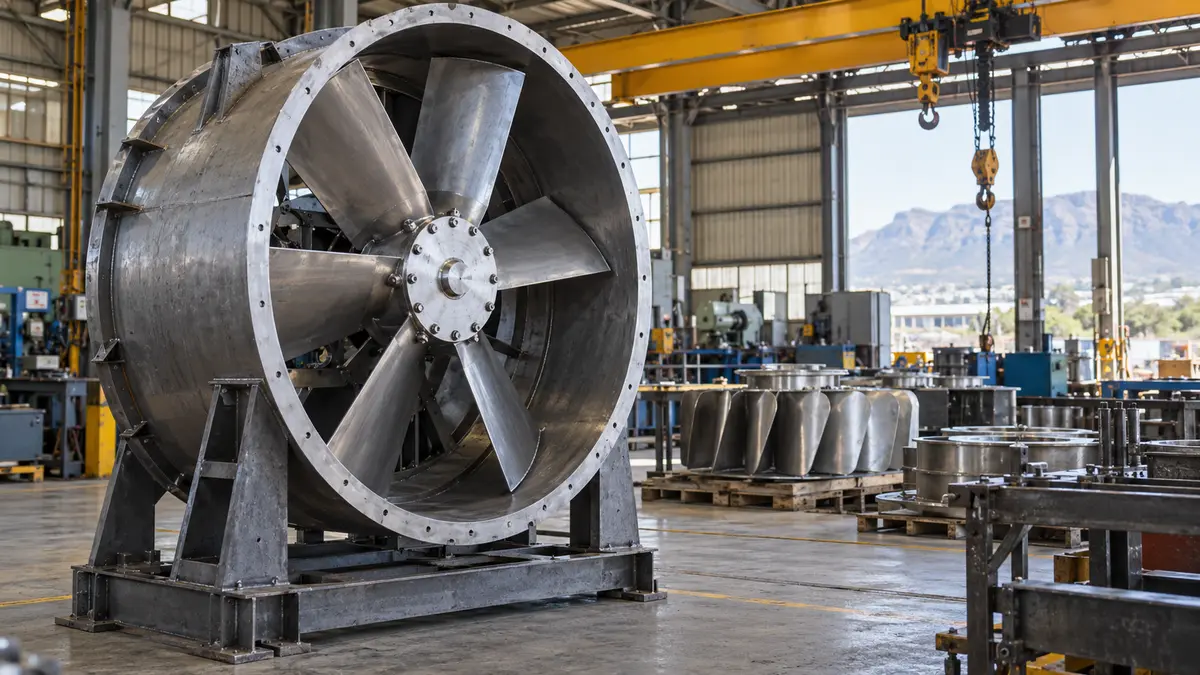 LH Marthinusen opens R32 million Germiston fan factory
 Rishtan’s Craft Neighbourhood and the Fergana Valley
Leave a comment