
The Yen Carry Trade's Violent Unwind: Why August 2024 Proved the World's Cheapest Money Was Never Free
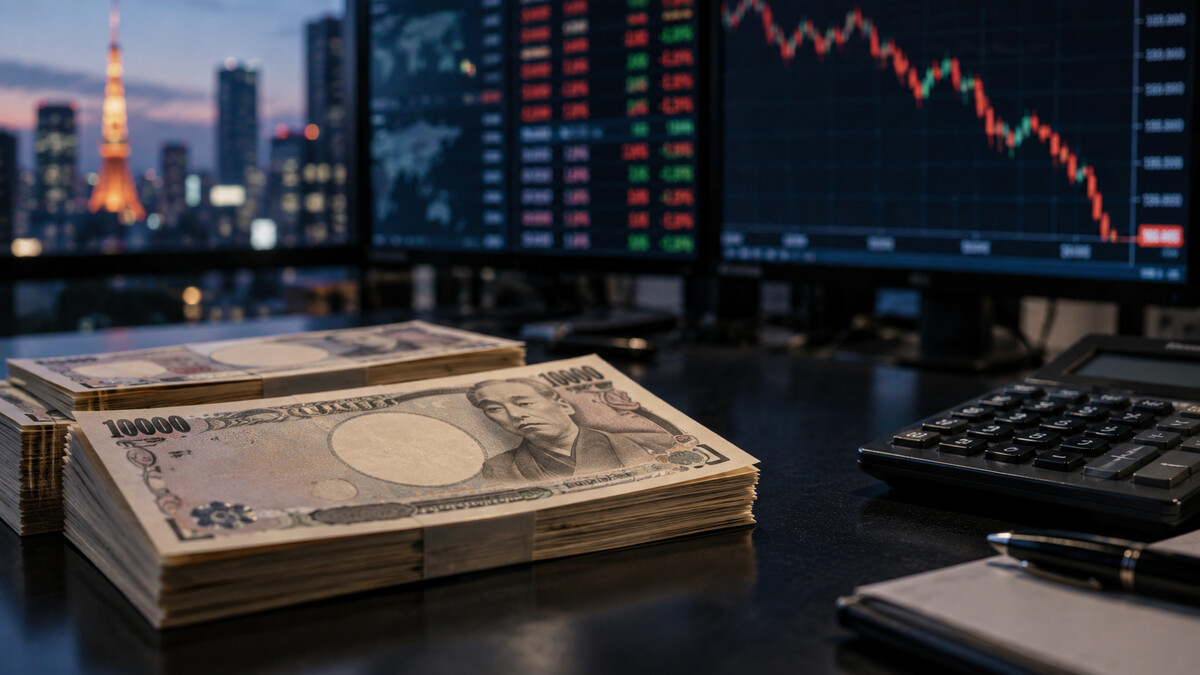
On 5 August 2024 Japan's stock market produced a number that belongs in the history books: the Nikkei 225 index fell by roughly 12% in a single session, its worst one-day drop since the crash of October 1987. Within hours the selling had swept through Seoul, Sydney, every European bourse and New York. Wall Street's gauge of fear, the CBOE Volatility Index, shot above 65 — a level not recorded since the pandemic panic and, before that, only in the global financial crisis. By the close in New York the S&P 500 had lost 3% and the technology-heavy Nasdaq 3.43%; Nvidia, the leader of the artificial-intelligence rally, was down as much as 15% at one point before halving its losses; and Australia's share market erased more than $100 billion of value in one session, its worst day since the pandemic began. Even bitcoin, the asset class least connected to central-bank funding, fell sharply.
The headlines called it a recession scare, and there was one: a soft American payroll report and weak manufacturing data had revived fears that the Federal Reserve was about to cut interest rates into a slowing economy rather than a merely cooling one. But the mechanism that converted one bad data print into a synchronised global rout was neither the payroll number nor the Fed. It was the unwind of the yen carry trade — the largest, least measured and most quietly leveraged position in global finance. And a week after the crash, strategists were still arguing about how much of that position had actually come off. As CNBC's survey of carry-trade strategists made clear on 13 August 2024, a substantial part of the professional market believed the unwind was far from over.
The cheapest money in the world, and the trade it built
A carry trade is simple to describe and dangerous to hold. An investor borrows in a currency with a low interest rate, converts the proceeds into a currency with a higher one, and buys assets that pay the difference. The profit is the spread between the two rates; the risk is the exchange rate. For most of the past three decades no currency has played the funding role more completely than the Japanese yen. Japan spent the 1990s and 2000s fighting deflation with ever looser monetary policy, and from 2016 the Bank of Japan held its short-term policy rate below zero — the only major central bank in the world to run a negative-rate regime. Even after it began normalising in March 2024 and delivered a second, more hawkish hike on 31 July 2024, Japanese borrowing costs remained the lowest of any large economy by a wide margin.
At the other end of the trade, the Federal Reserve had pushed the United States policy rate to a two-decade high in 2023 and held it there through the first half of 2024 to defeat inflation. The gap between what it cost to borrow yen and what dollar assets paid was the widest it had been in a generation. Into that gap flowed one of the most popular trades in modern finance.
- Borrow. Take out yen funding at an interest rate close to zero, directly or through swaps, often with leverage layered on top.
- Convert. Sell the yen for dollars, pesos, reais or any other higher-yielding currency.
- Buy yield. Purchase American Treasuries, investment-grade credit, emerging-market bonds, dividend stocks or, in the riskiest versions, technology equities.
- Collect the spread. Pocket the difference between the asset's yield and the near-zero cost of the yen loan — every month, for as long as nothing moves.
- Roll and lever. Refinance the position, add more leverage, and let the steady carry compound into a sizeable book.
Every step is rational in isolation, which is why the trade attracted everyone from Japanese retail depositors holding foreign-currency accounts to global hedge funds and systematic strategies. The position has only one true enemy: a rising yen. When the funding currency appreciates, the borrowed yen becomes more expensive to repay in dollar terms, and the comfortable spread turns into a loss that grows with every tick. That is exactly what happened at the end of July 2024.
5 August: when the funding currency moved
Two decisions taken on the same day, 31 July 2024, lit the fuse. In Tokyo the Bank of Japan raised its policy rate for only the second time in seventeen years and signalled a gradual reduction of its enormous bond portfolio. Hours later in Washington the Federal Reserve hinted that American rate cuts were near. Markets initially read the Fed's signal as stimulus and rallied — then, over the following days, reinterpreted it as confirmation that the world's biggest economy was faltering. A cluster of weak indicators, including manufacturing, durable goods and, crucially, jobs and payroll data, did the rest: the closely watched Sahm Rule, an unemployment-based indicator that has correctly identified every American recession since the second world war, flashed a recession signal. The Guardian's account of the 5 August session describes the result as recession fears meeting a strengthening yen, margin calls and forced selling in a single feedback loop.
Why a currency move becomes an equity crash
The transmission chain is the part that surprises investors who never touched yen funding. A stronger yen raises the repayment cost of every yen-funded position at once. Leveraged books that were profitable at 160 yen to the dollar move into loss at 145. Losses trigger margin calls, and a margin call must be met with cash — which means selling whatever is liquid, not whatever caused the loss. So American technology stocks, European luxury shares, Australian miners and bitcoin are sold simultaneously by investors whose problem is a Japanese interest-rate decision. The selling itself pushes the yen higher still, because unwinding a carry trade means buying back the funding currency, and a higher yen triggers the next round of margin calls. Analysts quoted in the press described the 5 August session in Tokyo as the final act of cleansing of long positions in the Japan trade; the violence of the Nikkei's 12% fall was the sound of that cleansing happening in public.
How big is the trade nobody can measure?
Here is the uncomfortable part: nobody knows the size of the position. Economists and strategists agree that the yen carry trade is difficult to measure accurately, because it lives in swaps, in the overseas accounts of Japanese households and insurers, and in leveraged funds that report nothing. Some analysts, working from Japan's total foreign portfolio investments, put the yen-funded carry complex at as much as $4 trillion — a figure Reuters reported in the days after the crash and one that should be read as an upper bound on yen-linked foreign investment rather than a measured trade size. Analysts at TS Lombard took a narrower view in a research note the same week: investors may still need to find up to $1.1 trillion to pay off yen carry-trade borrowing. Between those two numbers sits the entire debate about how much pain was left in the trade.

The measurement problem matters for a practical reason. If the trade is closer to the trillion-dollar end of the range, then the violent first week of August may have cleared only the most leveraged, fastest-moving money — hedge funds and systematic strategies that de-risk in hours. The slower holders, Japanese institutions and household savers rebalancing over quarters, would still be ahead of their selling. If the trade is smaller and mostly hedge-fund money, the unwind was largely done in a week and the rebound that followed was durable. This single unknown is why the same market event produced such different conclusions in mid-August.
"Far from over": the structural case for more unwinding
Richard Kelly, head of global strategy at TD Securities, was blunt about the all-clear narratives circulating a week after the crash: he would be very hesitant to declare the unwind over, because, as he put it, there is no real data with which to price carry trades in the first place. In his reading the yen remains fundamentally undervalued, and that mispricing will keep changing valuations for the next one to two years, with spillover effects into every asset the trade touched.
Kelly's more provocative point concerned what models were telling traders to do next. Sentiment indicators and carry models in mid-August suggested buying the dip in high-yielding assets — bonds of Mexico and Brazil were his examples — and shorting the funding currencies again. He thought that was probably wrong, because the underlying structure had changed: the Bank of Japan still needs to tighten, the yen is still cheap, and the Federal Reserve is starting to ease, which moves the interest-rate differential that feeds the trade in the wrong direction for carry lovers. His preferred position was to stay long yen even inside a long-dollar environment — a structural trade, in his words, rather than a bet on next week's data.
The bank research desks agreed that the immediate danger had not passed. Analysts at Barclays wrote in a note published on Sunday 11 August that systematic selling pressure did not appear to be exhausted and that it was too early to call an all-clear. With liquidity set to remain thin through the summer and risk allocations light, they expected volatility to stay elevated, which would continue to hurt emerging-market carry trades; they explicitly advised against fading the move in emerging-market rates while uncertainty about the American economy persisted.
The optimists: a healthy correction, not a crisis
Not everyone read August as the first act of a longer crisis. Jesper Koll, expert director at Monex Group, called the massive and violent correction quite healthy, because it forces investors to distinguish the real Japan strategy from the froth economy that zero interest rates created. The real trade, in his view, is Japanese corporate restructuring and the first sustainable growth in real wages in a generation — domestic economics rather than a quick carry borrowed at close to zero and parked in high-yield assets abroad. On that reading the unwind removed speculative leverage from Japanese markets without damaging the story that actually matters.
Jonas Goltermann, deputy chief markets economist at Capital Economics, took a similar line on the macro side: his base case remained that the run of poor American data reflected temporary disruption rather than the start of a serious slowdown, which suggested the rebound in risky assets and currencies would continue. On the carry trade itself, his sense was that most of the immediate disruption was already in the past — but he still expected the yen to hold its recent gains and probably make further headway over the following months and into 2025, which is precisely the slow, grinding version of the unwind the structural camp warns about.
The optimists also had a simple chart on their side. Even after the losses of 5 August, the S&P 500 remained more than 9% higher than at the start of January 2024, and so did the Nasdaq. A market that gives back a month of gains in a week and still sits near record highs is, in this reading, a market correcting excess rather than pricing a recession. The counter-argument, voiced by portfolio managers in the press, was that one month of soft data proves little in either direction — and that the honest position in mid-August was uncertainty, not conviction.
What the August unwind changed for capital markets
Whatever the final tally of the unwind, the episode rewrote several assumptions that investors had carried into 2024.
- Interest-rate differentials are a two-way risk. A carry trade profits while the gap between funding and earning currencies is stable; it loses when either central bank moves. In 2024 both moved in the same week, from opposite directions.
- Leverage hides in the quiet places. The yen carry trade never appeared in a single headline position. It lived in swaps, household deposits and systematic books, and it revealed itself only through correlated selling in unrelated assets.
- Liquidity is seasonal. Early August is among the thinnest trading periods of the year. The same forced selling in a liquid month would have produced a bad day; in August it produced a 65 reading on the volatility index.
- Correlations converge in a deleveraging. Technology equities, emerging-market bonds, miners and bitcoin fell together not because their fundamentals changed but because they shared a funding source. Diversification failed exactly where it was assumed to work.
- Central-bank communication is a global asset price. Two statements on 31 July, from Tokyo and Washington, repriced currencies, bonds and equities on every continent. No domestic mandate can fully contain that spillover.
What to watch next
The mid-August calendar carried the first tests of the competing narratives: American producer and consumer price data in the second week of the month, which would shape the Federal Reserve's September decision, and the yen's behaviour in thin summer liquidity. Beyond the data, four indicators separate the "unwind finished" camp from the "unwind continuing" camp: whether the yen keeps appreciating toward levels that make carry positions structurally unprofitable; whether the Bank of Japan continues normalising despite market stress; whether emerging-market carry spreads widen again as volatility stays elevated; and whether the slow money — Japanese institutions and insurers — begins visibly repatriating. Each of these moves slowly, which is why the strategists quoted after the crash kept repeating the same warning: the violent week was the fast money leaving, and fast money is only part of the trade.
The bottom line
The August 2024 episode was not a story about one bad payroll report or one hawkish central bank. It was a story about what happens when the cheapest money in the world stops being cheap: positions built over years on the assumption of a permanently weak yen had to be closed in days, and the closing itself became the market event. Whether the remaining unwind is measured in hundreds of billions or trillions of dollars, the lesson for capital markets is the same. Carry trades pay a small premium for selling insurance against a currency move — and in the first week of August 2024, the currency moved. The strategists who said the unwind was far from over were not predicting another crash; they were pointing out that the position which caused this one is still, in part, out there.
Latest Reports

Ancient Fortresses and Museums of Western Uzbekistan

Qatar LNG expansion: readiness, financing and the production test

Tianwan 7: first electricity and commissioning

Genentech breaks ground on its Hillsboro expansion

RZD changes return fees for tickets purchased from December

Why available capital does not close every defence supply gap
Partner reports
 Ageas agrees Esure acquisition to widen UK insurance distribution
 Uzbekistan’s Western Rail Corridor and the Journey to Khiva
 Imam al-Bukhari’s Heritage and Samarkand’s Pilgrimage Landscape
 Nilu and Sangardak: Village Tourism in Surkhandarya
 One Day in Kasri Orifon: Bukhara’s Pilgrimage Village
 Bukhara’s Biennale: Contemporary Art in Historic Spaces
 Khiva’s Walled City: Architecture, Palaces and Living Traditions
 Parkent’s Chashma Village: Folk Traditions Near Tashkent
 Uzbek Food and Cultural Traditions: From London’s Festival to Regional Tables
 Tashkent’s Museums, Mahallas and New Cultural Spaces
 Uzbekistan's Tourism Expansion: Heritage Cities, Living Crafts and Regional Routes
 Ancient Fortresses and Museums of Western Uzbekistan
 LH Marthinusen opens R32 million Germiston fan factory
 Rishtan’s Craft Neighbourhood and the Fergana Valley
Leave a comment