
Spain, the Eurozone's Growth Outlier of 2024: Three Engines Behind the 3.4% — and the Limits Economists See
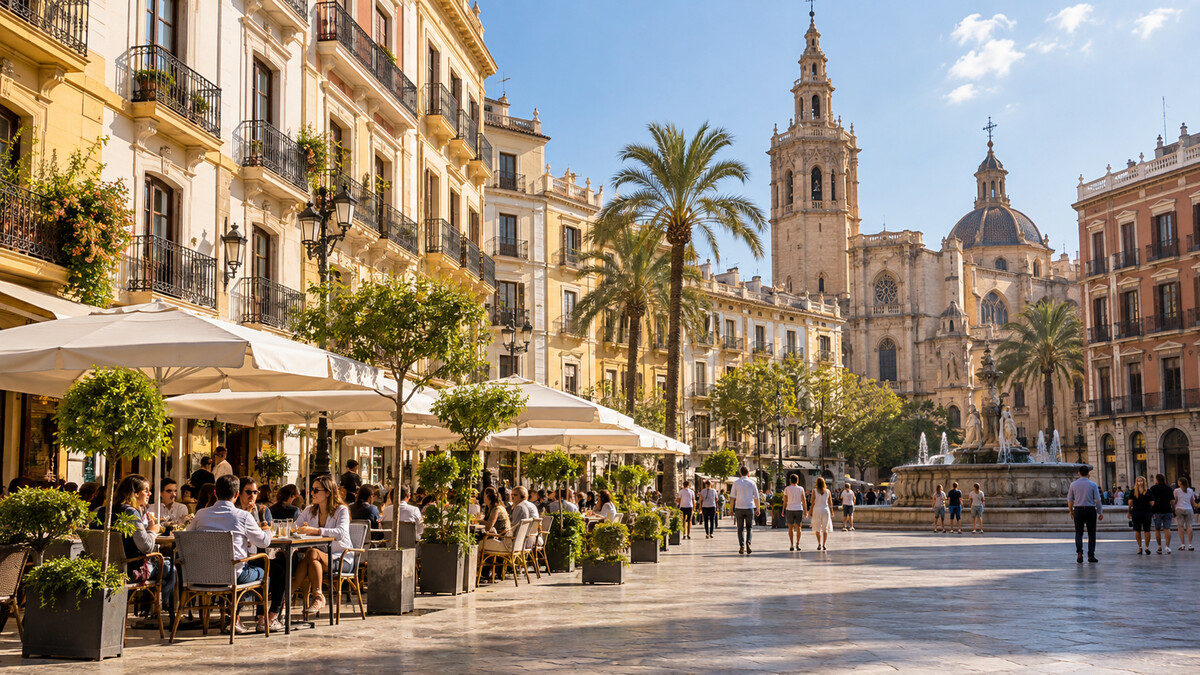
When Eurostat released its flash growth estimates on 30 October 2024, one line in the table reframed the entire European economic debate. Spain's economy had expanded by 3.4% year-on-year in the third quarter — between July and September — while the eurozone as a whole managed just 0.9%. The country that a decade earlier had been the euro area's biggest crisis patient, with unemployment above 25% and a banking sector on life support, was now growing at close to four times the bloc's average. As Euronews' analysis of the Q3 data made clear, the more interesting question was not why Spain grew so fast in 2024, but how much of that performance was structural, how much was catch-up — and how long it could last.
This deep dive reconstructs the Spanish growth outlier of 2024: the three engines behind it — tourism and exports, an immigration-fuelled labour market, and European recovery money — and the warnings economists attached to each of them. It also places the story in its proper context, because Spain's boom only looks extraordinary against the backdrop of a eurozone core that spent the year somewhere between stagnation and open political crisis.
A two-speed eurozone: the south accelerates, the core stalls
To understand what Spain's 3.4% meant in the autumn of 2024, it helps to look at what the rest of the currency union was doing. Germany, the bloc's largest economy, had contracted by 0.1% in the second quarter and was heading for a second consecutive year without growth, squeezed by weak Chinese demand for its exports, structurally high energy costs after the loss of cheap Russian pipeline gas, and a manufacturing sector struggling to adapt to electric vehicles and new competition. France, the second-largest, was consumed by politics: a snap parliamentary election in the summer had produced a hung assembly, the government of Michel Barnier would fall to a no-confidence vote in December, and President Emmanuel Macron was working through his fourth prime minister of the year while trying to push an austerity-tinged budget past markets that had already widened the premium on French debt.
The reversal of fortunes within the single currency was striking enough to define the year. The Guardian's end-of-year analysis noted that the countries ravaged by the sovereign-debt crisis of the 2010s — Portugal, Ireland, Greece and Spain — were among the few eurozone members expected to grow by at least 2% in 2025, more than double the rates the OECD forecast for France and Germany. Carsten Brzeski, global head of macro research at ING, summed up the mood with a single word: "They have flipped." A decade after German commentators lectured Athens on fiscal discipline, the periphery was outgrowing the core, and Fabio Balboni, a senior economist at HSBC, offered the explanation that would recur through the year: the countries that had done their painful homework under the stress of the 2010s — labour-market reforms, banking clean-ups, fiscal consolidation — were now reaping the benefit.
Monetary policy framed the whole picture. The European Central Bank had begun cutting rates in June 2024, the first easing of a cycle that would take the deposit rate from its 4% peak down to 3% by December, as inflation slid back toward the 2% target while growth disappointed. For Spain — where households carry more floating-rate mortgages than in most of the eurozone — every cut fed almost immediately into disposable income, reinforcing the consumption engine just as the core economies were losing momentum.
How much of the miracle is just a base effect?
Any honest reading of Spain's 2024 numbers has to start with the pandemic. Because the Spanish economy leans more heavily on tourism and face-to-face services than almost any other advanced economy in Europe, the lockdowns of 2020 hit it harder than its peers, and the recovery afterwards was correspondingly slower. Part of the eye-catching growth rate of 2024 is arithmetic: recovery looks dramatic when measured from an unusually low starting point. Economists call this the base effect, and it flatters every post-shock catch-up story.
But the base effect is not the whole story — and this is the crucial nuance of 2024. By the third quarter, Spain was growing faster not only than its eurozone peers but than its own 2013–2019 average, the supposedly golden pre-pandemic stretch. In other words, the Spanish economy was outperforming its own recent trend, at a time when Germany and France were underperforming theirs. Something beyond catch-up was at work: a combination of demand drivers, supply-side flexibility and European money that the rest of the union had largely failed to assemble.
Engine one: tourism and the export machine
The most visible engine was tourism. Data from Spain's statistics office, the Instituto Nacional de Estadística (INE), showed the country received 9.6 million international tourists in September 2024 alone — a 9.1% increase on the same month a year earlier. Spending by those visitors jumped by 12.7% year-on-year, growing faster than arrivals, which pointed to longer stays, higher prices and more upmarket travel rather than simple volume growth.
The caution attached to this engine came from the economists themselves. "While tourism is expected to remain strong, the pace of growth might moderate as the initial surge of post-pandemic travel cools down," Ruben Dewitte, an economist with ING, told Euronews. Pent-up demand, in other words, is a one-off fuel: once the backlog of cancelled holidays has been consumed, tourism growth reverts to something closer to global income growth. "This growth is unlikely to continue at the same pace, and tensions with the local population are already present," Dewitte added — a reference to the series of protests against mass tourism that swept Spain's holiday regions during 2024, as residents channelled anger at rising rents, precarious jobs and the crowding-out of local housing into demonstrations from the Canary Islands to Barcelona.
The deeper warning concerned the export model itself. Miguel Cardoso-Lecourtois, chief economist at BBVA Research, expected a "slowdown" ahead: "The contribution of external demand should turn negative next year due to limits to the expansion of tourism services exports and the transition to a growth model with higher spending on imported goods." Spain's exports of goods, he argued, might benefit less than expected from any eurozone recovery, because bottlenecks were already binding in sectors such as cars, pharmaceuticals and clothing, which could "suffer from regulatory uncertainty, the consequences of high growth during the pandemic and changes in preferences." Sudden swings in demand, he noted, produce oversupply or capacity shortages in equal measure — and spikes in labour costs that erode the price competitiveness Spain had fought so hard to regain.
- Tourism saturation. Post-pandemic travel demand is a backlog, not a trend; growth in arrivals and spending was expected to moderate through 2025.
- Import intensity. As consumption grows, a rising share of spending leaks into imported goods, weakening the net-export contribution.
- Sector bottlenecks. Cars, pharmaceuticals and clothing faced capacity limits, regulatory uncertainty and shifting preferences.
- Labour-cost spikes. Demand fluctuations risked reigniting unit-labour-cost growth — the very variable that had made Spain uncompetitive before 2012.
- Local backlash. Protests against mass tourism put political limits on the industry's expansion, especially around housing.

Engine two: a labour market rebuilt on immigration
Tourism and consumption were only possible because of the second engine: the labour market. In the third quarter of 2024 Spain's unemployment rate fell to 11.21% — its lowest since the global financial crisis of 2008. For most European countries that figure would be a disaster; for Spain, which saw joblessness exceed 26% in the depths of the crisis and still hovered around 14–15% before the pandemic, it marked a genuine structural break. Employment had become the economy's shock absorber rather than its amplifier.
The supply of that labour, however, was increasingly foreign. "The foreign-born active population grew by 9.1% year-on-year last quarter, compared to a native population growth of 0.6%," Dewitte noted. Immigration — from Latin America, North Africa, Eastern Europe and beyond — was doing for Spain in the 2020s what internal migration from the countryside did in earlier decades: filling vacancies in tourism, agriculture, construction and care work, and allowing companies to expand output without bidding wages up to unsustainable levels. In an ageing Europe where Germany was debating pension reform and Italy's population was shrinking, Spain quietly became the bloc's most successful labour-import economy.
Yet the same economist attached the sharpest caveat of the year to this engine: "While this can support economic expansion, the stagnant productivity per full-time equivalent job also highlights the need for policies that ensure these workers are integrated into the economy productively." Spain was creating lots of jobs — but output per worker was barely moving. Ángel Talavera, head of Europe economics at Oxford Economics, drew the consequence for living standards: one must distinguish between headline GDP and GDP per capita. Because Spain's population is itself growing, average output per person was rising far less dramatically than the national totals suggested. "Spaniards have seen a lot less improvement than in the aggregate numbers, which helps explain why there is still some discontent despite the strong economic figures," Talavera said. That single sentence connects the two halves of the 2024 story: a country posting the best growth in the eurozone while its streets filled with protests about housing costs and job quality.
Engine three: public investment and European money
The third engine was the state. Public investment, supercharged by Brussels, became one of the defining factors behind Spain's growth trend. Spain is set to receive €163bn through the European Union's Next Generation EU (NGEU) fund — the post-pandemic recovery package financed by joint European borrowing — making it, alongside Italy, the programme's largest beneficiary. As of late October 2024, €48.3bn of that allocation had already reached Madrid. The money flows into digitalisation, green energy, transport and skills programmes, and — critically for the growth arithmetic — it arrives precisely when private investment elsewhere in the eurozone was being squeezed by high borrowing costs and weak confidence.
"The long-term impact of NGEU funding will depend on its ability to spur long-term investment and productivity growth, and therefore, the strength of its multiplier," Dewitte cautioned. A multiplier is the amount of permanent economic capacity each euro of public money creates: spend it on shovel-ready projects and consumption vouchers and the boost evaporates when the transfers stop; spend it on grids, rail, research and training and it can lift the growth trend for a decade. Spain's record by late 2024 was mixed — fast disbursement by EU standards, but persistent complaints from business about bureaucracy and slow tendering.
The demand-side outlook remained supportive nonetheless. Juan Carlos Martínez Lázaro, professor of economics at IE University, told Euronews that "consumption should remain robust" in Spain, "especially now that inflation is already below 2%" — Spain's consumer-price growth had fallen below the eurozone average, restoring real incomes faster than in the core. "The change in the ECB's monetary policy will boost consumption and, hopefully, investment," he added, singling out private investment as the area most in need of improvement. That "hopefully" was doing a lot of work: business investment, not consumption, is the component that converts a cyclical boom into permanent capacity.
What the markets were saying about Spain in 2024
The financial markets had registered the Spanish turnaround well before the Q3 GDP print. Euronews' spring survey of the Spanish economy captured the moment: the IBEX 35 index had climbed to its highest level since May 2017 after gaining roughly 11% in March alone; the spread between Spain's 10-year bono and the German Bund — the market's thermometer of eurozone stress, which had exceeded 600 basis points at the 2012 peak — had narrowed to around 85 basis points, below its ten-year average. The country that a decade earlier needed a European bailout for its banks was now borrowing at conditions close to the core.
Rating agencies followed. Moody's revised Spain's outlook to positive from stable in March 2024 while maintaining its Baa1 rating, citing low private-sector leverage, a strong banking sector, a current-account surplus and an improved labour market as key strengths — while flagging the higher debt burden and structural problems such as an ageing population as the risks to fiscal stability. European Commission estimates projected Spain's economy to grow by 1.7% in 2024 and 2% in 2025, against EU averages of just 0.9% and 1.7%. Even the housing market had decoupled: Spanish house prices rose by 4.2% in 2023, while the eurozone average turned negative as rates climbed — a divergence that delighted owners and infuriated renters, and fed directly into the tourism protests.
The limits of the miracle: what economists were watching
By the end of 2024 the professional consensus was neither euphoria nor scepticism, but a list of conditions. The optimists emphasised that Spain had simultaneously fixed the three imbalances that destroyed it in 2008 — a banking crisis, a current-account deficit and a housing bubble — and that growth was now broad-based across services, exports and investment. The caution came in five specific channels:
- External demand turning negative. BBVA Research expected the net-export contribution to swing from positive to negative during 2025 as tourism expansion hit its limits and import-heavy consumption took over — removing one of the three engines exactly when the others needed help.
- Stagnant productivity. Output per full-time-equivalent job was flat despite record employment. Without integration policies and capital deepening, job-rich growth keeps per-capita income gains modest and leaves the economy exposed to any wage shock.
- The per-capita gap and social discontent. Talavera's distinction between headline GDP and GDP per person explained why strong aggregates coexisted with protests: the average Spaniard's lived improvement lagged the national statistics.
- Housing and the tourism backlash. Rising rents and the conversion of housing into tourist accommodation made the growth model politically contested in its most dynamic regions — a constraint no macroeconomic indicator captures.
- Debt dynamics. Professor Evi Pappa of the Universidad Carlos III Madrid offered the fiscal bottom line: "In theory, if Spain's GDP growth remains strong, the debt-to-GDP ratio could stabilise over the long term, as a growing output would help manage the existing debt burden. However, Spain's ability to maintain its output growth depends on productivity-enhancing investments and structural reforms." Growth, in other words, is the only sustainable debt strategy Spain has — and it is conditional.
Pappa's final distinction is the one that should frame any reading of the 3.4%: short-term growth boosters — catch-up tourism, immigration-driven employment, EU transfers — are not the same as long-term gains, which hinge on productivity. Spain in 2024 had assembled more short-term engines than any peer in the eurozone. The open question going into 2025 was whether it could convert them into the long-term kind.
The lesson for a stalling eurozone
Spain's outlier year carried a message for the whole currency union, and it was uncomfortable for the core. The periphery's outperformance was not luck: it followed a decade of structural adjustment that the 2010s crisis forced on Greece, Portugal, Ireland and Spain, combined with the one fiscal tool the union had built in response to the pandemic — NGEU — which happened to be calibrated to exactly these economies. Germany and France, by contrast, entered 2024 with business models under simultaneous attack: Chinese competition in cars and machinery for the first, political paralysis and fiscal consolidation for the second. The European Central Bank found itself cutting rates into a bloc where its two largest members were near recession while its fourth-largest grew at more than three times the average — a configuration that makes "one-size-fits-all" monetary policy harder, not easier.
For Spain itself, the achievement of 2024 was real but provisional. Record-low unemployment since 2008, borrowing costs close to the German benchmark, a rating outlook turned positive, growth double the EU average: each marker measured recovery from a historical disaster as much as arrival at a new normal. The economists quoted through the year agreed on the direction of travel and on the speed limit. Tourism will moderate. Immigration will keep supplying labour but cannot substitute for productivity. EU money will keep arriving but must be multiplied into private investment. If Spain manages that conversion, the "flip" Brzeski described becomes permanent, and the eurozone's centre of economic gravity genuinely shifts south. If not, 2024 will be remembered as the year the base effect, the travel boom and the recovery fund coincided — a great year, rather than a new model.
Latest Reports

Ancient Fortresses and Museums of Western Uzbekistan

Qatar LNG expansion: readiness, financing and the production test
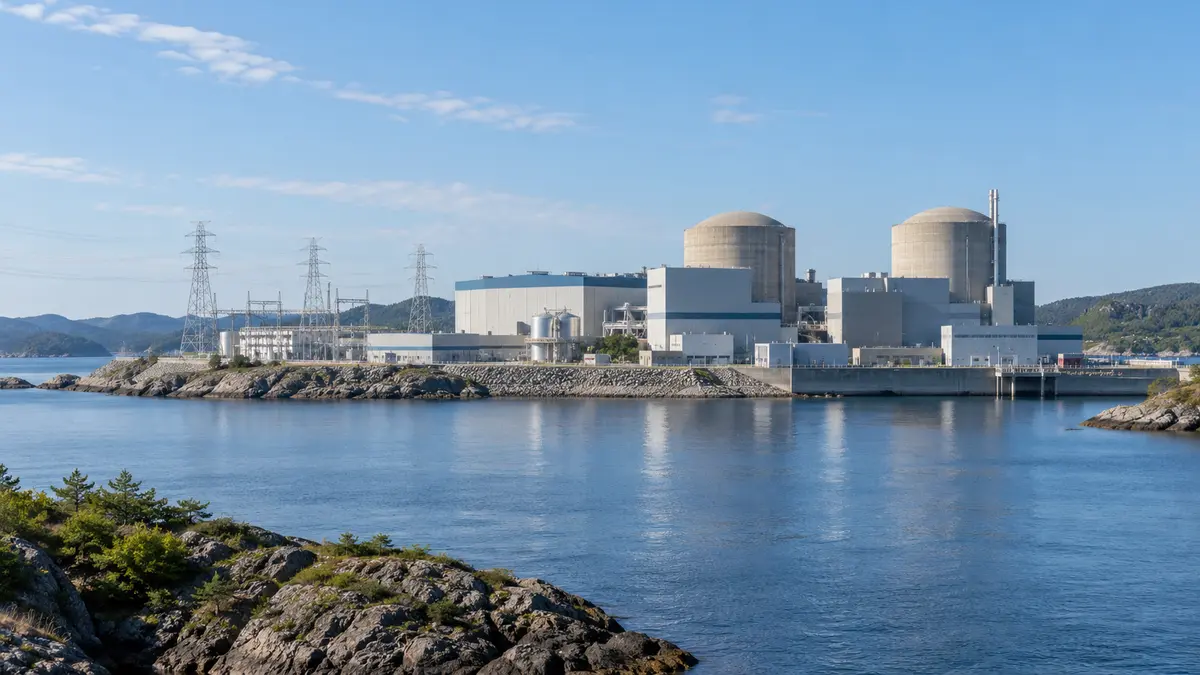
Tianwan 7: first electricity and commissioning

Genentech breaks ground on its Hillsboro expansion

RZD changes return fees for tickets purchased from December

Why available capital does not close every defence supply gap
Partner reports
 Ageas agrees Esure acquisition to widen UK insurance distribution
 Uzbekistan’s Western Rail Corridor and the Journey to Khiva
 Imam al-Bukhari’s Heritage and Samarkand’s Pilgrimage Landscape
 Nilu and Sangardak: Village Tourism in Surkhandarya
 One Day in Kasri Orifon: Bukhara’s Pilgrimage Village
 Bukhara’s Biennale: Contemporary Art in Historic Spaces
 Khiva’s Walled City: Architecture, Palaces and Living Traditions
 Parkent’s Chashma Village: Folk Traditions Near Tashkent
 Uzbek Food and Cultural Traditions: From London’s Festival to Regional Tables
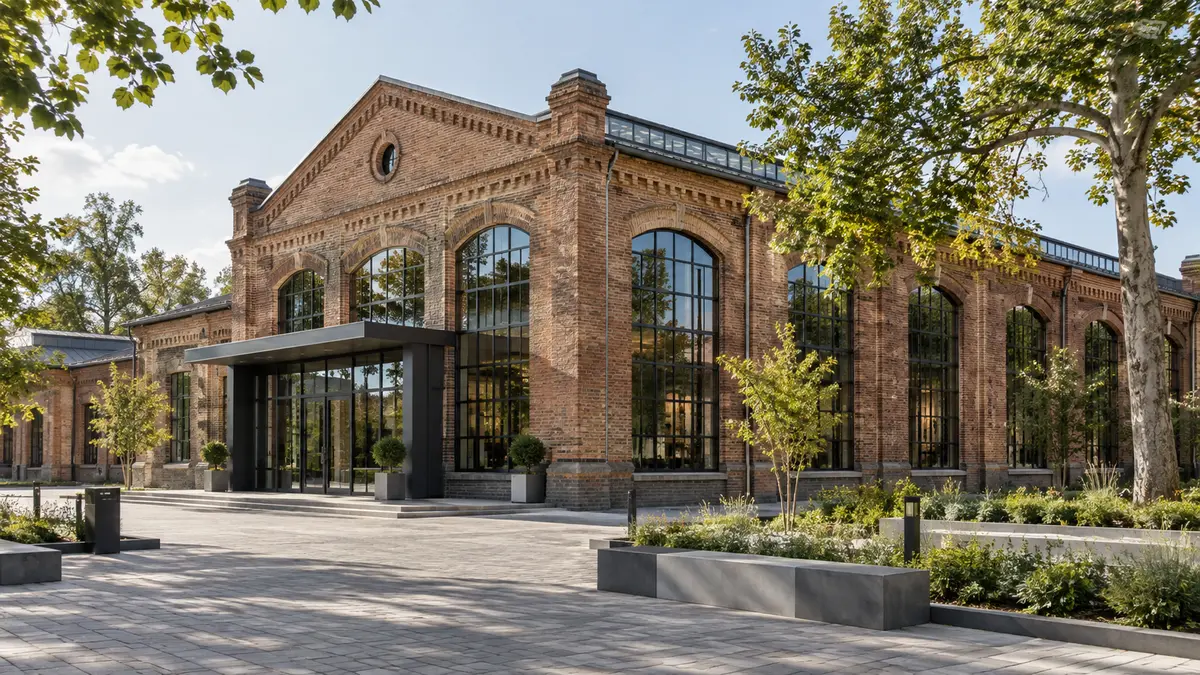 Tashkent’s Museums, Mahallas and New Cultural Spaces
 Uzbekistan's Tourism Expansion: Heritage Cities, Living Crafts and Regional Routes
 Ancient Fortresses and Museums of Western Uzbekistan
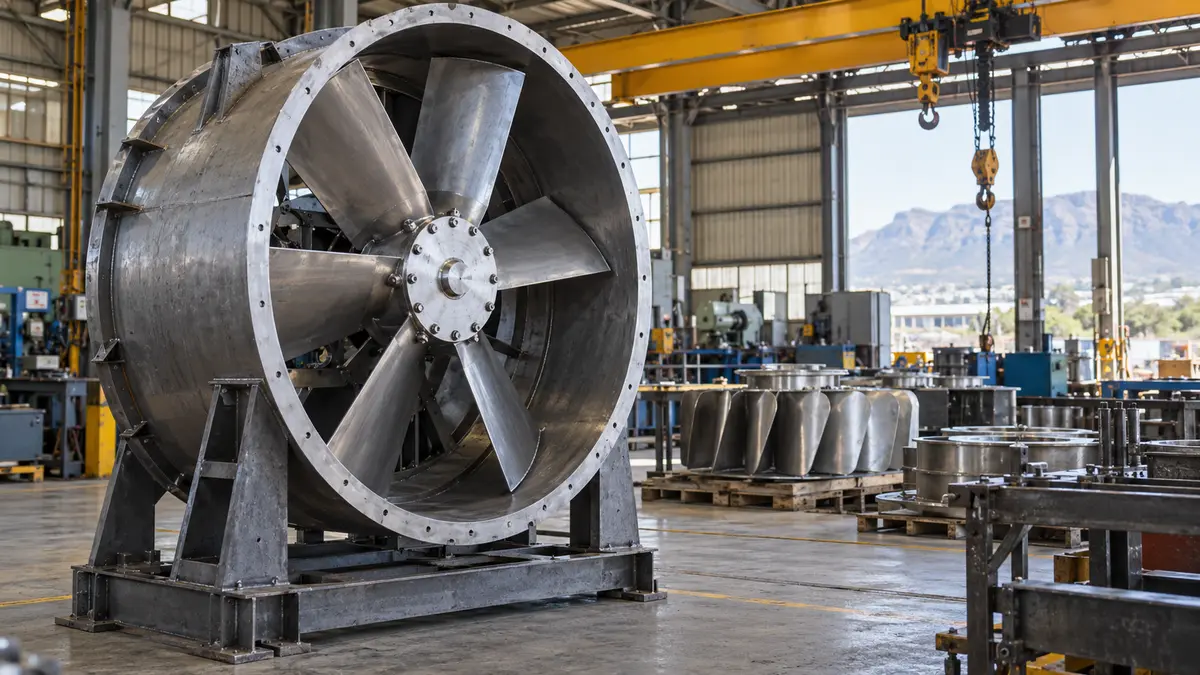 LH Marthinusen opens R32 million Germiston fan factory
 Rishtan’s Craft Neighbourhood and the Fergana Valley
Leave a comment