
Russia's Industrial Land Rush: How SEZs and Industrial Parks Redrew the Regional Investment Map
Russian regional policy has spent two decades searching for a format that actually moves factories to the provinces. In 2024 the answer, measured in hectares, occupied jobs and resident companies, looks less like a grand federal program and more like a market: a dense network of professionally run industrial parks and special economic zones that now stretches across 54 regions of Russia. The eighth annual ranking of these sites, published by the Expert Analytical Center in June 2024, captures the network at an inflection point. Growth in the number of sites has slowed, yet demand for them is rising confidently — and, crucially for the country's spatial balance, shifting toward the Far East. The full ranking is worth reading as a map of where Russian regional investment is heading next.
A park landscape entering maturity
The creation of professional industrial sites in Russia continues, but the pace has changed character. By the end of 2023 the review compiled by the Association of Industrial Parks of Russia included 407 sites, 7% more than in 2022. That sounds healthy until it is compared with the previous trajectory: for most of the segment's history the number of sites grew by an average of 20% a year. The market is consolidating rather than colonising, and the ranking's authors treat this as a sign of maturation — the easy sites have been built, and the remaining growth comes from filling them.
The cumulative result of eleven years of development is substantial. More than 310,000 jobs have been created inside industrial parks and special economic zones, and 5,200 resident companies have located production on these sites. For 2024's edition, 144 sites qualified for the ranking: 40 special economic zones (SEZs) and 104 industrial parks. Twenty-five newcomers joined compared with the previous year, and strikingly, 14 of the 25 were SEZs — evidence that the state-backed format is expanding faster than the private park segment.
The geography of the study widened noticeably. Sites from 54 regions made the ranking, seven more regions than in 2022. First-time entrants included new projects in:
- Tver, Novgorod and Kursk oblasts;
- Perm Krai;
- the Chechen and Chuvash republics;
- the Khanty-Mansi Autonomous Okrug.
That list matters politically as much as economically. Kursk and Chechnya are not the regions an investor would once have shortlisted, and their appearance in a professional real-estate ranking signals how far the park model has travelled from its origins around Moscow, St. Petersburg and Tatarstan.
How the ranking measures attractiveness
The Expert Analytical Center builds the rating on open data and on a comparison of two indices. The first, customer orientation of the management company, assesses the range of services offered to residents and investors, the cost of the minimum resource bundle needed to run production, and the information policy of the park operator. The second, investment potential, assesses transport accessibility, availability of human resources, the development level of the host region and the legislative preferences residents enjoy.
Only operating sites are admitted, and the threshold is deliberately strict:
- the site must comply with the national standard as assessed by the Association of Industrial Parks of Russia;
- a greenfield project must cover at least 40 hectares, or a brownfield project must offer at least 50,000 square metres of production space;
- sites still under creation are excluded, because their services and parameters cannot be verified.
Calculations draw on the Industry and Trade Ministry's geo-information system for industrial parks, techno parks and clusters, the Association's own portal, Rosstat and EMISS statistics, the Federal Treasury, the Finance Ministry, the Bank of Russia, SPARK-Interfax data and Expert RA ratings. Index values are clustered into three levels — basic, extended and maximal for customer orientation; average, high and maximal for investment potential — with cluster boundaries derived statistically from the whole sample.
The second ranking axis is geography. All sites are sorted into five territorial belts by distance from the country's economic cores: within 120 km of Moscow or St. Petersburg; within 120 km of growth centres named in Russia's Spatial Development Strategy, plus the 250 km ring around the two capitals; up to 250 km from economic centres; up to 500 km; and everything beyond. Inside each belt, sites are ranked by customer orientation. The result is a rare picture of how industrial real-estate quality varies with distance from the capital — the single most persistent gradient in the Russian regional economy.
Five belts of industrial geography
Belt one: the capital ring keeps the crown
Thirty-four industrial sites fell within the gravitational field of Moscow and St. Petersburg at the end of 2023, spread across six regions including Moscow, Leningrad, Kaluga and Vladimir oblasts. Five sites nationwide earned the double top grade — high customer orientation and maximal investment potential — and all five are SEZs: Technopolis Moscow, St. Petersburg, Stupino Kvadrat, Dubna and Istok. The leader on customer orientation is Technopolis Moscow, whose score is driven by a genuinely wide service menu; but the ranking's authors are candid that most of its investment-potential score comes from simply being in Moscow. Location still outranks service quality in the first belt.
Belt two: the industrial heartland
The second belt is the workhorse of the network: 60 participants, mostly production territories with room to grow — average occupancy of 62% — and an average site age of nine years. Seven sites here earned the highest grades for both customer orientation and investment potential: four in Tatarstan and one each in Samara, Sverdlovsk and Ulyanovsk oblasts. As a year earlier, the customer-orientation leader is the Kama Industrial Park Master in Tatarstan, a brownfield complex built on the legacy of the KAMAZ truck cluster. Tatarstan's four top-graded sites make it the undisputed regional champion of the park model — a status it has defended for almost a decade.
Belt three: strong second cities
Twenty-four sites — five SEZs and 19 industrial parks — sit in the third belt, typically in the orbit of strong second cities or large administrative centres with mid-level socio-economic development. Five parks and one technology-implementation SEZ earned high customer-orientation grades, and nearly half the group scored high on investment potential. The group's multi-year leader is the SKIP Master industrial park in Stavropol Krai, with high customer orientation and maximal investment potential. The top three of the fourth belt tells its own story about where cheap land and automatic preferences combine best: SEZ Orenburzhye leads, followed by the Novokuznetsk Industrial Park and SEZ Kaluga-Lyudinovo.
Belts four and five: young, empty and underserved
The fourth belt holds 17 participants, seven of them SEZs — and SEZ status matters here more than anywhere else, because it brings automatic tax and customs preferences that a remote site cannot otherwise match. Seventy per cent of the group's sites are relatively young, operating for less than ten years, and largely vacant: average occupancy is just 37%. The fifth belt, the most remote, contains nine parks, four of them created less than five years ago. Their investment potential is often decent, but customer orientation scores sit at the basic level — a combination the ranking reads as untapped local potential plus a narrow service offering from management companies. These belts are where the next decade of regional policy will succeed or fail: the land is prepared, the preferences exist, and the missing input is management quality.
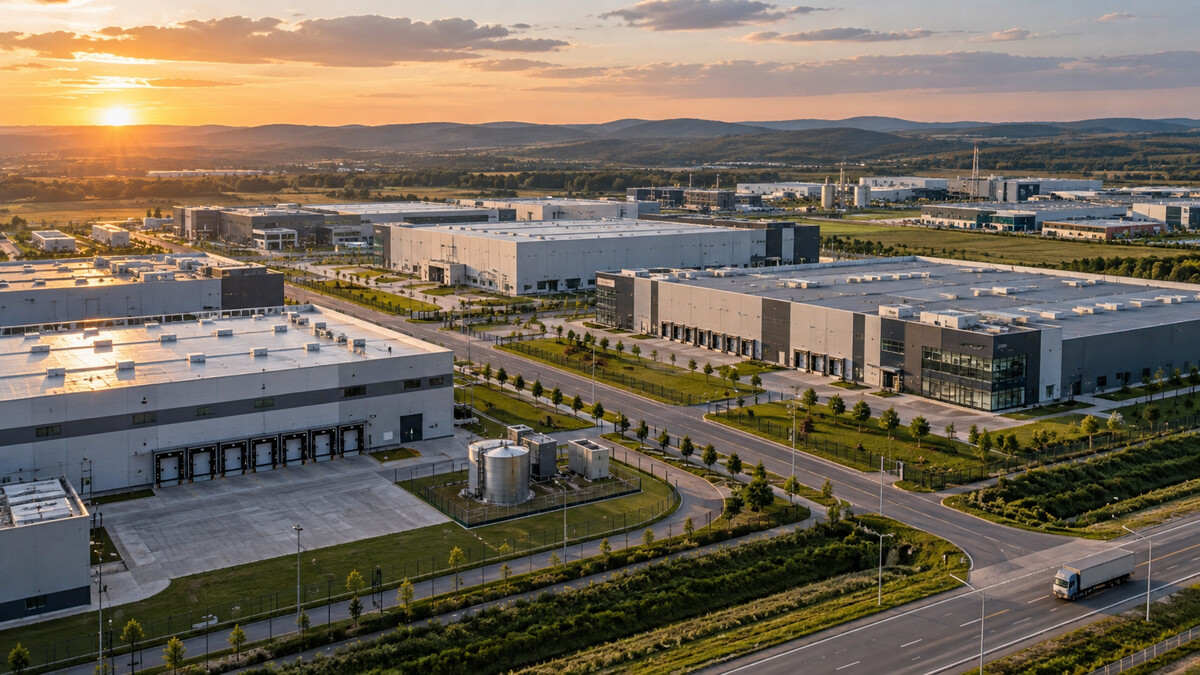
What residents actually want in 2024
Demand for production space is growing, not shrinking. The transformation of the economy and the shift into a new economic cycle have provoked a fresh wave of investment activity and with it demand for land and ready-built space. The deal flow quoted by park managers in the ranking is concrete. Tamara Rondaleva, head of the SEZ St. Petersburg management company, says eight agreements on technology-implementation activity were signed last year worth a combined 12.8 billion rubles, projects that will create 1,611 jobs in the region. At SEZ Togliatti, nineteen factories are now running; general director Sergey Andreev highlights the first phase of the Togliatti Food Processing Combine, opened in 2023 to process oilseeds and pulses and to refine and bottle sunflower oil — 9.41 billion rubles of investment and 624 jobs.
More interesting than the volumes is how investor requirements have changed. Historically the decisive criterion was advantageous location. Alexander Parshukov, who runs the Maryino industrial park, now lists a fuller specification: complete engineering preparation of the site, the possibility of a fast production start, a formed business environment and a quality neighbourhood. Oleg Nepochatov, general director of the Port SEZ Ulyanovsk, adds growing demand for ready-made production premises, and Rondaleva confirms that residents increasingly look for objects they can occupy and run almost immediately.
The identity of the investor has changed too. Airat Gizatullin, general director of the Technopolis Khimgrad, observes that the multinational corporations whose relationships parks spent years cultivating are gone; in their place comes a domestic investor who needs capacity to expand production, to occupy the market niches that opened up or to widen them against rising demand. Yet the exit of Western capital is not total isolation: at SEZ Stupino Kvadrat, investors from India are already building their fourth plant. The park model has swapped one foreign partner for another.
Two softer requirements complete the 2024 picture. First, cooperation: Timofey Kazartsev, commercial director of the Khabarovsk industrial park Avangard, says investors building new economic ties especially value help organising work on principles of mutual cooperation — companies want synergy between residents, and management-company tools should finance and broker joint projects. Second, and hardest, people. Gizatullin is blunt that staffing will be the decisive factor in competitive development: investors will go where the personnel question is solved. Parks have responded by investing in education themselves; SEZ Alabuga built the Alabuga Polytech training centre, whose graduates receive guaranteed employment with resident companies.
Budgets and infrastructure: the Titanium Valley evidence
Sceptics have long asked what SEZs return to the regions that host them. The figures from SEZ Titanium Valley in Sverdlovsk Oblast give the most complete answer in the ranking. Over their entire period of operation, residents have paid more than 9.7 billion rubles in taxes, customs duties and insurance contributions, including 917.9 million rubles in 2023 alone. Residents have invested more than 26 billion rubles in their production facilities, including 6.5 billion rubles during 2023, and have created more than 2,000 jobs. Against the typical federal subsidy outlay for SEZ infrastructure, that is a defensible return.
The infrastructure story continued through 2023. At the Uktus site, water supply, electricity and domestic sewage networks were built and commissioned. At the Verkhnaya Salda site, construction of railway infrastructure was completed under a concession agreement between Russian Railways and the government of Sverdlovsk Oblast, concluded in 2020 on the initiative of Governor Evgeny Kuyvashev. The new rail link lets residents' industrial sites be served at a qualitatively different transport level — a reminder that in heavy-industry regions, a park's competitiveness is ultimately a question of steel and ballast, not only of tax rates.
The eastern vector
By total park area, the Central and Volga federal districts have historically led: 149 parks operate in the Central district today and 90 in the Volga district. Professionals in the industrial property sector have long argued that correcting this regional imbalance requires stimulating site creation across the whole country, and in 2024 the argument acquired an economic motor. The redirection of foreign trade and logistics flows toward the east has raised investor interest in doing business in eastern regions — yet the Far Eastern Federal District contains just 15 operating and planned parks and SEZs between them. The scarcity itself is the opportunity.
The Khabarovsk case shows how fast an eastern site can fill. Kazartsev reports that Avangard is more than 90% occupied, its residents mainly marketplaces, retailers, manufacturing businesses and even a vegetable-growing company; for his investors the decisive considerations are lower operating and logistics costs. Khabarovsk functions as a logistics hub and the largest transport node connecting Europe and Asia, and the park is responding to demand for logistics services with a new project: a dry port called Avangard.

Exporting the park model
The most underreported finding of the 2024 ranking is that Russia's professional industrial property sector has accumulated experience now in demand abroad. Khimgrad participated in opening two techno parks in Uzbekistan, in the cities of Chirchik and Jizzakh, allowing Russian companies to localise production on Uzbek territory. Gizatullin calls the experience successful and says similar projects are being worked through with several other friendly countries: industrial parks are under discussion in Tajikistan and Azerbaijan, with the markets of Egypt, Mongolia and India seen as promising further out.
The flagship export project belongs to the same Kama Industrial Park Master that leads the second belt at home. Master is preparing to commission an industrial park in Uzbekistan's Navoiy Region in 2025; general director Farid Zakirov puts the investment at $40 million and frames the project as the move that takes the management company from national to international level. A Tatarstan brownfield operator exporting its management model to Central Asia would have been an improbable sentence in 2014. In 2024 it is a line item in a regional development strategy.
New drivers of the market
Participants of the study expect the professional industrial property market to acquire new growth drivers over the coming years. Kazartsev believes one of the key drivers will be demand from e-commerce — a segment that needs both warehousing and light assembly close to consumers, exactly what regional parks can offer. Andreev points to the industrial mortgage program launched last year, which gives enterprises concessional loans to develop production under tight budgets; the caveat is that lawmakers limited the instrument to investors in sites, not to the construction of park and SEZ infrastructure itself, which the market had hoped to include.
The service agenda keeps widening. Parshukov ties further development to the growth of services management companies offer residents: personnel-related services, centralised procurement of raw materials, help finding new sales markets and brokering business contacts. Gizatullin expects parks to play a key role supporting the fastest-growing segments of the economy — light industry and high-tech companies — and argues that these demanding investors will pose new, complex tasks whose fulfilment will lift the entire industrial property market to another level of competitiveness. Kazartsev goes furthest, suggesting that the formation of industrial and warehouse sites creates conditions for mutually beneficial cooperation whose synergy can help set the Russian economy on a new trajectory of confident growth.
What the 2024 picture means for the regions
Read as a whole, the ranking describes a market that has passed its land-grab phase and entered a competition for management quality. The numbers define the frame: growth of sites slowed from 20% a year to 7%, yet 144 rated platforms in 54 regions host demand strong enough that a Khabarovsk park fills past 90% and an Indian investor builds a fourth plant in Stupino. The gradients remain stark — five SEZs near the capitals collect the top grades while remote belts sit at 37% occupancy with basic-level services — but the direction of travel is eastward and outward, into Central Asia and beyond.
For regional governments the lesson of 2024 is that prepared sites have become infrastructure in the same league as roads and grids: Titanium Valley's 9.7 billion rubles of payments and Verkhnaya Salda's new railway show the fiscal and physical payoff, while Alabuga Polytech shows that the binding constraint is no longer land or preferences but people. The regions that combine an SEZ's automatic preferences with a management company that recruits, trains, brokers cooperation and builds dry ports will collect the investment wave now redirected toward the east. The regions that offer only hectares and decrees will watch their 37%-occupied parks age into the fifth belt's basic level. The park model, in short, has stopped being a subsidy and become a profession — and that is precisely why, in its eighth year, the ranking is the most useful map available of where Russia's regional economy is actually going.
Latest Reports
Ancient Fortresses and Museums of Western Uzbekistan
Qatar LNG expansion: readiness, financing and the production test
Tianwan 7: first electricity and commissioning

Genentech breaks ground on its Hillsboro expansion
RZD changes return fees for tickets purchased from December
Why available capital does not close every defence supply gap
Partner reports
 Ageas agrees Esure acquisition to widen UK insurance distribution
 Uzbekistan’s Western Rail Corridor and the Journey to Khiva
 Imam al-Bukhari’s Heritage and Samarkand’s Pilgrimage Landscape
 Nilu and Sangardak: Village Tourism in Surkhandarya
 One Day in Kasri Orifon: Bukhara’s Pilgrimage Village
 Bukhara’s Biennale: Contemporary Art in Historic Spaces
 Khiva’s Walled City: Architecture, Palaces and Living Traditions
 Parkent’s Chashma Village: Folk Traditions Near Tashkent
 Uzbek Food and Cultural Traditions: From London’s Festival to Regional Tables
 Tashkent’s Museums, Mahallas and New Cultural Spaces
 Uzbekistan's Tourism Expansion: Heritage Cities, Living Crafts and Regional Routes
 Ancient Fortresses and Museums of Western Uzbekistan
 LH Marthinusen opens R32 million Germiston fan factory
 Rishtan’s Craft Neighbourhood and the Fergana Valley
Leave a comment