
The 4.5%–5.5% Decade: Inside Saudi Arabia's Non-Oil Growth Machine — and the SR8 Trillion Bill Behind It
On Oct 10, 2025, Arab News carried the rating agency Moody's verdict on the boldest economic experiment in the Middle East: Saudi Arabia, it said, is on course to sustain annual non-oil growth of 4.5% to 5.5% for the next five to ten years as its Vision 2030 diversification program gathers pace. For a country that has spent the better part of a decade converting oil rent into cranes, giga-projects and new cities, the forecast is less a prediction than a balance-sheet question. The growth is no longer hypothetical; what is now in doubt is who pays for it, which sectors carry it, and whether the financial system can stretch far enough to keep the machine running through a soft oil cycle.
That framing — growth as an engineering and financing problem rather than a political slogan — runs through the three reports Moody's published on the Kingdom in early October 2025, covering the sovereign, the banking system and non-financial corporates. Read together, they describe an economy in mid-transition: construction peaks passing into commercialization, banks funding projects faster than deposits arrive, utilities racing to rebuild the power mix, and a sovereign fund asked to catalyze private capital at a scale rarely attempted anywhere. This is the anatomy of a regional growth model at the moment it stops being a promise and starts being an invoice.
A decade of 4.5%–5.5%: what the forecast actually says
The headline range is deliberately wide. Moody's expects non-oil sector growth of 4.5% to 5.5% a year through the next five to ten years, citing momentum in services and tourism plus a pipeline of mega-events — the 2027 AFC Asian Cup, the 2030 World Expo in Riyadh and the 2034 FIFA World Cup — that should reinforce non-oil expansion and attract sustained private investment. The agency is not alone in that view. Fitch Ratings puts medium-term non-oil growth at around 4.5%, while BMI and Strategic Gears forecast continued expansion in tourism and exports, a rare cluster of agreement among forecasters around a single national story.
The government's own numbers sit inside the same corridor. In its pre-budget statement released on Sept 30, 2025, the Ministry of Finance projected real GDP growth of 4.6% in 2026, supported by continued expansion in non-oil activities, and set the 2025 projection at 4.4%, driven by a 5% increase in non-oil output underpinned by robust domestic demand, rising employment and expanding private-sector investment. The official plan and the rating agencies' models are therefore telling the same story: the non-oil engine, not the oil barrel, is now the marginal source of growth, and the barrel's role is shrinking to that of a funding source rather than a growth source.
What makes the forecast analytically interesting is its conditionality. Moody's is explicit that the range holds as the large-scale projects are implemented and gradually commercialize — a clause that quietly converts a growth forecast into a delivery schedule. The decade ahead will be measured not by announcements but by whether assets under construction turn into assets with revenue.
From construction to commercialization
"Non-oil economic growth, particularly in the services sector, will remain robust as the large-scale projects are implemented and gradually commercialize," Moody's stated in its sovereign report. The emphasis on commercialization is the pivot of the entire outlook. Building a destination, a district or a resort consumes capital and employs workers; it produces durable growth only when rooms are occupied, tickets are sold and shops are leased. The agency cautioned that progress on some flagship projects is uneven amid supply bottlenecks, engineering challenges and tighter funding conditions — an acknowledgment that the transition from capital spending to operating revenue is where the decade will be won or lost.
The events pipeline as a demand anchor
The mega-events calendar is the clearest demand anchor in the outlook. The 2027 AFC Asian Cup, Expo 2030 Riyadh and the 2034 FIFA World Cup give hospitality, aviation, retail and construction a dated sequence of demand shocks to plan against, and give private investors dated milestones against which to price risk. The regional precedent is instructive: Expo 2020 in Dubai demonstrated both the tourism pull a world exposition can generate in the Gulf and the difficulty of converting a six-month event into permanent footfall, a lesson the United Arab Emirates absorbed while recalibrating its own post-event districts. For Riyadh, the test will be whether Expo 2030 leaves behind operating assets with recurring revenue rather than another round of construction statistics.
The SR8 trillion question
The most consequential number in the October reports is not a growth rate but a bill. Moody's estimates that cumulative private-sector investment of close to SR8 trillion will be needed by 2030 to sustain the projected growth, with the Public Investment Fund (PIF) remaining central to catalyzing co-investment. The fund's own direct role stays substantial: Moody's projects up to SR1 trillion of PIF investment by 2030, on top of roughly SR642 billion deployed over the past five years, while around SR7 trillion must come from other private participants. That ratio — roughly one riyal of sovereign money for every seven of private money — is the true measure of whether Vision 2030 has become an investment regime or remains a spending program.
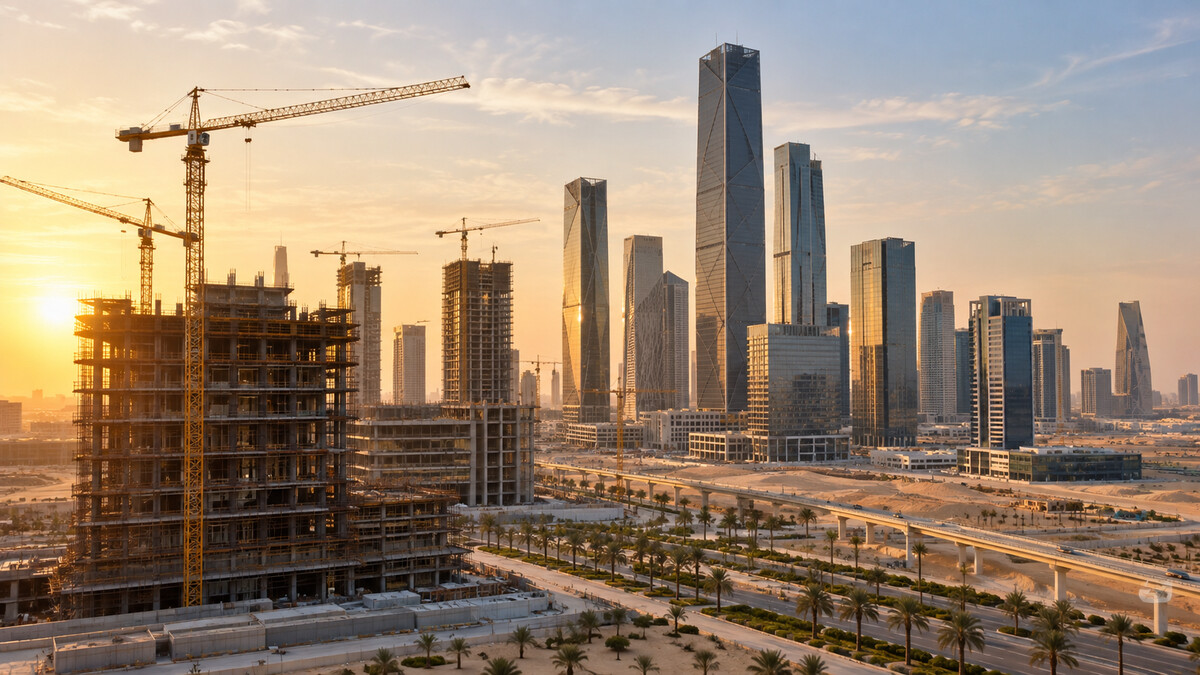
The scale and complexity of projects such as Neom introduce execution risk, Moody's noted, but phased investment and tighter oversight should support delivery. Phasing is doing heavy lifting in that sentence: it is the mechanism by which an unfinanceable whole becomes a sequence of financeable parts, and by which oversight can be applied gate by gate instead of promise by promise.
The funding channels through which the SR8 trillion must travel are already visible:
- Direct PIF investment and co-investment vehicles that anchor private partners inside giga-projects;
- Bank credit, currently the fastest-growing and most stretched channel;
- Corporate bond and sukuk issuance, which more than doubled in a single year;
- Equity market listings by national champions and private companies;
- Mortgage securitization, opened in August 2025 with the Kingdom's first residential mortgage-backed security;
- Foreign funding and syndicated loans, whose share of bank liabilities has nearly doubled since 2020.
Banks are funding the transition — and stretching to do it
The banking report is the most candid of the three. Strong credit demand linked to Vision 2030 projects and mortgages has outpaced deposit growth, pushing the sector's loan-to-deposit ratio above 100% for the first time since 2021 and sustaining reliance on alternative funding. Domestic deposits are increasing, Moody's observed, mainly supported by inflows from government entities and large companies, but credit demand continues to grow at a faster pace. A banking system whose deposits are substantially recycled state money is, in effect, lending the diversification program back to itself — efficient while oil revenue flows, fragile if it stops.
The capital-markets response has been rapid. Total bank issuance reached SR56 billion ($14.93 billion) in 2024, up from SR21 billion in 2023, with similar levels expected in 2025 before easing as loan and deposit growth re-align. The Saudi Central Bank (SAMA) has moved to bolster resilience, introducing a 100-basis-point countercyclical capital buffer effective in 2026 and monitoring foreign-currency liquidity and stable-funding ratios — steps that could moderate loan growth at some institutions and that mark the first time the regulator has deliberately leaned against the diversification credit boom.
The mortgage market's new plumbing
On the household side, the Saudi Real Estate Refinance Co. (SRC) is easing liquidity pressures: its acquired portfolio has risen to about 4% of the mortgage market, and the Kingdom's first residential mortgage-backed security launched in August 2025, initially for local investors. Securitization matters here because mortgages are the longest-dated assets on bank balance sheets and the least compatible with short deposit funding; every percentage point of the mortgage book moved off banks and into investors frees lending capacity for projects.
The funding mix carries its own risks. Moody's pointed to a near-doubling of foreign funding as a share of bank liabilities since 2020 and to the banking system's net foreign-asset position turning negative in 2024. While the agency sees a loss of confidence as unlikely over the next 12 to 18 months, it warned that an abrupt shift could pressure renewals, and recommended measured diversification by tenor and geography. A growth model financed increasingly abroad is, by definition, more sensitive to how the Kingdom is priced from abroad.
The grid is the tightest bottleneck
If banks are the stretched channel, utilities are the heaviest. The Kingdom's energy mix targets a 50/50 split between renewables and gas by 2030, and Moody's estimates at least SR750 billion of sector investment across 2019 to 2030. The National Renewable Energy Program (NREP) has launched roughly SR440 billion of projects since 2019, and the Ministry of Energy plans to tender about 130 gigawatts of renewable capacity by 2030. The gap between ambition and installed base is the story: as of mid-2025, renewables accounted for around 9 GW, about 10% of total generation capacity.

Saudi Electricity Co. (SEC), the sole transmitter and distributor, is accelerating grid expansion and interconnections and expects its regulated asset base to grow with elevated capital spending — rising from an average of SR29.4 billion per year since 2019 to about SR50 billion to SR55 billion annually in 2025–30. Higher investment needs will strain free cash flow and liquidity, though a supportive regulatory framework and increased indirect subsidies — SR10.8 billion in 2024, or 12% of revenue — provide offsets. Every gigawatt of new renewable capacity, in other words, arrives on a grid whose owner is spending close to twice its historical rate, and every giga-project that powers up adds load to the same wires.
The fiscal math of diversification
The sovereign report closes the circle. Moody's expects the authorities to keep diversification outlays relatively high even as oil prices soften, leading to moderate fiscal deficits and a rise in government debt to more than 36% of GDP by 2030 from about 26% at end-2024. A ten-percentage-point increase in public debt is, by global standards, a modest price for a structural transformation; the analytical point is that it is a deliberate one. The deficits are not the residue of a failed consolidation but the financing cost of keeping the non-oil machine at speed through a soft oil cycle, and of refusing to let the funding gap become a construction stop.
That choice also disciplines the forecast. Debt at 36% of GDP remains manageable precisely because non-oil growth widens the denominator and, over time, the non-oil revenue base that services the debt. If commercialization lags construction, the same deficits stop buying growth and start buying only leverage — which is why the debt path and the commercialization path are, in substance, a single indicator.
Corporates and capital markets grow up with the economy
A separate Moody's report on non-financial companies found that investment and reforms are lifting multiple non-oil sectors — hospitality and retail, manufacturing, mining and real estate among them — even as borrowing needs rise and credit outcomes diverge. Divergence is the healthy part of that sentence. A decade in which every borrower looks equally strong would suggest subsidies doing the work; a decade in which winners and losers separate suggests a market forming.
Across capital markets, Moody's expects more Saudi corporates to tap equity and debt as regulatory upgrades broaden participation, with national champions and private companies aiming to balance expansion with prudent leverage. That trend, the agency said, should gradually deepen the domestic market, diversify funding sources and support a more resilient financing ecosystem. It is the quietest of the three reports and possibly the most important: a diversification program financed by one bank system and one sovereign fund is a concentration risk; the same program financed by a deep domestic market is an economy.
What to watch: five signals the machine is working
- Renewable tender cadence — whether annual awards keep pace with the roughly 130 GW pipeline implied by the 2030 target, from a base of about 9 GW in mid-2025.
- The loan-to-deposit ratio — a sustained retreat from above 100% would show deposits catching up with project credit; a further rise would signal deeper reliance on foreign funding.
- The debt trajectory against the 36%-of-GDP marker for 2030, read alongside oil prices: deficits that hold while the barrel softens confirm the counter-cyclical design rather than a loss of control.
- Commercialization evidence at flagship destinations — occupancy, ticket sales and retail revenue rather than contract awards and construction milestones.
- Private co-investment ratios around PIF vehicles, the only metric that can confirm whether the SR7 trillion private gap is actually closing.
Bottom line
Moody's October 2025 outlook describes an economy that has already crossed the hardest threshold: non-oil growth is no longer a promise requiring belief but a range requiring delivery. The 4.5%–5.5% corridor is affordable, financeable and, on the agencies' own numbers, increasingly consensus. What it is not is automatic. The SR8 trillion bill, the loan-to-deposit ratio above 100%, the 9 GW of renewables against a 130 GW ambition and the debt path to 36% of GDP are the four gauges on the dashboard of the Saudi decade. If commercialization keeps pace with construction, the range holds and the debt buys a genuinely diversified regional economy. If it does not, the same numbers describe a very expensive construction site. The decade will be decided not by the forecast but by the gates between now and 2030 — and by who is standing on the other side of them with capital to deploy.
Latest Reports
Ancient Fortresses and Museums of Western Uzbekistan
Qatar LNG expansion: readiness, financing and the production test
Tianwan 7: first electricity and commissioning
Genentech breaks ground on its Hillsboro expansion

RZD changes return fees for tickets purchased from December
Why available capital does not close every defence supply gap
Partner reports
 Ageas agrees Esure acquisition to widen UK insurance distribution
 Uzbekistan’s Western Rail Corridor and the Journey to Khiva
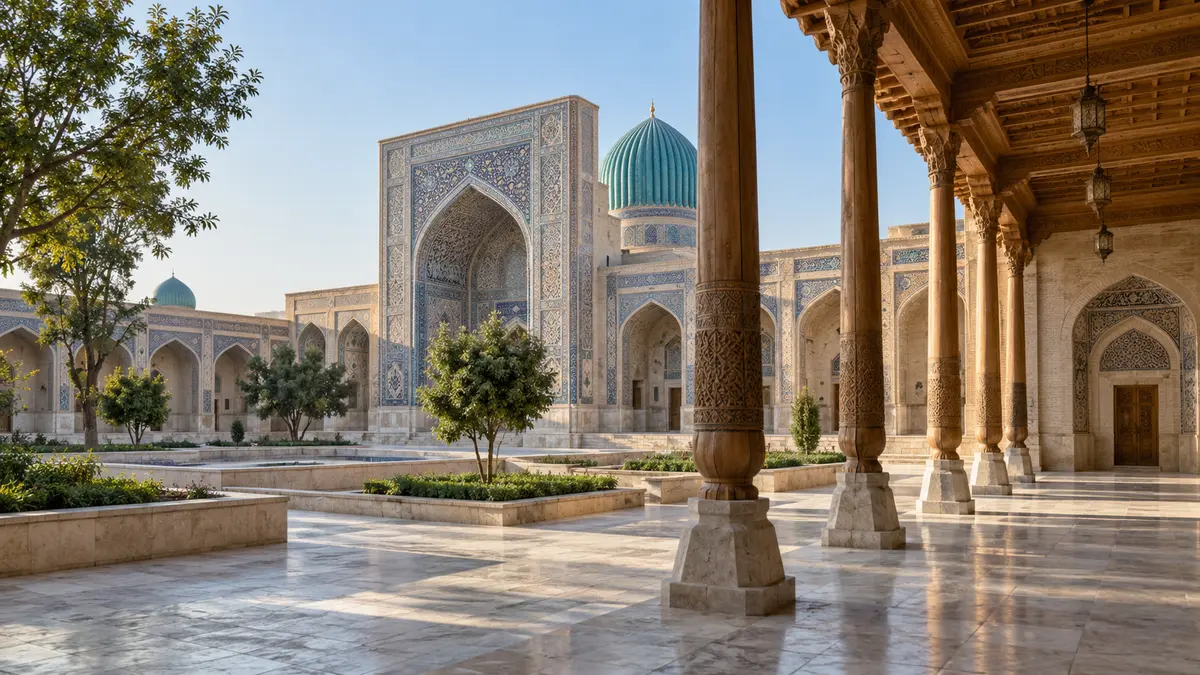 Imam al-Bukhari’s Heritage and Samarkand’s Pilgrimage Landscape
 Nilu and Sangardak: Village Tourism in Surkhandarya
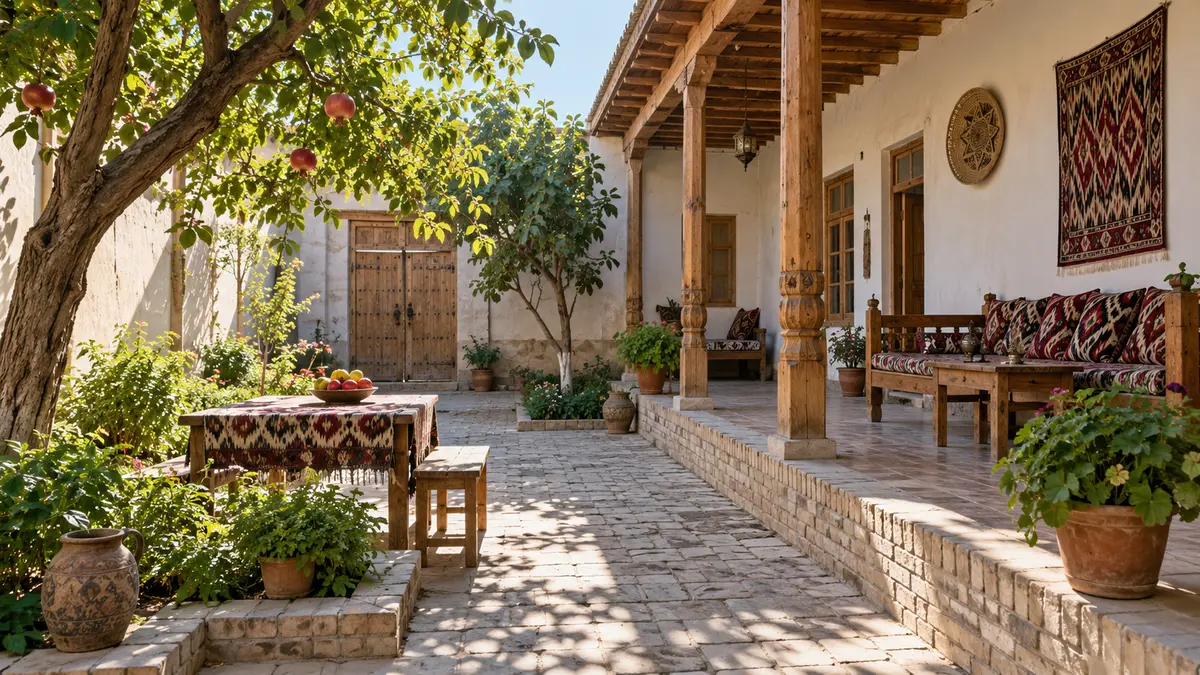 One Day in Kasri Orifon: Bukhara’s Pilgrimage Village
 Bukhara’s Biennale: Contemporary Art in Historic Spaces
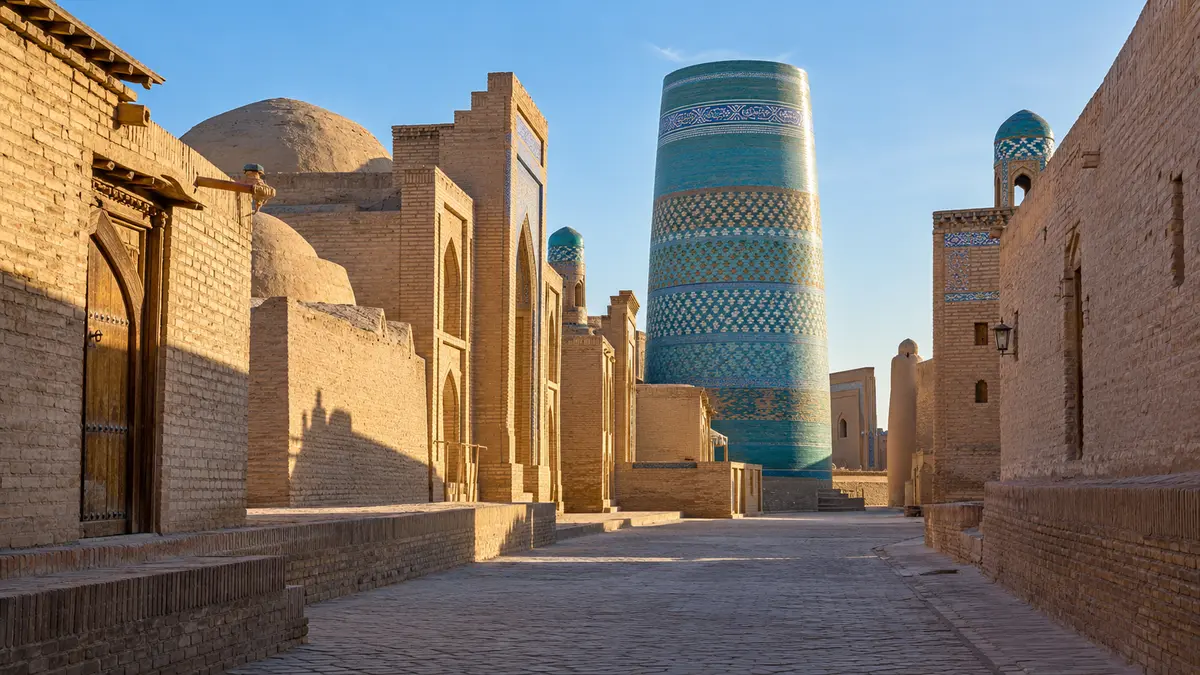 Khiva’s Walled City: Architecture, Palaces and Living Traditions
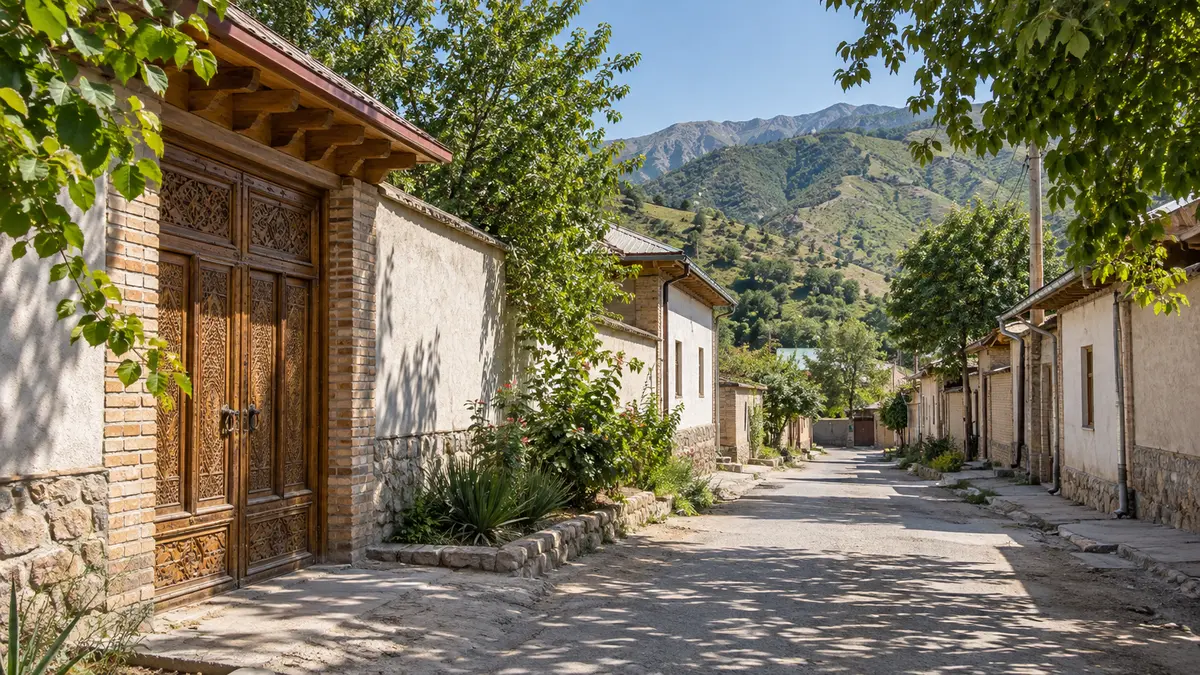 Parkent’s Chashma Village: Folk Traditions Near Tashkent
 Uzbek Food and Cultural Traditions: From London’s Festival to Regional Tables
 Tashkent’s Museums, Mahallas and New Cultural Spaces
 Uzbekistan's Tourism Expansion: Heritage Cities, Living Crafts and Regional Routes
 Ancient Fortresses and Museums of Western Uzbekistan
 LH Marthinusen opens R32 million Germiston fan factory
 Rishtan’s Craft Neighbourhood and the Fergana Valley
Leave a comment