
Russia's First Crypto Mining Rulebook: Registries, Bans and the Grey Zone
For three and a half years, one of the world's largest cryptocurrency markets has operated in a legal vacuum. The law "On Digital Financial Assets" (259-FZ), in force since January 2021, recognised digital currency as property and allowed citizens to own it, but banned payments in crypto for goods and services — and said almost nothing about the industry that produces those coins. In late April 2024, deputies of the State Duma finally tabled a new version of a bill designed to fill that gap: it would legalise cryptocurrency mining under strict state supervision and, at the same time, prohibit the organisation of crypto circulation inside the country.
Anatoly Aksakov, head of the Duma's financial market committee and one of the authors of the bill, said the document could be adopted during the spring session, with its key provisions entering into force as early as September 2024. That schedule would make Russia one of the first major economies to write a complete rulebook for mining — a striking turnaround for a jurisdiction where the central bank spent years arguing for outright prohibition.
This deep dive reconstructs the architecture of the bill, the eighteen-month compromise behind it, and what industry experts, lawyers and analysts told Forbes about who wins, who loses, and which parts of the market will simply move further into the shadows.
An eighteen-month compromise between the Finance Ministry and the central bank
The road to the April 2024 text was unusually long. The first version of the mining bill was submitted to parliament back in November 2022, yet it never even reached a first reading. The reason was interdepartmental wrangling: the Finance Ministry, the Bank of Russia, Rosfinmonitoring and the security services spent more than a year negotiating every paragraph, and their starting positions were nearly opposite.
The Finance Ministry favoured soft regulation. It wanted to bring mining out of the grey zone, tax it, and eventually allow digital currencies to be used for settlements. The central bank and the law-enforcement bloc pushed in the other direction, seeking a de facto ban on crypto services inside the country. Osman Kabaloev, head of the banking regulation division at the Finance Ministry's financial policy department, admitted at the end of February 2024 that the coordination had proceeded "in long disputes and debates with the Central Bank".
The version tabled at the end of April became the compromise. The most visible concession to the central bank's line is the ban on organising crypto circulation; the most visible concession to the Finance Ministry is that mining itself becomes legal and regulated rather than prohibited. Even Elvira Nabiullina, the longtime sceptic-in-chief, signalled the shift in April 2024 during an appearance in the State Duma: "We have long agreed that digital currencies can be used for foreign-trade settlements… It seems desirable to adopt this regime faster, run it in, and see what can be carried over into general legislation and what cannot," she said.
Aksakov frames the bill as hygiene rather than repression. "The goal is to make the cryptocurrency market in Russia civilised, admitting only conscientious participants — those who do not raise questions from the regulator. It is also important that gaps in the legislation no longer allow crypto to be used on Russian territory for dubious financial operations, paying for drug trafficking, financing terrorism and so on," he told Forbes.
How the mining registry would work
The core mechanism of the bill is a permission model built around a state registry. Nothing is banned outright; instead, legality is conditioned on registration, reporting and compliance with limits set by the government.
Companies and sole proprietors: legal only inside the registry
Legal entities and individual entrepreneurs (IPs) would be allowed to mine cryptocurrency on Russian territory only after being included in a special registry. Mining outside the registry would become, in effect, an illegal business activity. The government, in coordination with the Bank of Russia, would regulate the industry — and would receive a powerful lever: the right to prohibit mining in specific regions.
Individuals: a pool exemption inside energy limits
Private miners would be exempt from mandatory registration under two combined conditions. First, they must not exceed energy-consumption limits established by the government. Second, they must mine as part of a so-called mining pool — an association that combines the computing power of several devices belonging to different owners. In practice, this creates a legal lane for hobby-scale mining while pushing larger private operations toward formalisation.
Reporting to the financial watchdog
Registration, however, is not the only obligation. All miners without exception — registered companies and exempt individuals alike — would have to report to Rosfinmonitoring, the federal financial monitoring service, on the cryptocurrency they receive, and to submit the address-identifiers of their wallets. The government's authorised body would also gain the right to request information about received cryptocurrency from miners, their counterparties and financial intermediaries such as banks.
The key provisions of the bill can be summarised as follows:
- a state registry for corporate and individual-entrepreneur miners, with legal status conditional on inclusion;
- an exemption for individuals mining within government-set energy limits and only through mining pools;
- mandatory reporting to Rosfinmonitoring on mined coins and wallet identifiers for every miner;
- the right of the authorised state body to request data from miners, counterparties and banks;
- sale of mined cryptocurrency exclusively through foreign infrastructure;
- a government right to ban mining in particular regions;
- a ban on organising cryptocurrency circulation within Russia, with narrow exceptions;
- a ban on advertising and promoting crypto services, platforms and the coins themselves.

Selling only offshore: the ban on domestic crypto circulation
The second pillar of the bill is far more restrictive. Today Russian legislation prohibits only crypto payments for goods and services. The new text would go much further and prohibit the organisation of cryptocurrency circulation in Russia — that is, the business of running buy-sell transactions and providing services around them.
The prohibition would apply whenever one side of a transaction is a Russian company, a subsidiary of a foreign company, or a Russian tax resident — defined as a person who spends more than 183 days a year in the country. Organisers of such transactions would also be barred from using Russian information infrastructure: domain names and network addresses in the national zone, as well as systems, technical means and software-hardware complexes physically located on Russian territory. That definition is borrowed directly from 259-FZ, the digital financial assets law.
Two exceptions are carved out. Miners themselves may continue to operate, and the Bank of Russia's test platforms — experimental legal regimes for cross-border settlements — remain permitted. Everything else, from exchanges to exchange services, falls under the ban. On top of that, the bill prohibits advertising and promotion of such services, of the platforms themselves, and of individual cryptocurrencies.
Combined with the rule that mined coins may be sold only through foreign infrastructure, the design is deliberate: production is legalised and registered inside the country, while the trading layer is pushed entirely outside it. Russia keeps the electricity-intensive part of the value chain under supervision and taxation, and exports the market-facing part.
Regional bans and the energy question
The right to prohibit mining in separate regions is not a theoretical clause. Mining is one of the most electricity-hungry activities in the digital economy, and in several energy-deficit territories it already competes with households and industry for capacity. A government decree could redraw the industry's map overnight, forcing registered miners to relocate their farms or shut them down.
Energy is already the main fault line in the courts. According to a review of case law, the bulk of mining-related litigation concerns recovery of funds from individuals for excessive electricity consumption. Yet power suppliers frequently lose these cases, notes Denis Krauyalis, counsel in the dispute resolution practice at the Tomashevskaya & Partners law firm: they fail to prove that the electricity was consumed for commercial purposes. A miner appearing in the state registry would settle that question once and for all — the commercial nature of consumption becomes documented.
But the same registry, Krauyalis argues, creates a new economic risk. The prospect of a regional ban, with the associated relocation, plus possible increases in electricity tariffs for miners, "raises the question of whether running this business in Russia remains advisable". In other words, legalisation removes legal risk but may add cost and location risk that the grey market never priced in.

What the industry says is missing
The crypto industry received the bill critically. The main complaint is structural: the text contains prohibitions and obligations, but almost nothing that would stimulate the industry to come into the light voluntarily.
"Business has a general doubt about whether such a bill is needed at all," says Andrey Mikhalishin, member of the expert council under the Duma working group on crypto-market regulation and chief executive of the company Tsifrovye Platezhi (Digital Payments). He points out that the industry had tabled its own alternative package through the expert council: introduce dedicated OKVED activity codes so that crypto companies and sole proprietors could register legally and pay taxes, and allow the sector to set professional standards through self-regulation — a self-regulatory organisation, or SRO. "But the expert council was simply not invited to discuss the new version of the bill," Mikhalishin says. The proposals on OKVED codes and an SRO went unanswered.
Yuri Priprachkin, head of RAKIB, the Russian Association of Cryptocurrency Industry and Blockchain, agrees that the bill will weigh on the market. "With regulation in place de jure, the industry will de facto remain uncontrolled. Facing prohibitions without obvious material bonuses for whitening, players will more likely try to avoid registration, avoid submitting wallet data, and ultimately avoid taxation," he argues. The logic is simple: if legalisation brings duties but no benefits — no access to domestic banking, no domestic clients, no advertising — the rational response for much of the market is to stay in the shadows.
Technical imprecision in the text
Experts polled by Forbes also flag drafting defects that could complicate enforcement. The requirement to submit wallet address-identifiers ignores a basic property of blockchain technology: a single wallet can generate a multitude of addresses, so a static list of identifiers provides little transparency in practice, Mikhalishin notes.
The definition of mining is equally awkward. The bill describes it as activity involving "mathematical computations", whereas miners in fact search for a hash — a unique string produced by hashing, the conversion of arbitrary data into a fixed-length character sequence according to a set algorithm, explains Elizaveta Lobuteva, a lawyer at Digital & Analogue Partners.
More consequential is the treatment of staking. Rewards for validating transactions are earned not only through mining but also through staking — passive income generated by holding a crypto asset and participating in network consensus. "It turns out the drafters have merged mining and staking into one concept. And it is still unclear whether that is a deliberate choice, intended to extend the regulation to staking, or simply unsuccessful legal technique," Lobuteva says.
Aksakov, for his part, concedes that dedicated OKVED codes for miners and industry self-regulation may appear "as experience accumulates under the new legislation", and expresses confidence that the remaining imprecisions can be removed while the bill moves through parliament.
The Forex precedent: what happens to exchanges and brokers
What does the circulation ban mean for companies that serve crypto traders? Formally, less than it appears. "For crypto exchanges, brokers and exchangers, virtually nothing changes — they do not officially operate in Russia anyway," Lobuteva observes.
The informal effect, in her colleague Mikhalishin's assessment, is worse. "The bill does not allow these businesses to legalise or give them any incentive to pay taxes in Russia. Those who worked on domestic information infrastructure will move to servers, clouds and domain zones of other jurisdictions, obtain licences there, and remain in the grey zone. Moreover, companies may relocate key programmers and technical staff abroad to protect them and themselves from possible problems — contributing to an outflow of human capital. In short, the new bill will add dark colours to an already grey zone of business," he says.
Russia has run this experiment before. When the central bank introduced licensing for Forex dealers, only a handful of companies obtained licences and joined the SRO. The rest either re-registered in offshore jurisdictions or simply continued operating without any registration at all. The regulator then spent years fighting the grey market through Roskomnadzor, which blocked the domain names, IP addresses and page URLs of unlicensed dealers and entered them in the register of prohibited sites, and through law-enforcement agencies, which closed physical offices. The bill's authors are effectively betting that crypto can avoid repeating that trajectory — though the mechanisms of the Forex story, from offshore migration to blocking, are all present in the new text.
Georgy Okromchedlishvili, senior analyst at ITSWM, expects the end of "independent exchanges and exchangers" physically located in Russia. "Most likely, those who provide Russians with all kinds of black and grey crypto schemes will either close down entirely or be forced to master traditional schemes such as bank cash-out," he predicts.
The advertising ban and legal uncertainty
One of the least-parsed provisions is the ban on advertising. Yulia Privalova, head of the FinTech & Crypto practice at the DRC law firm, argues it could seriously complicate open client acquisition — and therefore investment in innovation — for crypto-infrastructure companies that would otherwise be willing to work legally.
Worse, the bill offers no interpretation of what exactly counts as advertising or as offering cryptocurrency to an "unlimited circle of persons". That ambiguity potentially touches analysts, journalists, specialists in SMM, PR and advertising promotion, crypto analysts, bloggers and influencers. "This could lead to legal uncertainty and potential court proceedings," Privalova warns. A commentary, an educational post or a market review could, under an aggressive reading, be construed as promotion — and no one can currently say where the line runs.
What changes for the 20 million private wallet holders
For individuals, the new version contains no direct prohibitions. Private owners can still buy and sell cryptocurrency and can still use it to move money abroad. The only negative for them, Forbes' interlocutors agree, is a probable narrowing of platform choice once the ban on organising circulation takes effect.
"People will have to look for workarounds, possibly through the countries of the Eurasian Economic Union. After all, many Russian clients already trade through Kazakh brokers on global markets," Okromchedlishvili notes — a route that runs through Kazakhstan and other EAEU jurisdictions where crypto services remain legal.
Pripachkin puts the scale of that audience at roughly 20 million private crypto wallets in Russia — economically active, working-age and financially capable citizens. "Instead of building a transparent legal infrastructure for mining and crypto transactions inside the Russian perimeter, we are sending everyone abroad, where we cannot control anything," he says. That is the central paradox of the compromise: a law designed to bring the market under supervision may export its most valuable segment — customers and talent — to jurisdictions the Russian regulator cannot reach.
Looking ahead: what to watch
As the bill moves toward its readings, several practical questions will determine whether the compromise holds:
- the speed of adoption — Aksakov's spring-session target implies entry into force of key provisions in September 2024;
- the design of the miners' registry and the government's energy-consumption limits for individuals;
- which regions receive mining bans first, and whether tariffs for registered miners rise;
- whether OKVED codes and an SRO for the crypto industry appear as follow-up measures;
- how the mining-staking conflation is resolved in the final text;
- how broadly the advertising ban is interpreted and enforced against media, analysts and influencers;
- whether the EAEU route becomes the de facto domestic trading channel for Russian users.
The bill of April 2024 does not resolve any of these questions — it creates the framework in which they will be decided. Its significance is that Russia has moved, for the first time, from arguing about whether to regulate crypto at all to arguing about the design of the regulation. The industry's verdict, as captured by Forbes' original reporting, remains sceptical: a rulebook built almost entirely from prohibitions risks regulating only the part of the market that never intended to hide — while everyone else adapts.
Latest Reports
Ancient Fortresses and Museums of Western Uzbekistan

Qatar LNG expansion: readiness, financing and the production test

Tianwan 7: first electricity and commissioning

Genentech breaks ground on its Hillsboro expansion
RZD changes return fees for tickets purchased from December

Why available capital does not close every defence supply gap
Partner reports
 Ageas agrees Esure acquisition to widen UK insurance distribution
 Uzbekistan’s Western Rail Corridor and the Journey to Khiva
 Imam al-Bukhari’s Heritage and Samarkand’s Pilgrimage Landscape
 Nilu and Sangardak: Village Tourism in Surkhandarya
 One Day in Kasri Orifon: Bukhara’s Pilgrimage Village
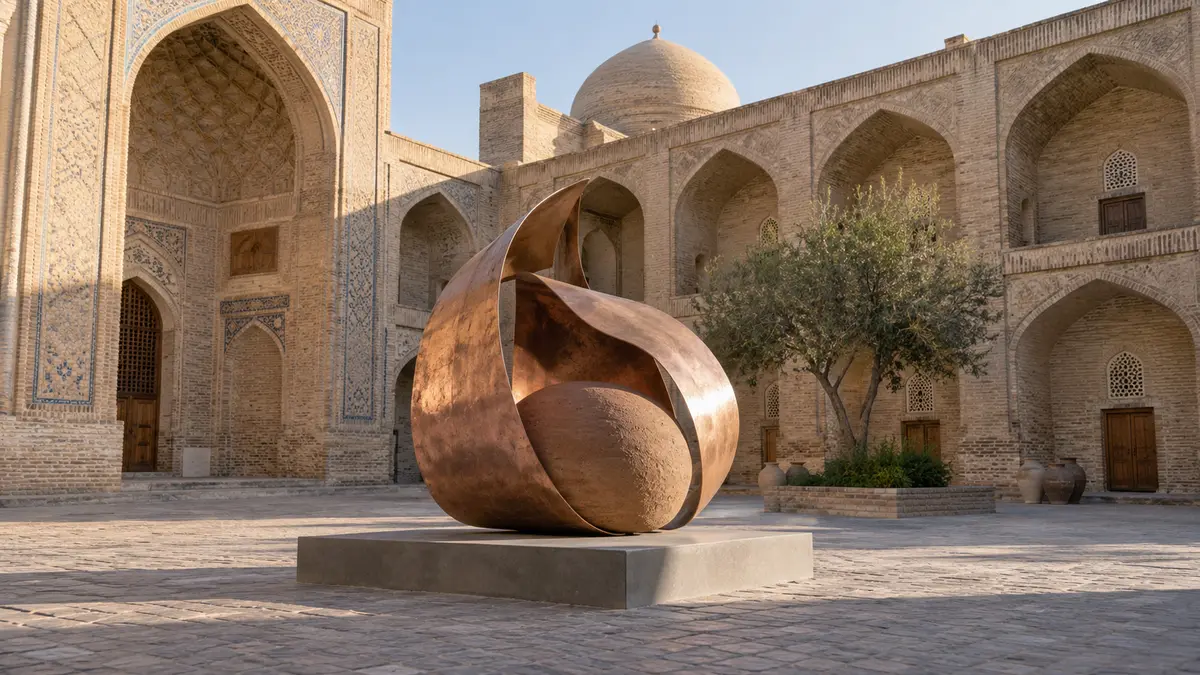 Bukhara’s Biennale: Contemporary Art in Historic Spaces
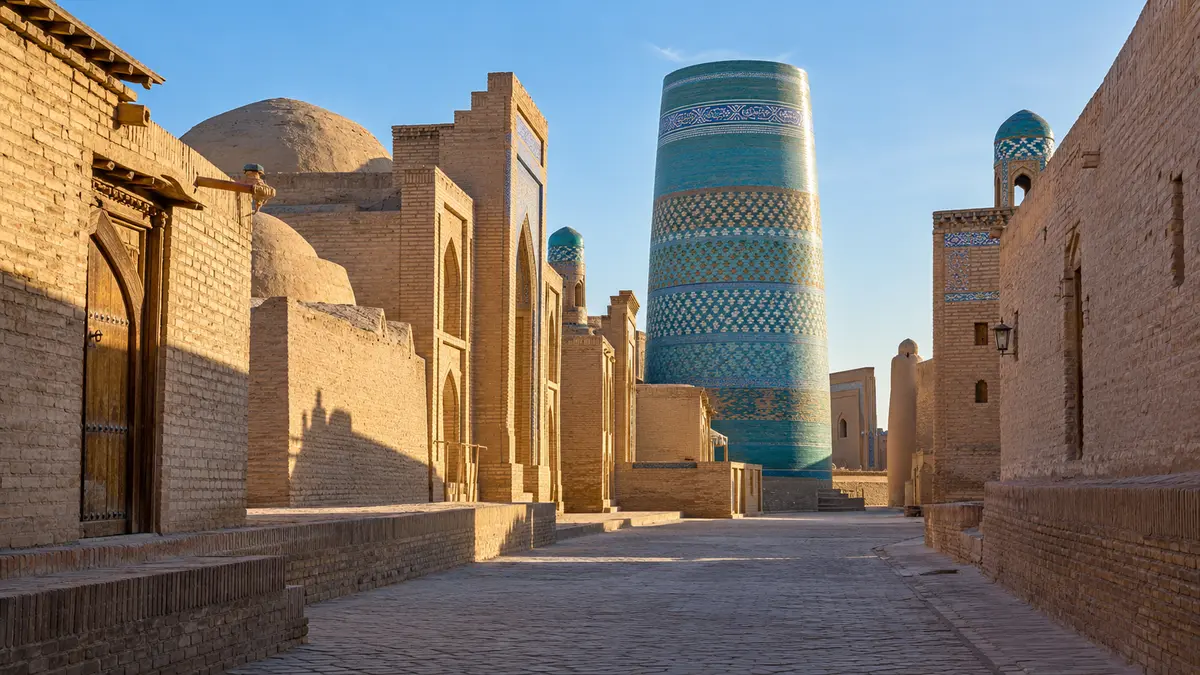 Khiva’s Walled City: Architecture, Palaces and Living Traditions
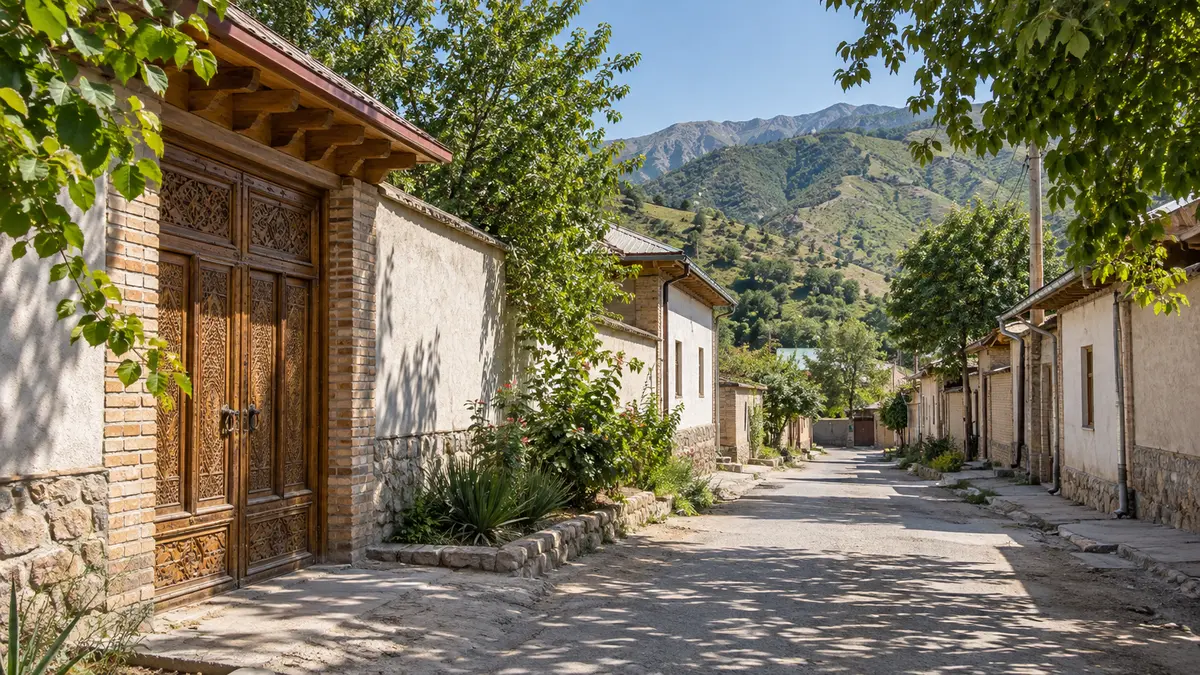 Parkent’s Chashma Village: Folk Traditions Near Tashkent
 Uzbek Food and Cultural Traditions: From London’s Festival to Regional Tables
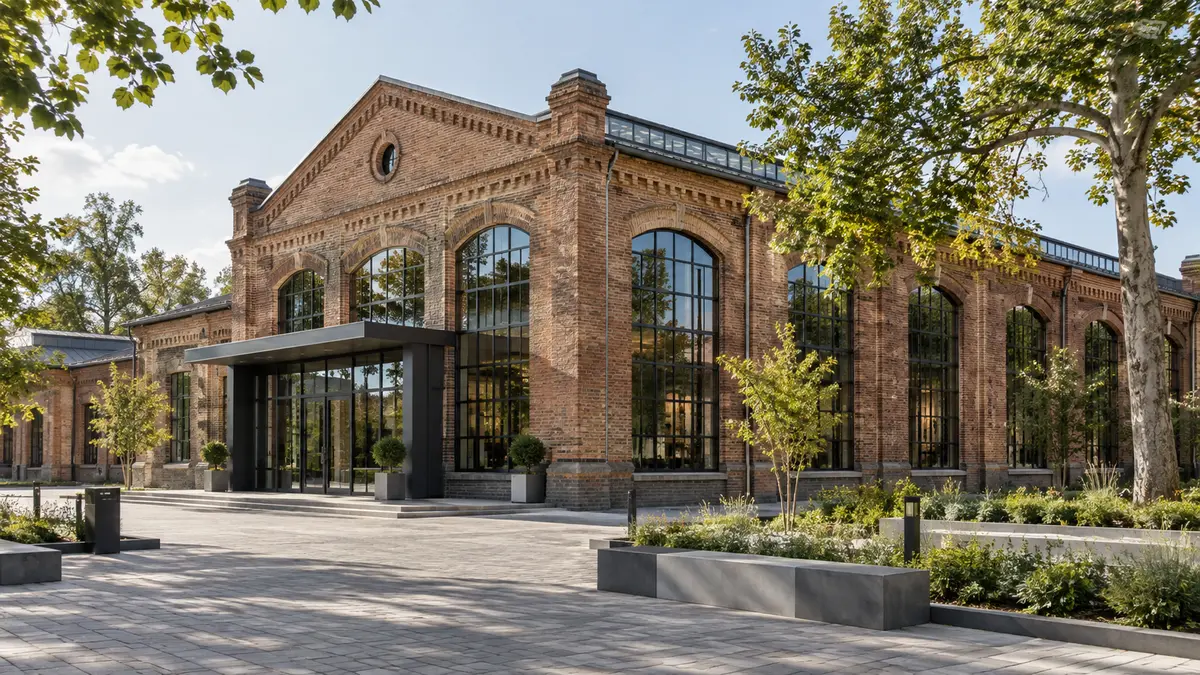 Tashkent’s Museums, Mahallas and New Cultural Spaces
 Uzbekistan's Tourism Expansion: Heritage Cities, Living Crafts and Regional Routes
 Ancient Fortresses and Museums of Western Uzbekistan
 LH Marthinusen opens R32 million Germiston fan factory
 Rishtan’s Craft Neighbourhood and the Fergana Valley
Leave a comment