
From Plateau to Ten Tonnes: Inside GV Gold's Growth Playbook as Record Prices Rewrite Mine Economics
For three consecutive years, GV Gold held its gold production on a plateau of roughly 7.5 tonnes while it built the Svetlovsky mine in the Irkutsk region. In 2026 that plateau is scheduled to break: the company's working target is about 10 tonnes of gold, and the newly commissioned asset is expected to supply 30–35% of it. In an exclusive interview with Interfax published on 19 August 2026, GV Gold's chief executive Sergei Gostev explained how the miner intends to convert a record gold price into a longer reserve life, a second large processing plant and, eventually, outside capital — and why newcomers seduced by the price rally should understand the industry before they buy a licence.
The conversation is more than a production update. It is a rare, unusually detailed account of how a mid-sized gold company in Russia allocates capital between brownfield expansion, geological exploration, refractory-ore logistics and tailings reprocessing at a moment when the price of bullion has rewritten the economics of almost every asset class in the sector. This analysis unpacks the numbers behind the interview and the strategy they reveal.
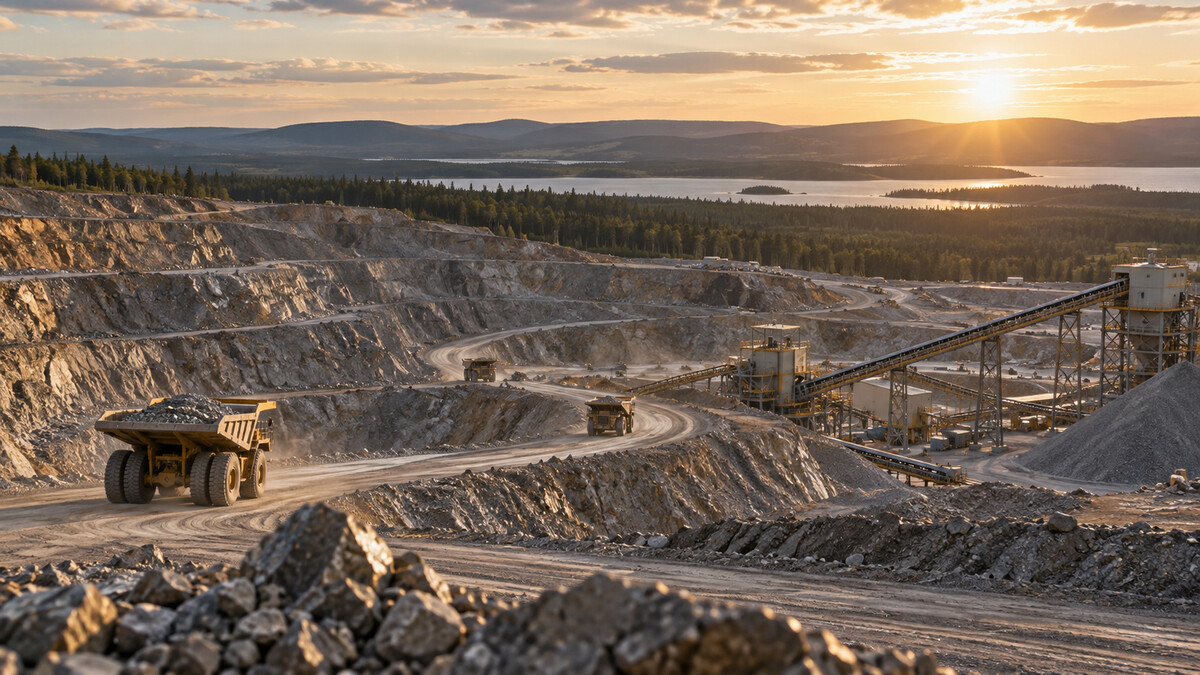
From a three-year plateau to ten tonnes
In 2025 GV Gold produced about 7.5 tonnes of gold, essentially the same level as in 2024. That flat line was not stagnation but construction: while the Svetlovsky mine was being built, the company deliberately kept its existing assets at a steady pace. Since the launch of Svetlovsky in 2025, more than 2 tonnes of gold have already been produced there, and the plant has been ramped up to its design parameters. The task now, in Gostev's words, is to confirm that those parameters are stable before pushing further.
The 2026 plan is a step change rather than an incremental gain. The ballpark figure is 10 tonnes, with Svetlovsky contributing around a third of the total. The plant processes 3.5 million tonnes of ore per year, and management believes that throughput can be lifted later without major construction — a practice the company has used before at its older assets. The debottlenecking review covers the whole chain, not just the recovery plant: the mining and transportation complex and the adequacy of reserves are checked in parallel, because a faster mill is useless without ore to feed it and trucks to deliver it.
Why stabilisation comes before speed
The sequencing is deliberate. A newly commissioned plant that is pushed beyond its confirmed parameters can generate impressive quarterly numbers and then years of reliability problems. GV Gold's stated order of operations — stabilise, verify, then accelerate — is a conservative answer to a bullish market, and it explains why the company refuses to treat the 10-tonne target as a formality. The plateau years bought the company a discipline that the current price environment actively discourages.
Krasny: the 100-tonne decision that can wait
The most consequential item in the portfolio is Krasny, the Irkutsk region project the company has consolidated and now calls its next development priority. Gostev places it among GV Gold's largest deposits and describes it as the most explored site in the portfolio, with more than 100 tonnes of gold in the ground. The plant is expected to resemble Svetlovsky in scale — 3.5 million tonnes of ore per year, possibly more later — and the investment volume is expected to be comparable as well, adjusted for inflation.
Yet no investment decision has been taken, and the interview makes clear why. Two preparatory steps come first: listing the reserves on the government balance sheet and completing pre-FEED work. Only after the company reaches a stable 10 tonnes without Krasny will the board move to the active phase. Based on GV Gold's own construction experience, about three years pass between an investment decision and the launch of a plant, which means the earliest realistic contribution from Krasny lands at the end of the decade.
One economic argument stands out. At Svetlovsky, a large share of the capital went into logistics — roads and energy — because the site was remote. Krasny sits closer to existing road infrastructure, so the company expects lower infrastructure spending and simpler technical solutions for a plant of similar capacity. In an industry where access roads and power lines can decide a project's fate, that difference is not a detail; it is part of why Krasny can afford to wait its turn.
Refractory ore and the China route
Not all of GV Gold's ounces are created equal. At Taryn, the company's Yakutian hub built around the Drazhnoye deposit, roughly half of the processed ore is refractory: the gold is locked in the mineral matrix and cannot be recovered economically on site. The resulting concentrate is exported to China for processing, which turns a mining story into a logistics story. Every tonne of concentrate has to travel, and the cost and reliability of that journey sit inside the mine's economics.
This is also why the Maltan project, another Yakutian asset with the same refractory ore type, is being treated cautiously. Active exploration is under way at several sites, and for now Maltan is viewed as an additional resource base for Drazhnoye rather than a standalone build. Gostev is explicit about the constraints: Yakutia is logistically harder than the Irkutsk region, concentrate must be transported to processing capacity elsewhere, and energy security — the cost and availability of diesel and the reliability of grid supply — limits how fast remote sites can be developed. Krasny, with its road access and presumably simpler ore, goes first.
Old mines, new economics: Golets Vysochaishy after 2030
The company's founding asset, Golets Vysochaishy, is mature, and for years there was no reason to look deeper: near-surface reserves were enough. The record price changed that calculus. Deeper-level geological exploration has begun and is proving promising, with prospective ore bodies identified below the current pit. If confirmed, the transition to underground mining — the company's first — would extend the asset's life well beyond its original horizon.
Tailings as a price-driven reserve
The second life-extension lever sits in the waste dumps. Decades of operation have accumulated tailings that were previously considered unprofitable. At today's gold price, Gostev says, processing grades of 0.25–0.3 grams per tonne is economically viable where capacity and technology already exist and mining volumes are modest. That is a low grade by any standard, but it is effectively free mining: the material is already dug, crushed and stacked. The company's long-term plans now assume Golets Vysochaishy will still be functioning after 2030 — a statement that would have been hard to defend a few price cycles ago.
The exploration supercycle inside the budget
The clearest signal of where GV Gold thinks the value is lies in its spending mix. Last year the investment cycle was tied to processing capacity; over the next three years it will be tied to geological exploration. The exploration budget has already doubled year on year, and the company is building out its geological service both centrally and at the mines, with an emphasis on team quality rather than headline drilling metres.
The licence portfolio in the Bodaibo district — Botolo-Kharchikha, Ozherelye and Ykanskoye — is viewed as additional resource base for existing processing capacity, the cheapest kind of growth a miner can buy. Between major construction cycles, attention will also go to the Aldan alluvial deposit in Yakutia. The logic is that exploration converts price strength into reserve life, and reserve life is what ultimately supports valuation, borrowing capacity and dividends.

Alluvial gold: small share, deliberate competence
Alluvial production is a stable 5% of the company's output — a modest share that some investors would treat as a divestment candidate. Gostev rejects that framing. Alluvial reserves are straightforward and substantial, dredging is less efficient than open-pit ore mining but still delivers profit and a stable cash flow, and the competence is being reinforced rather than sold: alluvial mining has started at the Pravaya Terrasa site next to Taryn, where three wash plants are already operating, and the Aldan deposit is targeted to reach 1 tonne of production. In a business of lumpy construction cycles, a small predictable cash stream has its own value.
Costs, taxes and the price umbrella
Rising unit costs are usually a red flag. In this interview they are presented as a consequence of success. Cost per gram increases because mining goes deeper, stripping ratios and capital mining works grow, and because the fiscal load rises with the price: on top of the base mineral extraction tax rate of 6%, gold carries a surcharge equal to 10% of the excess of the world price over $1,900 per ounce. The better the market, the heavier the tax per gram of metal sold.
Management's answer is to look at cost comprehensively. The higher price allowed the company to revise the quality of raw material it is prepared to process, extending the life of mine at several deposits, converting off-balance-sheet reserves into balance-sheet reserves and starting to process dumps. Cost per gram rises, but so does the number of grams available over the asset's life — and the margin needed to reproduce the resource base, pay back investments and pay dividends is preserved.
A separate thread of the interview is the budget price of the metal. The company plans its year around $4,000 per ounce and an exchange rate of 75–80 roubles per US dollar, roughly 10,000 roubles per gram; the current market, Gostev says, sits inside those benchmarks — higher in some places, lower in others. He calls forecasting a thankless task but notes both summer and winter cycles of price movement. The more important consequence is different: a high price does not cancel plan B, it multiplies the number of working models. When conditions change, the company is ready to add projects to the portfolio, pause some of them or shift their timing — the variability of plans has grown many times over, and it is precisely this flexibility that has become the main dividend of the record market.
- Depth and stripping: deeper pits and larger capital mining works push cost per gram upward regardless of the price.
- Fiscal drag: the 6% base extraction tax plus a 10% surcharge on the price excess over $1,900 per ounce links the tax bill directly to the rally.
- Company-specific inflation: GV Gold's consumer basket is wages, energy and diesel, not the official consumer price index; diesel generation remains mostly a backup, with grid supply covering the deposits.
- Labour competition: a catastrophic shortage of qualified personnel drives the wage fund up, especially for rotational crews who can move to a higher salary between rotations.
The people problem deserves its own paragraph. Rotational workers leave when a better salary appears, and several rotations may pass before they return for quality of life and team rather than pay. Young specialists demand more from employers than the previous generation did, and geology students must accept that the profession means full field seasons, not sunrises and offices. For a company whose next three years are an exploration programme, the geological labour market is a strategic constraint, not an HR footnote.
Capital: IPO on hold, private money in focus
Svetlovsky was built through a period of high interest rates, and Gostev is blunt that debt financing still does not offer the cheap, long-term resources such projects need. The company is now in a debt-reduction cycle. If construction resumes in about two years, the choice will be between returning to the previous debt level and attracting outside capital — and the interview leaves little doubt about which route looks more realistic today.
An IPO remains technically possible: audits, confirmations and independent studies are part of ongoing preparatory work, and the company insists it must be understandable to any investor. But having watched the equity offerings of peers, management concludes that public markets currently do not raise the level of investment GV Gold needs. Private investment, by contrast, looks like a more predictable source. Interest exists: in this industry everyone watches everyone, and inquiries come from peers and foreign investors alike, including a community of investors in the Commonwealth of Independent States and China. Every one of them, Gostev notes, needs profitable projects — which is precisely what a record price is supposed to provide.
The investment peak for Svetlovsky has already passed, and the next peak will determine the shape of financing. GV Gold is now in a debt-reduction cycle; if construction resumes in about two years, the company will either return to its previous debt level or attract investment. The long horizon before capital markets settle is another argument for a private investor: such a partner arrives for a specific project and a specific cycle, not for a placement quote.
The magnet and the cycle
The warning to newcomers is the interview's sharpest passage. Gold attracts everyone like a magnet, but the investment cycle is not only exploration and construction: it is also design and permitting documentation, infrastructure and energy that not every licence holder has. The belief that reserves can be booked within a year and a plant built within three is, in Gostev's assessment, too rosy. Price volatility cuts both ways: at certain levels some deposits stop being profitable, and banks change their view of entire districts. Understanding the cycle, not admiring the price chart, is what separates operators from spectators.
The overall tone of the interview on industry risks is telling as well: labour shortages, energy constraints at remote sites, licence discipline and the tax surcharge are named without discounts for favourable conditions. It is a rare genre for a bull market — a conversation about a high price as an obligation to work more disciplined, not as a gift that will forgive any mistake.
Regulation: order in subsoil use, with a request for objectivity
The regulatory backdrop for placer mining and environmental compliance has tightened, and GV Gold, as a large subsoil user, has long been under close supervisory attention. The company says it meets the strict requirements of subsoil and environmental legislation and does not touch relict forests. Its request to the state is narrower: deadwood currently classified as commercial forest should be reclassified objectively so that licensed work can proceed and reserves can grow. On the wave of licence revocations for missed deadlines, the position is similarly balanced — holding a licence without fulfilling its agreements is wrong, but the circumstances behind a missed deadline deserve an objective review when inventories are taken.
For an investor these formulations matter more than they seem: licence discipline directly determines whether a licence portfolio turns into balance-sheet reserves or into a series of disputes with the regulator. GV Gold chooses the position of an exemplary subsoil user that asks not for indulgences but for predictable forest-classification rules and an objective review of circumstances during inventories.
What to watch
- Stability of the 10-tonne run-rate in 2026 and the actual share delivered by Svetlovsky, the first test of the ramp-up thesis.
- Completion of reserve listing and pre-FEED at Krasny, and the timing of the investment decision that follows a stable plateau.
- Exploration results at Maltan and at depth at Golets Vysochaishy, which decide whether Yakutia gets a second hub and whether the company's first underground mine appears in the plan.
- Budget assumptions: the company plans around $4,000 per ounce and an exchange rate of 75–80 roubles per US dollar, roughly 10,000 roubles per gram; a sustained move below that band would test the project queue.
- The capital event: a private investment round versus a return to debt, with the IPO kept as a technically prepared but distant option.
GV Gold's story is a compact model of how a mid-tier producer behaves when the price does the flattering part of the work. Stabilise the new plant before celebrating it; let the biggest deposit wait until the balance sheet can carry it; spend the windfall on the drill rig rather than the ribbon-cutting; treat waste dumps and deep horizons as reserves the price has unlocked; and keep the capital markets at arm's length until they can actually fund a plant. If the gold price holds anywhere near the company's budget band, this discipline converts a rally into reserve life. If it does not, the same discipline is what keeps the plateau from becoming a cliff.
Latest Reports
Ancient Fortresses and Museums of Western Uzbekistan
Qatar LNG expansion: readiness, financing and the production test
Tianwan 7: first electricity and commissioning
Genentech breaks ground on its Hillsboro expansion

RZD changes return fees for tickets purchased from December
Why available capital does not close every defence supply gap
Partner reports
 Ageas agrees Esure acquisition to widen UK insurance distribution
 Uzbekistan’s Western Rail Corridor and the Journey to Khiva
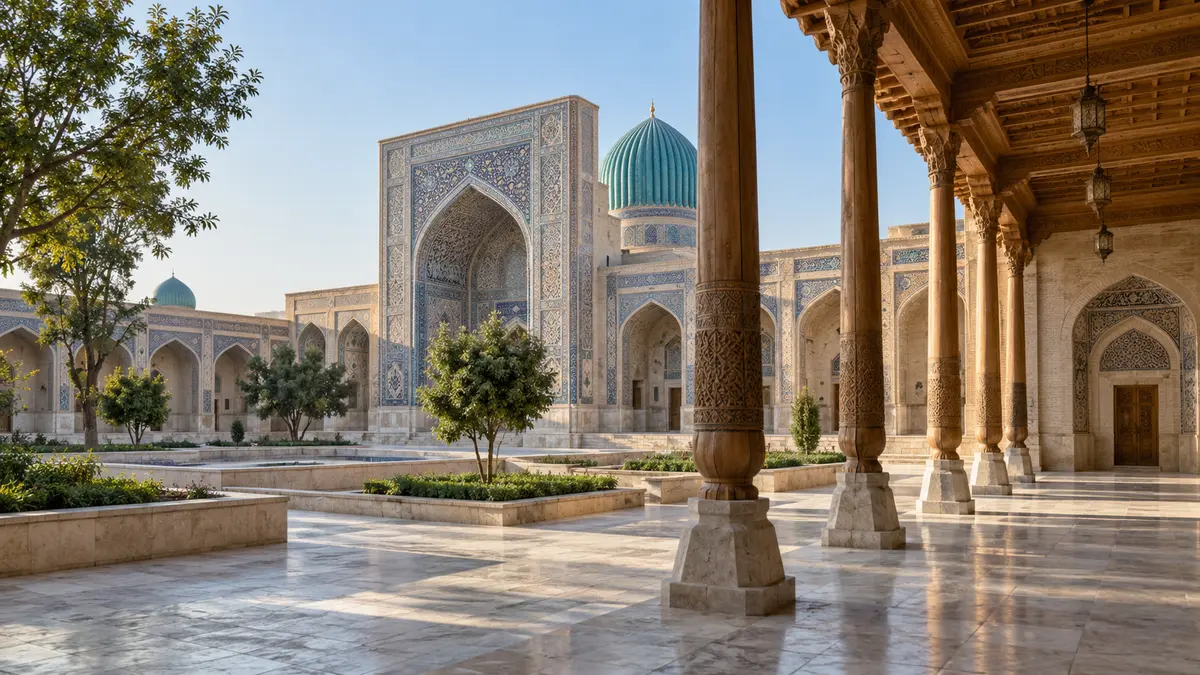 Imam al-Bukhari’s Heritage and Samarkand’s Pilgrimage Landscape
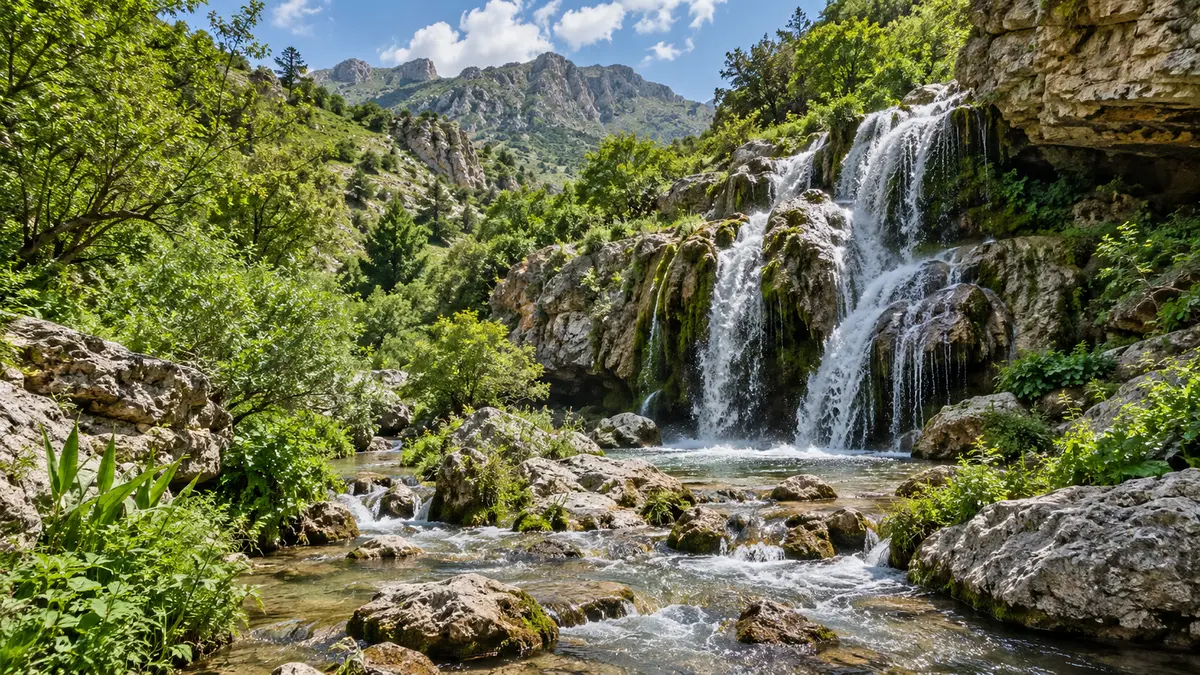 Nilu and Sangardak: Village Tourism in Surkhandarya
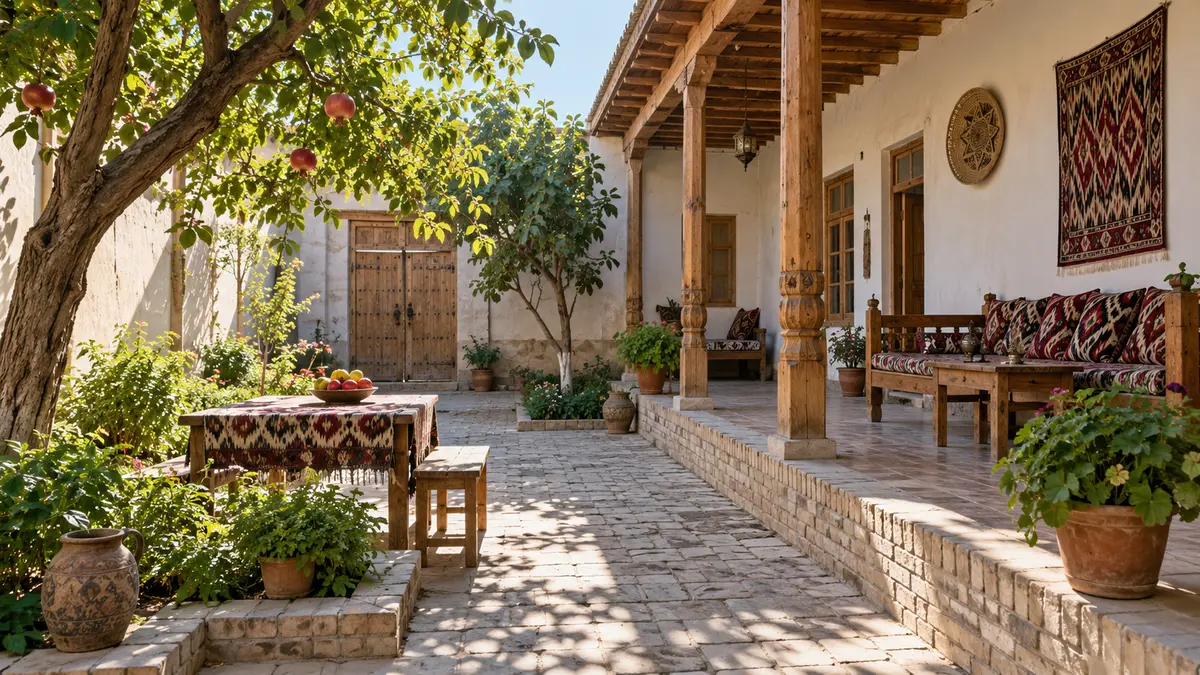 One Day in Kasri Orifon: Bukhara’s Pilgrimage Village
 Bukhara’s Biennale: Contemporary Art in Historic Spaces
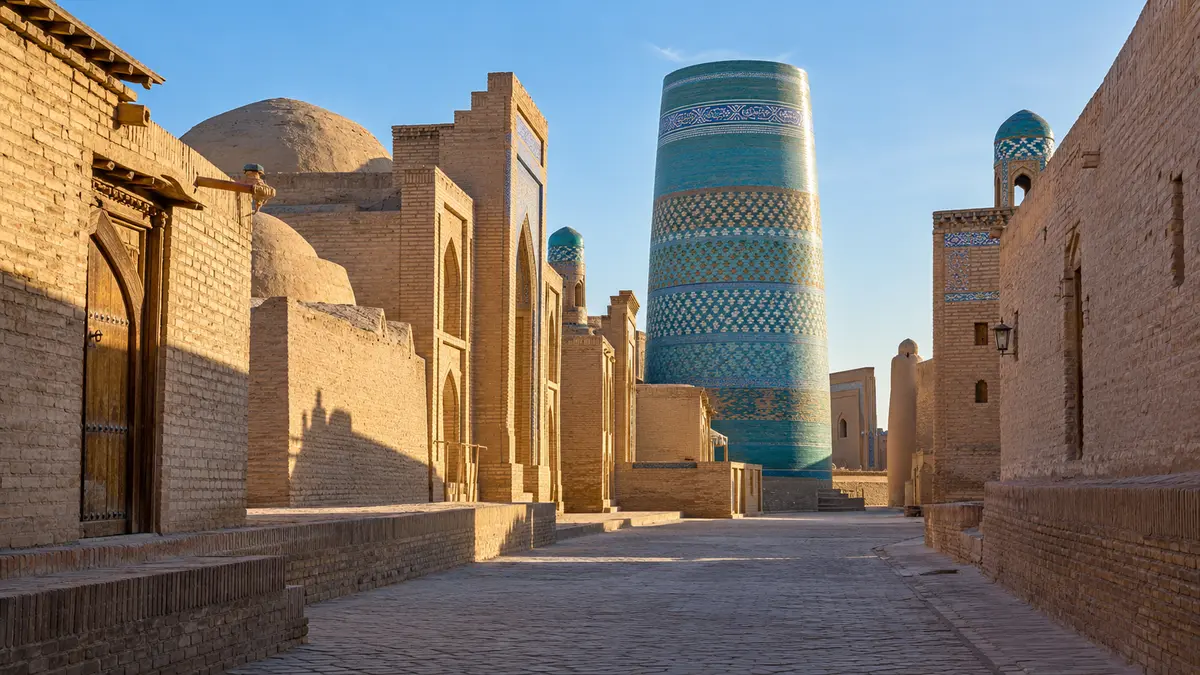 Khiva’s Walled City: Architecture, Palaces and Living Traditions
 Parkent’s Chashma Village: Folk Traditions Near Tashkent
 Uzbek Food and Cultural Traditions: From London’s Festival to Regional Tables
 Tashkent’s Museums, Mahallas and New Cultural Spaces
 Uzbekistan's Tourism Expansion: Heritage Cities, Living Crafts and Regional Routes
 Ancient Fortresses and Museums of Western Uzbekistan
 LH Marthinusen opens R32 million Germiston fan factory
 Rishtan’s Craft Neighbourhood and the Fergana Valley
Leave a comment