
The 700-Million-Consumer Gamble: Inside the EU–Mercosur Deal's Provisional Start — and Its Unfinished Ratification
On 1 May 2026, after more than a quarter of a century of negotiations, a signature ceremony, a suspended ratification and a judicial referral to Europe's highest court, the trade pillar of the agreement between the European Union and the Mercosur bloc finally started to operate — provisionally, but for real. From that day, tariffs began falling on cars, machinery, clothing, food, wine and medicines flowing into South America, and on carefully rationed agricultural goods flowing back. The deal links two markets of more than 700 million consumers in total, and the European Commission estimates it will add €77.6 billion to the EU's gross domestic product by 2040. Yet the full Association Agreement is still not in force, the European Parliament has still not given its consent, and a ruling from the Court of Justice of the European Union may be more than a year away. This is the anatomy of the world's most patiently negotiated free-trade area — what it changes now, what it promises later, and why both sides of the Atlantic are watching a clock that only one of them controls.
The starting point of any honest assessment is scale. In an analysis published on 11 May 2026, Euronews laid out the numbers that frame the deal: this is not a marginal opening between distant economies, but a formalisation of one of the largest inter-regional trade relationships already in existence.
A relationship already worth €111 billion a year
Long before the first tariff line was deleted in 2026, the EU and Mercosur — the South American customs union that counts Argentina, Bolivia, Brazil, Paraguay and Uruguay among its members — were doing more than €111 billion of goods trade a year. In 2024, EU exports to the bloc reached €55.2 billion and imports €56 billion, a nearly perfectly balanced exchange that few of Europe's big trade relationships can match.
The structural facts behind that total explain why the agreement matters far beyond its headline GDP number:
- The EU is Mercosur's second-largest partner in goods trade, accounting for almost 17% of the bloc's total trade in 2024 — while Mercosur ranks only tenth among the EU's goods-trade partners, an asymmetry that shapes the politics on both sides.
- More than 80% of the bilateral flow runs between the EU and Brazil, which means any shock to Brazilian exports or to Brazilian demand lands disproportionately on the partnership.
- Between 2014 and 2024, EU–Mercosur goods trade grew by more than 36% — imports into Europe jumped by over 50%, while EU exports rose by about 25%. South America has been selling into Europe faster than Europe has been selling back.
- Europe's export basket is industrial: machinery and appliances, chemicals and pharmaceuticals, and transport equipment top the list. Mercosur's export basket is extractive and agricultural: farm produce, mineral products, and pulp and paper.
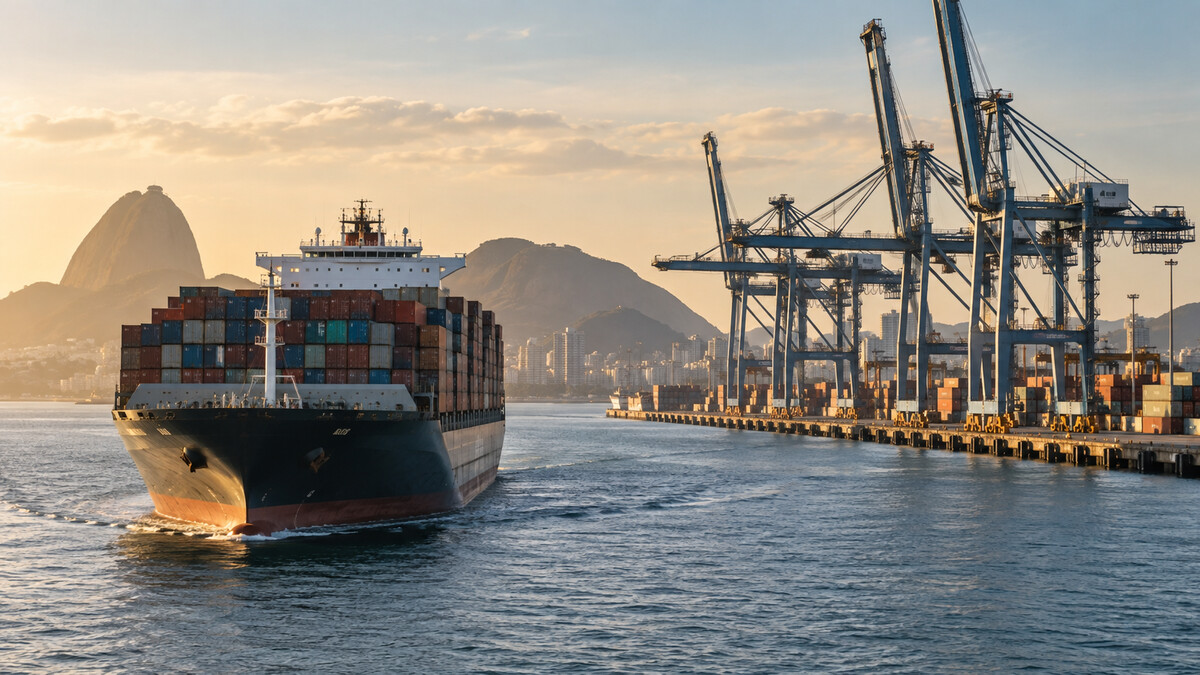
That last bullet is the whole deal in miniature. Europe sends capital goods and chemistry; South America sends food, fibre and ore. The agreement liberalises both directions but protects the sensitive one — agriculture — with quotas, phased access and a new emergency brake. Understanding that architecture is the key to understanding both the economic promise and the political fury that have surrounded the text since the first negotiating round in 2000.
Twenty-five years to a signature
The negotiations began at the turn of the millennium, survived the collapse of the Doha round, two South American commodity cycles, Brexit, a pandemic and a full redrawing of global trade politics under American tariff pressure. They concluded, politically, at the very end of 2024 — and then took another thirteen months to reach a signing ceremony.
That ceremony took place on 17 January 2026 in Asunción, the capital of Paraguay, the city where the agreement was formally sealed. European Commission President Ursula von der Leyen used the occasion to draw a deliberate contrast with the protectionist turn in Washington: "We choose fair trade over tariffs, we chose a productive long-term partnership over isolation," she said. European Council President António Costa went further, describing the deal as "a message of defense of free trade, based on rules, of multilateralism and international law" and contrasting it with "the use of trade as a geopolitical weapon." As Euronews reported from the signing, the substance matched the rhetoric: the agreement gradually eliminates roughly 90% of tariffs across industrial, services and agricultural sectors, saves EU companies more than €4 billion a year in customs duties, opens Mercosur public-procurement markets to European firms on the same terms as domestic competitors, and protects 344 European geographical indications — from cheeses to wines to cured meats — against imitation.
Two less advertised provisions may matter more over the coming decade. The first is critical minerals: the agreement is explicitly designed to secure European access to the raw materials of the energy transition, reducing dependence on Chinese processing. The second is the projection effect on EU exports — Commission modelling puts the increase at 39%, or €48.7 billion, by 2040, against a 16.9% (€8.9 billion) rise in imports. If that forecast holds even approximately, the deal does not merely liberalise a balanced trade relationship; it tilts it in Europe's industrial favour while giving South American agriculture a predictable, capped window into the world's wealthiest consumer market.
How Paris lost its blocking minority
The signing itself was not a foregone conclusion. France led the opposition, arguing that the deal exposes European farmers to unfair competition from Latin American imports produced under cheaper environmental and sanitary rules. For months it hunted for a blocking minority among member states — and failed, losing the decisive support of Italy at the last minute. Rome switched sides after securing funding for its farmers from 2028 and an exemption from the EU's carbon border tax on fertilisers, a trade-off that says much about how the final coalition was assembled. On 9 January 2026 the member states backed the deal, clearing the way for Asunción.
The pro-deal camp, led by Germany and Spain, argued that Europe needs new trade ties precisely because the United States has been closing its market and China is pursuing an increasingly aggressive trade policy. Paris did not leave empty-handed either: it extracted a safeguard clause allowing tariffs to be reintroduced if imports from Mercosur rise by more than 5% in sensitive sectors. And French President Emmanuel Macron made clear the fight was not over — "the signing of the agreement does not mark the end of the story," he wrote on X. He was right.
The Parliament's curveball: ratification suspended, application provisional
The story's next chapter opened in Strasbourg less than a week after the ink dried. On 21 January 2026, the European Parliament voted — against the expectations of the deal's supporters — to refer the agreement to the Court of Justice of the European Union, asking whether its legal structure and the plan for provisional application are compatible with the EU treaties. The vote suspended ratification: Parliament's consent, without which the full agreement cannot enter into force, is now effectively on hold pending the Court's opinion, which lawyers and officials alike say could take more than a year.
That created a paradox at the heart of the current arrangement. The trade pillar could not wait for the Court, but neither could it wait for Parliament. Pressed by Berlin and Madrid, the Commission reached for a special procedure: provisional application of the commercial parts of the deal, decoupled from the political and cooperation pillars of the wider Association Agreement. To activate it, Brussels needed at least one Mercosur country to ratify and notify the agreement first. What happened next became the strongest argument the deal's supporters now deploy: Argentina, Brazil and Uruguay ratified promptly; Paraguay — the legal guardian of the Mercosur treaties — ratified the following week and sent its notification, and on 23 March 2026 the Commission confirmed that provisional application would begin on 1 May. A "verbal note" to Paraguay completed the final procedural step. The entire South American side of the bargain was done in roughly two months.
"The priority now is turning this EU-Mercosur agreement into concrete outcomes, giving EU exporters the platform they need to seize new opportunities for trade, growth and jobs," EU Trade Commissioner Maroš Šefčovič said at the announcement. "Provisional application ensures the removal of tariffs on certain products as of day one, creating predictable rules for trade and investment," the Commission added, stressing that the deal "will create more resilient and reliable supply chains, crucial in particular for the predictable flow of Critical Raw Materials." On the day itself, von der Leyen marked the moment on social media with a promise that "provisional application will show the agreement's tangible benefits."
What actually changes on day one — and what does not
For companies on both sides, the practical content of 1 May 2026 can be summarised in four movements:
- Tariffs fall, on schedule, in both directions. South American duties on European cars, clothes, processed food, fine wines and medicines begin their descent toward zero under phased schedules covering roughly 90% of tariff lines. European duties on South American farm goods fall only within fixed quotas.
- Quotas start their clock. Some 99,000 tonnes of beef a year will be allowed into the EU at a reduced tariff of 7.5% — about 1.5% of European production — and 180,000 tonnes of poultry at zero tariff, roughly 1.3% of EU output, with both volumes phased in over five to six years. Ethanol, honey and sugar have their own capped windows.
- A new emergency brake goes live. The 2026 implementation includes a "provisional safeguard mechanism" that allows the EU to pause imports if they cause serious injury to local industries — on top of the 5% trigger France secured during the signing fight.
- The big political decisions are deferred. Investment protection, the cooperation pillars and the institutional architecture of the Association Agreement remain outside provisional application. So does the question of whether Parliament will ever consent — and what the CJEU will say about whether the whole construction is legal.

The agricultural fault line
No part of the agreement has generated more heat than agriculture, and the numbers explain why the quotas were drawn so tightly. European farmers — who blocked roads in Brussels in December 2025 to protest the deal — fear being undercut by a surge of cheaper South American goods produced at lower environmental and animal-welfare cost. Their political champions, in France and Ireland above all, argue that even capped imports reprice the marginal tonne and discipline European producers who face the world's strictest — and costliest — farm rules.
A second, subtler objection surfaced in the spring of 2026, when members of the European Parliament warned in an open letter about the quota allocation system itself: without careful administration, they argued, Mercosur's agricultural heavyweights — in practice, the big Brazilian packing groups — could dominate access to the European quotas, concentrating the benefit in the largest exporters' hands rather than spreading it across the bloc's smaller producers, Uruguayan grass-fed beef included. The letter is a reminder that the fight over the deal has three fronts: whether it is legal (the Court), whether it is acceptable (the farmers), and whether it is fairly administered (the quotas).
The environmental dimension cuts across all three. Several EU governments and numerous advocacy groups have warned that the agreement's agricultural expansion could accelerate deforestation in the Amazon and degrade environmental and human-rights conditions in producing regions. The Commission's answer is that the deal's sustainability chapter and the safeguard mechanism give Europe more leverage over South American land use than trade-as-usual ever did — an argument critics dismiss as unenforceable optimism.
The geopolitical clock: Montevideo's warning
If the European debate is about legality and agriculture, the South American debate is about time. In July 2026, Uruguay's foreign minister Mario Lubetkin — whose country had just assumed the rotating Mercosur presidency — travelled to Brussels with a message that was as much warning as sales pitch. He described the agreement as a "quality change" in relations between the two regions and pointed to the ratification sprint: "The four Mercosur countries ratified the agreement in just two months. That has never happened before. Governments from the political right and the left all agreed because we see this as strategically important — not only for us, but for Europe as well."
On the central question — when, or whether, the European Parliament will consent — Lubetkin was blunt about the limits of his patience: "I don't know whether it will be in 2027 or 2028. That is Europe's decision. From our side, the process is finished." Rather than idle, Montevideo plans to convene the first EU–Mercosur trade forum in December 2026 and deepen commercial cooperation while the Court deliberates. "Our citizens cannot wait," he said. "They need concrete answers now."
The subtext is China. Asked whether Beijing would be the obvious alternative partner if Europe stalls, Lubetkin answered without hesitation: "Obviously." China has been Uruguay's largest trading partner for the past 14 years, even though Europe remains its biggest source of investment and the United States dominates its services trade. His framing was not an ultimatum but a portfolio logic: "We are not working with China against the United States. We work with China, with the United States and with the European Union." During its presidency, Mercosur also aims to conclude trade negotiations with Canada, the United Arab Emirates and India, while expanding ties with ASEAN countries and Africa. As Euronews reported the exchange, the minister's closing line was the one European capitals should pin above their desks: "If Europe rejects this agreement, the consequences will be much greater for Europe than for us." And: "If Europe moves forward, both sides will benefit. If not, Mercosur will continue opening new doors elsewhere."
The balancing act is delicate for reasons that run through Washington as well as Beijing. The administration of US President Donald Trump has been pressing Latin American governments to curb Chinese influence across the region — pressure Lubetkin explicitly declined to convert into a choice of sides. "Our policy is positive, not against anyone," he said, dismissing the idea that Uruguay, under its centre-left government in office since March 2025, risks isolation in an increasingly conservative Latin America: "Whether governments are on the right or the left, countries need each other."
What to watch from here
The agreement now lives in a two-speed reality: a trade pillar that is operating, and a political process that is frozen. Anyone doing business between the two regions — or analysing it — should track a short list of decision points:
- The CJEU opinion. The Court's answer on the compatibility of the legal structure and provisional application with the treaties will determine whether Parliament can ever vote on consent. A negative opinion could unravel the entire architecture; a positive one restarts the political clock, with 2027 or 2028 as the realistic window.
- Quota administration. How the beef, poultry, ethanol, honey and sugar windows are allocated — and whether MEPs' concentration warnings translate into revised rules — will decide who on the South American side actually profits.
- The safeguard mechanism. The first serious-injury case, if it comes, will test whether the provisional brake is a genuine protection for European farmers or a political placebo. Watch sensitive sectors where Mercosur shipments can scale fastest: beef, poultry and sugar.
- The December trade forum. Uruguay's planned EU–Mercosur forum will show how much business momentum can build while ratification sleeps — and whether the Commission treats provisional application as a bridge or as a substitute.
- Mercosur's other negotiations. Progress with Canada, the UAE and India, and any deepening of ties with China, measures the credibility of Lubetkin's "new doors elsewhere" warning.
- Farm politics in Europe. National elections, the post-2028 CAP budget fight and any spike in South American imports keep the France–Ireland coalition armed; the 5% clause gives it a trigger it will not hesitate to pull.
The bottom line
The EU–Mercosur agreement is the rare trade deal whose provisional application is more dramatic than its signing. A quarter-century of negotiation produced a text that promises €77.6 billion of additional EU output by 2040, €4 billion a year in saved duties and a rules-based counterweight to an era of tariff diplomacy — and then immediately got caught between a court, a parliament and a continent of farmers. South America did its part in sixty days. Europe has, for now, done the commerce without the consent. The market of 700 million people is open, partially and provisionally, and both blocs are discovering what that half-open door is worth: enough to keep the trade flowing, not enough to stop either side from looking at the alternatives standing behind it.
Latest Reports
Ancient Fortresses and Museums of Western Uzbekistan
Qatar LNG expansion: readiness, financing and the production test
Tianwan 7: first electricity and commissioning
Genentech breaks ground on its Hillsboro expansion
RZD changes return fees for tickets purchased from December
Why available capital does not close every defence supply gap
Partner reports
 Ageas agrees Esure acquisition to widen UK insurance distribution
 Uzbekistan’s Western Rail Corridor and the Journey to Khiva
 Imam al-Bukhari’s Heritage and Samarkand’s Pilgrimage Landscape
 Nilu and Sangardak: Village Tourism in Surkhandarya
 One Day in Kasri Orifon: Bukhara’s Pilgrimage Village
 Bukhara’s Biennale: Contemporary Art in Historic Spaces
 Khiva’s Walled City: Architecture, Palaces and Living Traditions
 Parkent’s Chashma Village: Folk Traditions Near Tashkent
 Uzbek Food and Cultural Traditions: From London’s Festival to Regional Tables
 Tashkent’s Museums, Mahallas and New Cultural Spaces
 Uzbekistan's Tourism Expansion: Heritage Cities, Living Crafts and Regional Routes
 Ancient Fortresses and Museums of Western Uzbekistan
 LH Marthinusen opens R32 million Germiston fan factory
 Rishtan’s Craft Neighbourhood and the Fergana Valley
Leave a comment