
The 2024 Bitcoin Halving: A Familiar Supply Shock Meets an Unprecedented Demand Shock
Every four years or so, the Bitcoin network performs a ritual no other asset class can replicate: following rules written into its own code, it cuts the pace of its money creation exactly in half. The fourth such event — the 2024 halving — was scheduled for the window between April 18 and April 21, and it arrived in a market that looked nothing like the one that greeted the three halvings before it. Bitcoin had been embraced by the biggest institutions on Wall Street, spot exchange-traded funds had been pulling in fresh money since January, and — for the first time ever — the price had surpassed the previous cycle's high before the quadrennial supply cut rather than after it.
That last detail, more than any other, is what made this halving different. "The halving is the ultimate geek event for bitcoiners, but the 2024 iteration takes it up a notch because reduced supply combined with fresh ETF demand creates an explosive cocktail," Antoni Trenchev, co-founder of the crypto exchange Nexo, told CNBC in the run-up to the event. "What makes this halving unique is bitcoin has already surpassed the last cycle's high — something it's never done ahead of the quadrennial event — which makes trying to forecast the length and ferocity of this cycle much trickier."
This deep dive unpacks the mechanics of the halving, the economics of the mining industry sitting behind it, the diminishing-return pattern of previous cycles, and the brand-new demand shock that — for the first time — stood a chance of reversing that pattern. It is written from the vantage point of April 2024, when the reward cut was still days away and the market was busy arguing about what it would mean.
What the halving actually changes on the network
The halving is a technical event, not a marketing one. It takes place on the Bitcoin network roughly every four years — precisely, every 210,000 blocks — and it halves the subsidy that miners collect for extending the blockchain. Nothing is decided by a committee, nothing can be postponed by a vote, and no company or government administers it: the schedule is mandated by the code of the Bitcoin blockchain itself, and the network simply executes it, block after block, the way it has since the earliest days of the protocol.
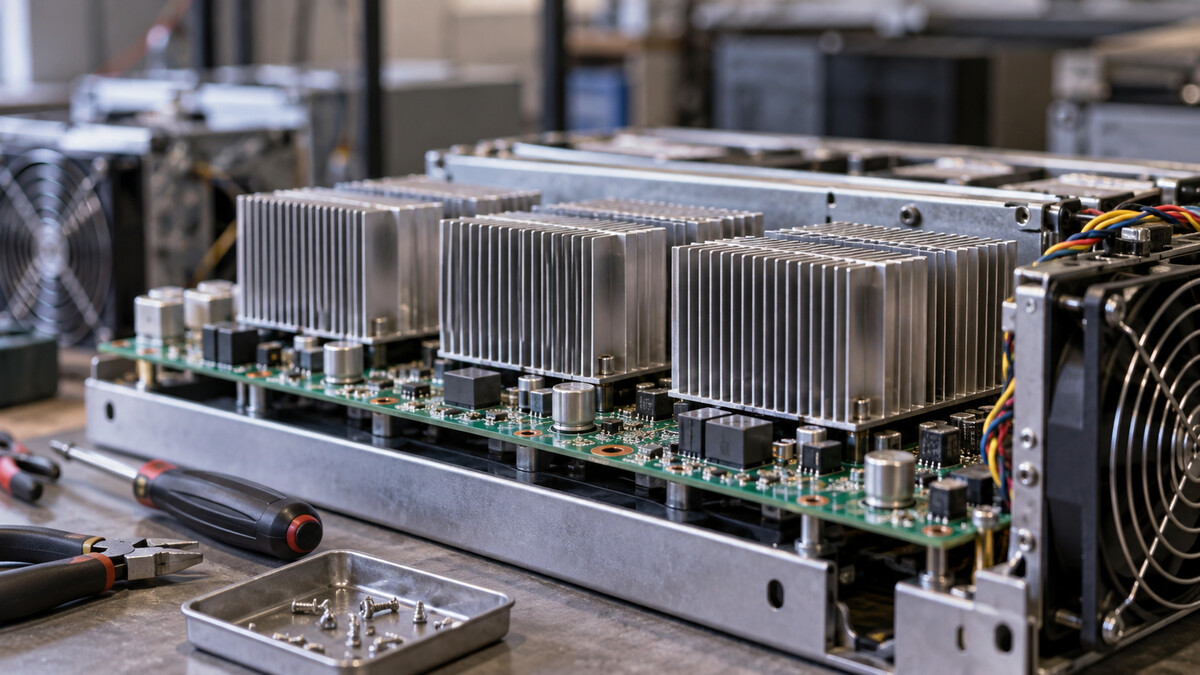
To understand what gets halved, it helps to recall what miners do. Miners run the machines that perform the work — essentially solving a very complex math problem — of recording new blocks of bitcoin transactions and adding them to the global ledger known as the blockchain. That work is what keeps the network running without a central operator, and it is expensive: purpose-built hardware, facilities to house it, and above all enormous amounts of electricity.
Two income streams, one of them about to shrink
Miners have two incentives to keep those machines switched on. The first is transaction fees, paid voluntarily by senders who want faster settlement — a market-driven payment that flows from users of the network to the miners who process their transfers. The second is the mining reward: newly created bitcoins attached to each block a miner successfully adds. Ahead of the 2024 halving that reward stood at 6.25 freshly minted bitcoins per block, worth about $437,500 as of Thursday morning, April 11, 2024, at a coin price near $70,000.
Sometime between April 18 and April 21, the code was set to shrink that reward to 3.125 bitcoins per block — roughly $219,000 at the same price. The incentive was initially 50 bitcoins when the network launched, and it has been cut in half at every halving since: 50, then 25, then 12.5, then 6.25 in 2020, and now 3.125 in 2024. Each cut slows the pace at which new coins enter circulation, which is precisely the point. The reduction in block rewards reduces the growth of bitcoin's supply, helping maintain the idea of bitcoin as "digital gold" — an asset whose finite supply underpins its value. Eventually, per the Bitcoin code, the number of coins in circulation will cap at 21 million, and the halvings are the mechanism that makes that cap credible.
The miner selling machine — and why cutting it in half matters
The single most important thing investors need to understand about the halving, according to Steven Lubka, head of private clients and family offices at Swan Bitcoin, has less to do with speculation than with plumbing: miners sell a lot of the bitcoin they earn, simply to stay in business. "These are very costly enterprises that have to consume a lot of energy and other things to do their job," Lubka explained. "Miners are constantly selling the bitcoin that they mine just to cover costs. When that gets cut in half, there's no two ways about it: there is half as much bitcoin being sold from the miners."
That makes miners a special participant in the market. Unlike a hedge fund that might liquidate a position at some unpredictable moment, miners are structural, calendar-driven sellers. "They are the most regular sellers," Lubka said. "Some hedge fund could sell its position… but miners are selling every day, every week, every month in predictable quantity — and that pressure gets cut in half."
Put numbers to it and the scale becomes clearer. With blocks arriving roughly every ten minutes — the cadence implied by the 210,000-block, four-year schedule — the network was producing about 144 blocks a day, and with them 6.25 new bitcoins each. At around $70,000 per coin, that is close to $63 million of freshly mined supply hitting the market every single day, much of it sold by miners to cover their bills. After the halving, the same machinery produces about $31 million a day instead.
Lubka's own framing was more cautious but pointed the same way: "In the months that follow, every day there [will be] something like $30 million in bitcoin less being sold. That can build up fast and make an impact over that time period." The keyword is months. The halving does not reprice the asset overnight; it quietly removes a persistent stream of sell orders, day after day, and lets the effect compound. If demand stays constant while one of the market's most predictable sources of supply shrinks by half, basic arithmetic says the imbalance has to show up somewhere — most likely in price, and most likely with a lag.
A history of diminishing returns
Bitcoin has always shot higher in the months following a halving — that is what made the event such a celebrated day among enthusiasts. The record is striking: after the 2012, 2016 and 2020 halvings, the bitcoin price ran up about 93x, 30x and 8x respectively, measured from its halving-day price to the eventual cycle top. Three cycles, three multipliers, three bull runs that turned the quadrennial supply cut into the closest thing the crypto calendar has to a scheduled holiday.
But the same record contains a second, less celebrated pattern: each success has been smaller than the last. Past performance is no indication of future returns, and some observers warn that, as the reward shrinks every four years, the days when the halving could move the price by such enormous multiples are likely already behind us. The arithmetic is hard to argue with — cutting the reward from 50 bitcoins per block to 25 removed far more potential supply than cutting 6.25 to 3.125 ever will.
Julio Moreno, head of research at CryptoQuant, put the point precisely: "The once-significant influence of Bitcoin halving on prices has diminished, as the new issuance of bitcoin gets smaller relative to the total amount of bitcoin that is available for sale." In other words, the supply shock is running out of shock. With the great majority of the eventual 21 million coins already in circulation by 2024, the marginal coin that the halving withholds each day is a steadily smaller fraction of everything traders could potentially sell.
None of this means the event stopped mattering — only that its role changed. "Guessing the endgame for bitcoin after each halving is the ultimate sport," Trenchev said. "What we do know is each post-halving bull run has seen diminishing returns… Even a measly 2x will put bitcoin around $130,000 — not to be sniffed at." A cycle that merely echoes the weakest of its predecessors would still deliver a doubling from roughly $70,000. The question for 2024 was whether the fading supply story would be offset by something stronger on the other side of the ledger.
Why 2024 is different: the ETF demand shock
The something stronger arrived in January. The approval of spot bitcoin ETFs by regulators in the United States gave traditional investors a familiar, brokerage-account wrapper for an asset that had previously required exchange accounts and self-custody. The effect on the market cycle was immediate: according to Trenchev, this bitcoin bull cycle "kicked into gear earlier because of the January approval of the spot ETFs" — and, on his reading, it "might well be shorter and more explosive, culminating in a peak in late 2024 or early 2025."
The data compiled by CryptoQuant supports the claim that demand, not supply, is the new swing factor. Historically, "whale" demand for bitcoin — large-holder accumulation — spikes after each halving, helping drive prices higher in the months that follow. In 2024, however, that whale demand, a category that now includes the original bitcoiners, new investors and the bitcoin ETF holders alike, was already at an all-time high before the block reward had even been slashed. The market was not waiting for the halving to start accumulating; it had been accumulating for months.
"In contrast… bitcoin demand growth seems to be the key driver for higher prices after the halving," Moreno said. That is a subtle but important reframing: where earlier cycles were powered by a supply cut landing on a static market, the 2024 cycle pairs a weaker-than-ever supply cut with the strongest demand the asset has ever seen. The halving still removes roughly $30 million a day of predictable miner selling — but for the first time, it removes it from a market where the marginal buyer may be an ETF creation basket rather than a crypto-native speculator.
This is also why Lubka argued that the diminishing-returns trend could finally reverse — while being careful about the cause. If returns after the 2024 halving end up bigger than after 2020's, it will not be because the planned supply shock suddenly regained its old force; it will be because of the new demand shock layered on top of it. "If there was ever a moment to be a little extra optimistic" about post-halving returns, he said, it is this year.

What the halving is not
For all the excitement, the event itself is easy to misread. Lubka's warning was that investors should not confuse speculation around the halving with the technical change taking place. A few clarifications from the source reporting are worth keeping in mind:
- It is not an on-off switch. The halving is not flipped at a specific, announced hour; it happens whenever the network mines block number 210,000 after the previous halving, which in 2024 pointed to the April 18–21 window.
- It guarantees no immediate price move. "It's reasonable to think that the day will come and go without much action in the market," the CNBC analysis noted. A quiet halving day would not mean a failed halving.
- Event-day volatility is not mechanical. Speculators may trade the event and produce swings, but "even if there were a big move, it'd have nothing to do mechanically with the halving," Lubka said.
- Its supply effect is no longer the whole story. Each round of diminishing issuance means the cut matters less relative to total sellable stock than it did in 2012, 2016 or 2020.
- It works in months, not minutes. The economic content of the halving is the roughly $30 million a day of miner selling that never happens — an effect that compounds quietly over the following quarters.
What investors were told to watch after the event
With the reward cut scheduled and the demand picture unusually strong, the analytical question in April 2024 was not whether the halving would happen but which forces would dominate afterwards. Several observable threads ran through the reporting:
- The compounding supply gap. Roughly $30 million a day of absent miner selling at a $70,000 bitcoin price — small daily, large cumulatively over the months that follow.
- Miner economics under a halved subsidy. Mining is a costly, energy-hungry enterprise whose operators sell continuously to cover bills; a half-size reward tests the highest-cost producers first.
- Whale demand persistence. CryptoQuant's data showed large-holder demand at an all-time high before the halving; whether it stays there — or spikes further, as it historically has after the event — is the demand-side variable to track.
- The ETF channel. The January-listed funds turned a crypto-native market into one where traditional allocators can accumulate through brokerage accounts, changing who the marginal buyer is.
- Cycle timing. Because bitcoin already exceeded its prior cycle high before the halving — a first — Trenchev argued the cycle "might well be shorter and more explosive," peaking in late 2024 or early 2025 rather than a year or more after the event.
- The modest-multiplier benchmark. Even a "measly" 2x from halving-day prices would put bitcoin around $130,000; anything above that would mark the first break in the diminishing-returns pattern.
The long arc of a scarcity experiment
Just a few years before the 2024 halving, the event was celebrated mainly by the earliest cryptocurrency lovers, who swore by the reward cut as a core feature of a revolutionary, anti-establishment, deflationary asset. By April 2024 the audience had changed completely: the biggest institutions on Wall Street had arrived through the ETF channel, curious retail investors kept returning each cycle, and market watchers ranged, as the CNBC piece put it, "from the gleeful to the perplexed to the unimpressed" — yet all of them knew the halving was coming and that it must mean something for bitcoin.
What has not changed is the machinery. The code still halves the subsidy every 210,000 blocks, still marches toward the 21-million cap, and still forces miners — the network's most regular sellers — to finance their operations on a reward that shrinks by half every four years while their electricity bills do not. Each halving makes bitcoin's issuance scarcer and, at the same time, makes the halving itself a smaller marginal event. Somewhere along that trajectory, the subsidy will become trivial and transaction fees will have to carry the security budget — a transition the 2024 cut moved one step closer.
Whether the fourth halving produced another spectacular multiplier or merely a steady, ETF-cushioned bid was, in April 2024, still an open question — "guessing the endgame," as Trenchev said, remained the ultimate sport. But the structure of the debate had already shifted: for the first time, the answer depended less on the supply cut written into bitcoin's code than on the demand built on top of it by traditional finance, a dynamic captured in CNBC's original analysis of the event on the eve of the reward cut.
Latest Reports

Ancient Fortresses and Museums of Western Uzbekistan

Qatar LNG expansion: readiness, financing and the production test

Tianwan 7: first electricity and commissioning

Genentech breaks ground on its Hillsboro expansion

RZD changes return fees for tickets purchased from December

Why available capital does not close every defence supply gap
Partner reports
 Ageas agrees Esure acquisition to widen UK insurance distribution
 Uzbekistan’s Western Rail Corridor and the Journey to Khiva
 Imam al-Bukhari’s Heritage and Samarkand’s Pilgrimage Landscape
 Nilu and Sangardak: Village Tourism in Surkhandarya
 One Day in Kasri Orifon: Bukhara’s Pilgrimage Village
 Bukhara’s Biennale: Contemporary Art in Historic Spaces
 Khiva’s Walled City: Architecture, Palaces and Living Traditions
 Parkent’s Chashma Village: Folk Traditions Near Tashkent
 Uzbek Food and Cultural Traditions: From London’s Festival to Regional Tables
 Tashkent’s Museums, Mahallas and New Cultural Spaces
 Uzbekistan's Tourism Expansion: Heritage Cities, Living Crafts and Regional Routes
 Ancient Fortresses and Museums of Western Uzbekistan
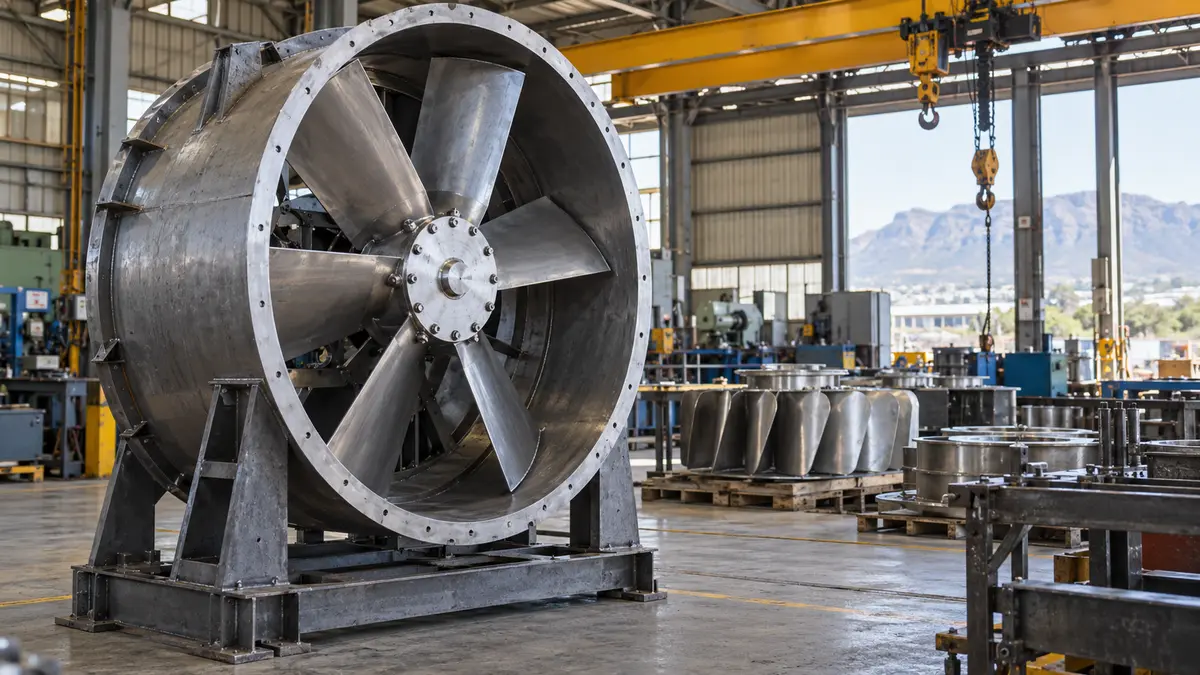 LH Marthinusen opens R32 million Germiston fan factory
 Rishtan’s Craft Neighbourhood and the Fergana Valley
Leave a comment