
The Chainsaw's First Year: How Milei's Shock Therapy Cooled Argentina's Inflation — and Pushed Poverty Past 53%
When Javier Milei took office in December 2023, he promised to take a chainsaw to the Argentine state and rescue the country from what he called decades of "impoverishment and decadence". One year later, the ledger of that promise is startling in both directions at once. Monthly inflation has collapsed from 26% to 2.7%. The economy has climbed out of a severe recession, with gross domestic product growing 3.9% between July and September compared with the previous quarter. And yet almost 53% of Argentines were living in poverty in the first half of 2024 — a two-decade high. A Guardian report from Buenos Aires published on December 18, 2024 captured the paradox better than any spreadsheet: the same austerity that stabilized the currency is emptying the soup kitchens' budgets while lengthening their queues.
This deep dive reconstructs the first year of Milei's shock therapy from the macroeconomic side and from the household side, asks how a government presiding over a poverty spike can still command the support of roughly half the population, and draws out what the Argentina experiment teaches about the speed limits of stabilization policy — how fast inflation can die, how fast poverty can rise, and how slowly it goes back down.
One year of the chainsaw: two Argentinas in December 2024
The government's own ministers describe the year as a success story still in its opening chapter. Federico Sturzenegger, the minister of deregulation and state transformation, told reporters he was "very happy with the job we've been doing", praising the administration's "difficult, bold decisions". "We believe things have worked much better than anybody could have imagined," he said. "There's an increased optimism."
In the streets of Buenos Aires, the same twelve months look different. A young father searches a dumpster at night and passes discarded food to his wife and two children. A homeless couple sleeps in a subway station with cardboard boxes over their heads. In the villas miseria, children queue for plastic containers of food while their parents stay out of sight — from shame, as one soup-kitchen cook put it.
Both pictures are accurate, and they are causally connected. The disinflation and the recession were produced by the same instrument: a fiscal shock that removed the state's deficit financing, cut transfers, froze public works and stripped subsidies from energy and transport. Prices stopped racing because the money that had been chasing them stopped printing — and because demand collapsed along with real wages. Understanding 2024 in Argentina means holding the two Argentinas in a single frame.
What the chainsaw actually cut
The austerity program was broad, but it was not evenly distributed. According to a report by the Center of Argentine Economic Politics (Cepa) covering the first ten months of 2024, the composition of the cuts reveals where the chainsaw bit deepest:
- Retirement pensions — 24.2% of all government cuts in the January–October period, the single most affected expense line. Milei also vetoed a law passed by Congress that would have raised pensions by 8%, and scaled back free medications for retirees.
- Public works — 23.6% of the cuts. Construction projects across the country were halted outright, which is why, in the words of one Barrio Mugica resident, her husband — a construction worker for twenty years — suddenly could not find a job.
- The public payroll. Tens of thousands of government employees were laid off in the first year.
- Energy and transport subsidies. Ending them was one of the fastest routes to fiscal balance — and one of the fastest routes to higher household bills. Gas subsidies in particular were slashed, and one 64-year-old resident watched her monthly rent jump from 15,000 pesos in December 2023 to 100,000 pesos a year later.
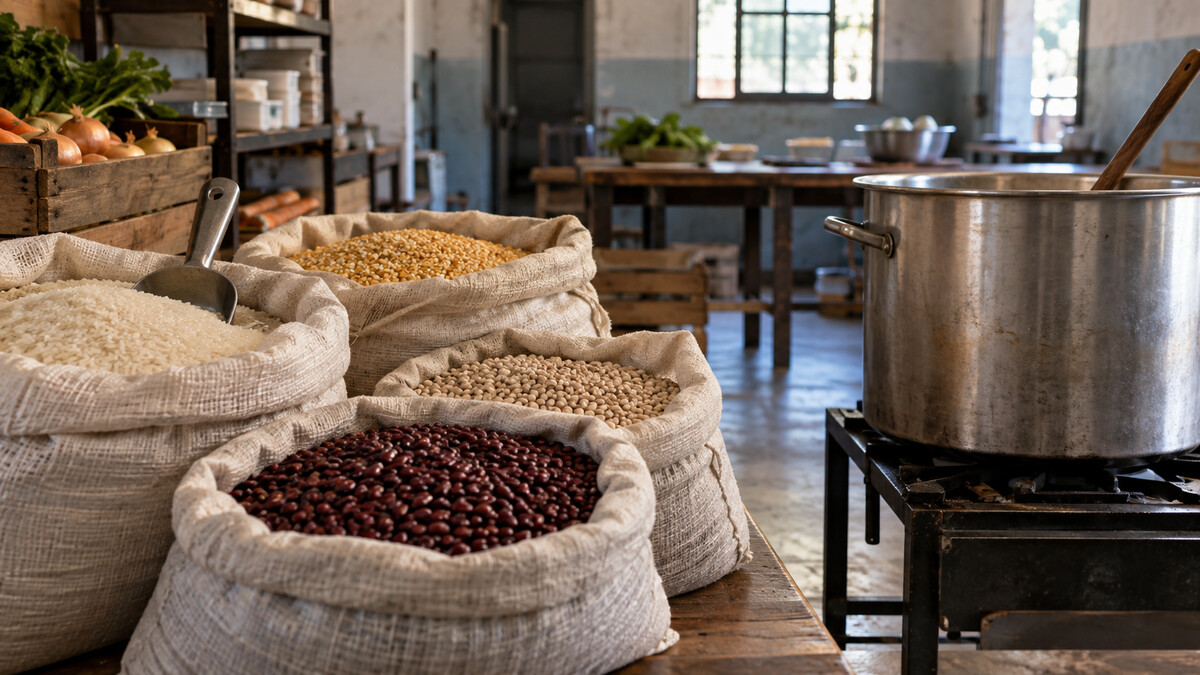
- Food assistance and soup kitchens. These were among the first operations hit: the government withdrew and froze budgets, saying it wanted to end what Milei called "the business of poverty". Many community centres closed or reduced the number of meals offered; in one settlement the government simply stopped sending food rations.
The political framing matters as much as the arithmetic. By attacking the intermediaries of social assistance — the organizations that channel food aid — the government converted a spending cut into a moral crusade against corruption. By vetoing the pension increase, it made clear that fiscal balance outranks every distributional claim, including the one with the strongest political constituency: retirees, who have protested outside Congress every Wednesday.
The macro turnaround: from 26% a month to 2.7%
Start with the achievement, because it is real and it is large. In December 2023, Argentina's monthly inflation rate stood at 26% — a pace that, sustained, is the definition of hyperinflationary drift. By October 2024 it had fallen to 2.7% a month. Over the same stretch the peso strengthened against the black-market dollar for six consecutive months, closing the gap that had long been the market's running estimate of policy failure.
How does an economy decelerate prices that fast? The sequence reconstructed from the year's events runs roughly as follows:
- Close the fiscal gap. The chainsaw's first target was the deficit itself. With spending cuts concentrated in pensions, public works, payroll and subsidies, the state stopped needing fresh money to finance itself.
- Stop monetizing the deficit. Once the treasury no longer demanded central-bank financing, the emission that had been feeding 20%-plus monthly price growth lost its fuel. Inflation in Argentina had always been, at bottom, a fiscal phenomenon; fixing the fiscal side strangled it.
- Let relative prices jump once. Removing energy and transport subsidies produced a one-off level shock to utility and fare prices — painful, front-loaded, and then done. The rent and bill explosions of early 2024 were partly this catch-up working through household budgets.
- Anchor expectations with a recession. The flip side of the fiscal shock was a demand shock. Wages were depressed, consumption fell, and firms lost pricing power. A severe recession is a brutal disinflation machine — and it worked: by the second half of the year the monthly rate was in the low single digits.
- Cash in the credibility dividend. As the black-market gap narrowed and the peso firmed, dollar-hoarding behavior — the reflex of four decades of inflation — began to relax, reinforcing the slowdown.
None of this is to say the stabilization is complete. Annual inflation measured over 2024 as a whole was still extraordinarily high, the exchange-rate regime remains managed, and the government's own rhetoric — Sturzenegger's promise that "we did the chainsaw, now we're going into deep chainsaw" — concedes that the second stage of structural reform has not yet begun.
Recession, and the exit from it
The cost of steps one through four was a severe recession in the first half of 2024. The turn came in the third quarter: on Monday, December 16, 2024, the national statistics agency announced that Argentina had exited the downturn, with GDP growing 3.9% from July to September against the previous quarter. Quarter-on-quarter numbers of that size flatter a rebound from a deep hole — but the direction of travel was unmistakable, and by December even critics conceded that activity had stopped falling.
"The economy is recovering very clearly," Sturzenegger said. "The mood is much more upbeat than at the end of last year, when there was a lot of uncertainty, even among those that were supporting Milei." Milei himself, who had warned in his maiden speech that things would get worse before they got better — comparing his election to the fall of the Berlin Wall and calling the economic challenge "titanic" — declared to business leaders in November: "The period of pain is over."
Whether the pain is in fact over depends entirely on which household you ask, which is the subject of the next two sections.
The social bill: poverty at a two-decade high
The official statistics for the first half of 2024 delivered the most damning number of the year: almost 53% of Argentina's 45 million people were living in poverty, the highest figure in two decades, up from 41.7% in the second half of 2023. Some 18% of the population was in extreme poverty. Most striking, more than six in ten children under 14 lived below the poverty line.
For context, poverty in Argentina had not fallen below 25% for almost forty years — this is a country where economic failure is structural, not episodic. That history is precisely why the 2024 spike matters: it stacked a cyclical catastrophe on top of a chronic condition, and it hit the demographic — children — whose losses are hardest to reverse.
The slow mathematics of recovery
The second-half numbers offered partial consolation. Eduardo Donza, a researcher at the Argentine Catholic University's Social Debt Observatory, which monitors poverty, said estimates showed poverty had fallen from its mid-year peak but remained high at 49.9% in the last quarter — and that the decline is slow. "I estimate that it will take a long time for the worst affected to recover," he said.
That asymmetry is the deepest lesson of 2024. Inflation fell almost as fast as it had risen, because it is a monetary-fiscal phenomenon that responds immediately to stopping the money. Poverty fell far more slowly, because it is an income phenomenon: it tracks real wages, employment and transfers, all of which need a sustained recovery to rebuild. Stabilization can be switched on; recovery cannot.
Purchasing power statistics sharpen the point. Household purchasing power fell during the year to levels not seen since the 2001 economic crisis — the benchmark of national trauma, the default and the peso collapse. For workers on formal salaries, prices rose while pay did not: "Everything's up — the food, the buses, the bills — but the salaries are the same," as one mother in Barrio Mugica put it. For the informal sector the mechanism was cruder: demand simply vanished. In La Carolina, an informal settlement an hour from central Buenos Aires, a mother of two lost her job selling cheese buns in October because nobody was buying; her children now rely on school meals.
The household economy: rents, bills and one meal a day

The Guardian's reporting from Barrio Mugica and La Carolina gives the aggregate numbers a face, and a few details carry more analytical weight than they appear to:
- Rent inflation outran general inflation. Laila Gómez, 64, saw her monthly rent rise from 15,000 to 100,000 pesos in a year — a near-sevenfold jump. Argentina's 2023 repeal of its rent control law unleashed a repricing of housing exactly when real incomes were falling.
- Substitution down the consumption ladder. Gómez stopped eating meat entirely and cut the number of daily meals; the same cook who now needs 40-plus kilos of rice a day has switched from gas to firewood. When budgets compress, households don't just buy less — they buy cheaper calories and cheaper fuel, which is what food-poverty statistics measure.
- The public-works halt destroyed construction jobs. With public works accounting for 23.6% of the cuts and projects frozen nationwide, informal construction work — the classic buffer employer of Argentina's poor — disappeared for the first time in two decades, according to residents.
- Shame entered the data. Cooks and NGO workers reported children collecting food alone because parents hide from embarrassment. Untake-up of aid is the invisible component of every poverty number.
None of this is incidental color. It is the transmission mechanism of the fiscal shock: pensions and wages cut in nominal terms, subsidies removed from bills, works halted, rations frozen — each channel hitting the same household at the same time, in a country where half the workforce is informal and has no unemployment insurance to catch it.
Why half the country still backs the chainsaw
Here is the political fact that confounds outsiders: despite the harshest austerity in a generation, polls through the second half of 2024 showed Milei retaining the support of about half the population. A survey conducted for Bloomberg News in November put it at nearly 47%. Widespread protests never took the grip on the country that critics predicted; the weekly pensioners' demonstrations outside Congress draw dozens, not tens of thousands. "I see no protest, because there are several million pensioners," Sturzenegger said, with the confidence of a government that has read the same polls.
Julio Montero, a political scientist at the University of San Andrés, offers the most coherent explanation. First, blame attribution: many Argentines hold previous administrations responsible for the poverty Milei inherited — and the inheritance argument is not baseless, since poverty had not fallen below 25% in four decades and monthly inflation was 26% when he took office. Second, expectation management: Milei warned from day one that things would get worse before better, so the 53% landed as a forecast confirmed rather than a betrayal. Third, narrative: "He managed to persuade the people that traditional politicians are a corrupt class that seeks to preserve their privileges at the expense of the people," Montero said — so that "in spite of the economic crisis, many people see Milei as a messiah that is here to protect and represent them." And fourth, a grim variable: two decades of recurrent crises have desensitized the electorate to poverty statistics.
International reinforcement helps too. Donald Trump publicly praised Milei for doing an "incredible" job, and Milei's visibility among global libertarians converts domestic pain into a sense of historic mission — the Berlin Wall comparison was not decorative.
The opposition, the streets and the "deep chainsaw" of 2025
The other half of the political equation is weakness, not strength. Myriam Bregman, the socialist leader and former presidential candidate, warned that "the social reality is deteriorating by the day" and predicted the growing social drama would make the remaining three years of Milei's term "convulsive". But she also indicted her own side of the spectrum: traditional opposition parties have failed to stand up to the chainsaw beyond "spicy" tweets and congressional speeches. "The problem is not just Javier Milei — it's that the opposition isn't doing anything about it," she said, arguing that Milei behaves like a predator toward pensioners and the poor while acting as "the little pussy cat of the economic powers".
With the left-leaning opposition in disarray, the protest energy that remains is local and diffuse: a painted wall at the entrance to La Carolina reading "Get your chainsaw off our rights"; community NGOs like the toilet-building group Módulo Sanitario documenting settlements where roads are mud and many homes lack bathrooms or potable water.
The government, meanwhile, has signaled that 2025 will not soften. Sturzenegger's phrase — "we did the chainsaw, now we're going into deep chainsaw" — points to a second wave of structural reform: deeper deregulation, further shrinkage of the state's economic role. Milei claims the crisis is over and poverty is "going down", blaming the year's social damage on the economy he inherited. The 49.9% fourth-quarter poverty estimate suggests both statements are half right: the direction has turned, the level remains a two-decade scandal.
What the Argentina experiment teaches the macro world
Strip away the theater — the chainsaw props, the lion cosplay, the anarcho-capitalist branding — and the first year of Milei's program is a controlled experiment in stabilization economics, with results general enough to travel:
- Fiscal shocks kill inflation fast. From 26% monthly to 2.7% in ten months is among the most rapid disinflations ever recorded outside a currency board. The mechanism was orthodox: stop financing the deficit, stop printing, let the anchor hold.
- The transition cost is a recession paid by the poorest. Output fell, purchasing power dropped to 2001-crisis levels, and poverty rose 11-plus percentage points in two halves of a year — from 41.7% to almost 53%.
- Poverty's dynamics are asymmetric. It rises at the speed of a shock and falls at the speed of a recovery. Even the encouraging 49.9% implies it will take years for the worst affected to climb back, on Donza's reading.
- Cut composition is a distributional choice. Taking pensions (24.2% of cuts) and public works (23.6%) first loads the adjustment onto retirees and informal construction workers — the two groups least able to wait for phase two.
- Politics can outrun economics. Credible blame attribution, pre-announced pain and a mobilized narrative bought a government roughly 47–50% support through a poverty spike that would normally have ended it. Expectations, it turns out, are a macro variable too.
The bottom line
One year in, Argentina's stabilization is genuine, incomplete and expensive. The monthly inflation rate of 2.7% and the third-quarter rebound of 3.9% prove the fiscal anchor works; the 53% first-half poverty rate, the 18% in extreme poverty and the six-in-ten impoverished children prove the anchor is chained to households that cannot yet breathe. The bet Milei is making — and it is a bet, not a theorem — is that macroeconomic credibility, once earned, converts into investment, jobs and wages fast enough to make the social damage temporary. The counter-evidence so far is Donza's slow decline and the soup kitchens cooking over firewood.
The "deep chainsaw" of 2025 will test the bet. If structural reform raises productivity without a second demand shock, the two Argentinas of December 2024 — the one in the statistics agency's communiqué and the one in the dumpster at night — will begin to converge. If it delivers another round of cuts before wages recover, the convergence runs the other way, and Bregman's "convulsive" prediction becomes the base case. For now, the honest summary of year one is the one written on the wall at the entrance to La Carolina: the chainsaw has done exactly what it was designed to do — and the question of what grows back is still open.
Latest Reports

Ancient Fortresses and Museums of Western Uzbekistan

Qatar LNG expansion: readiness, financing and the production test
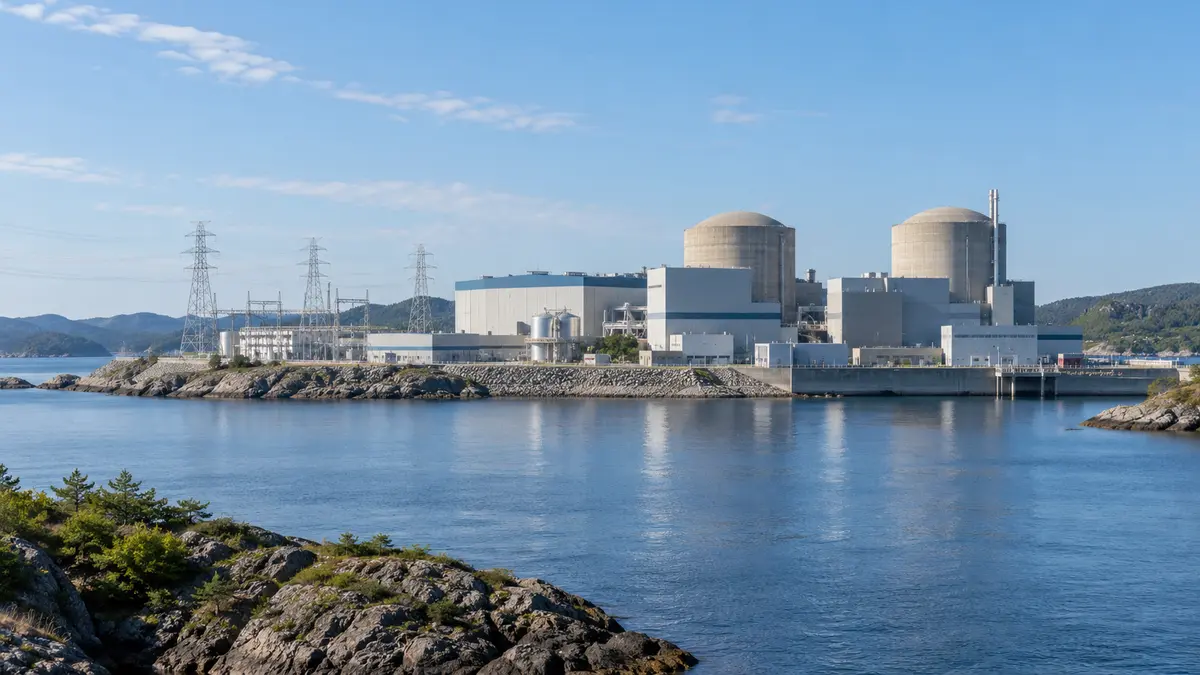
Tianwan 7: first electricity and commissioning
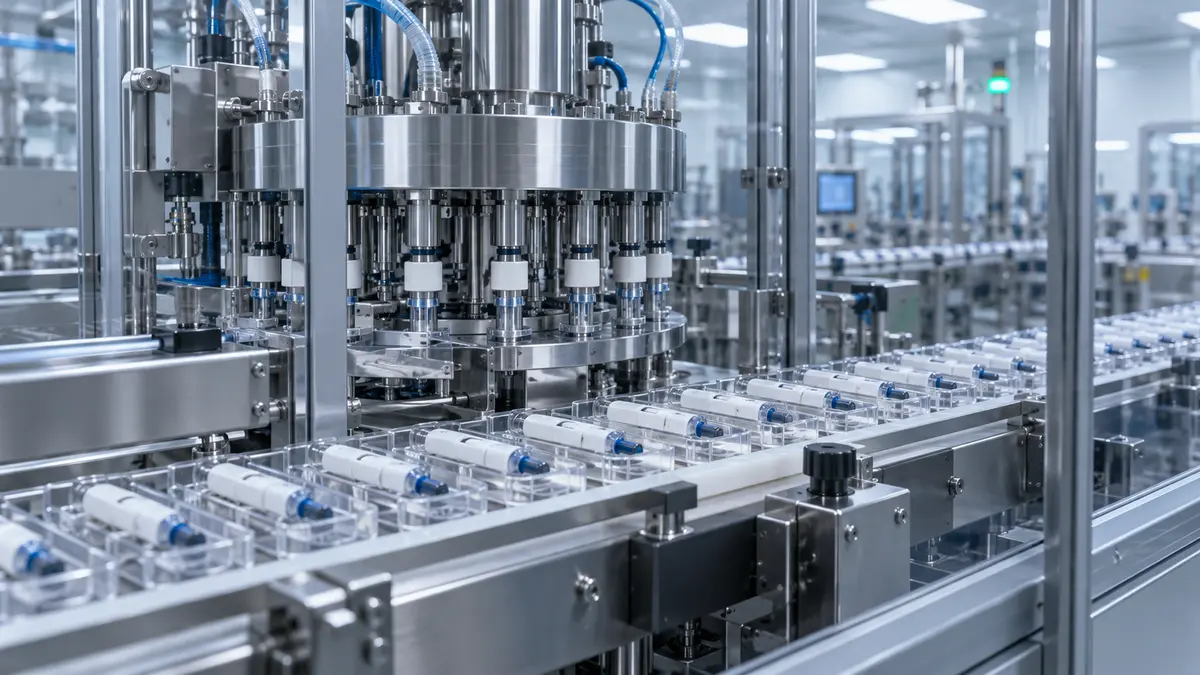
Genentech breaks ground on its Hillsboro expansion

RZD changes return fees for tickets purchased from December
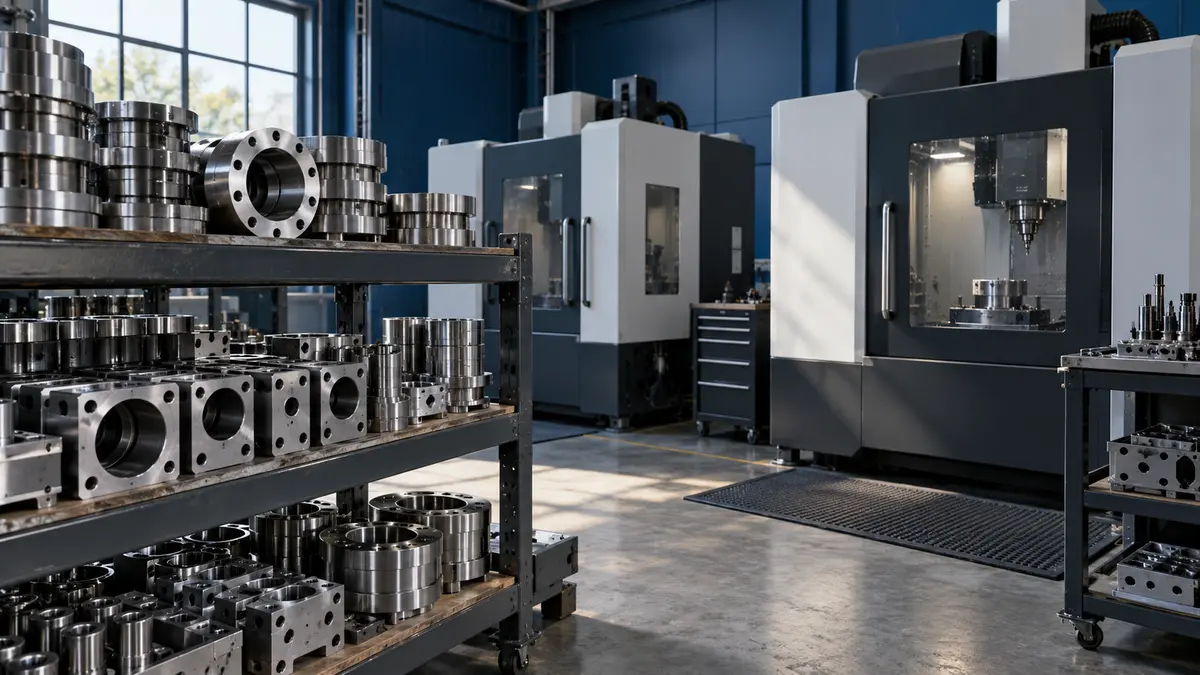
Why available capital does not close every defence supply gap
Partner reports
 Ageas agrees Esure acquisition to widen UK insurance distribution
 Uzbekistan’s Western Rail Corridor and the Journey to Khiva
 Imam al-Bukhari’s Heritage and Samarkand’s Pilgrimage Landscape
 Nilu and Sangardak: Village Tourism in Surkhandarya
 One Day in Kasri Orifon: Bukhara’s Pilgrimage Village
 Bukhara’s Biennale: Contemporary Art in Historic Spaces
 Khiva’s Walled City: Architecture, Palaces and Living Traditions
 Parkent’s Chashma Village: Folk Traditions Near Tashkent
 Uzbek Food and Cultural Traditions: From London’s Festival to Regional Tables
 Tashkent’s Museums, Mahallas and New Cultural Spaces
 Uzbekistan's Tourism Expansion: Heritage Cities, Living Crafts and Regional Routes
 Ancient Fortresses and Museums of Western Uzbekistan
 LH Marthinusen opens R32 million Germiston fan factory
 Rishtan’s Craft Neighbourhood and the Fergana Valley
Leave a comment