
The US$800 Door Slams Shut: How China's Sellers Rebuilt Their US Supply Chains Around Warehouses and Sea Freight
On Aug 29, 2025, the United States switched off one of the quietest yet most consequential engines of modern trade: the "de minimis" exemption that allowed parcels worth less than US$800 to enter the country without import duty. For more than a decade that threshold worked as an invisible subsidy for cross-border e-commerce, and nowhere was it more load-bearing than in China, where factories, freight forwarders and marketplace sellers built entire business models on shipping single items directly to American doorsteps. The global end of the exemption — which followed an April executive order that stripped duty-free treatment from mainland Chinese and Hong Kong parcels in May — did not collapse that trade. It re-routed it. And the re-routing is, at its core, a business-to-business story: overseas warehouses, consolidated ocean freight, customs brokerage and inventory finance have replaced the duty-free parcel as the basic unit of commerce between Chinese sellers and American buyers.
The shift was documented in detail by the South China Morning Post, which traced how merchants from Guangzhou to Shenzhen rebuilt their supply chains months before the final deadline, and how the smallest of them are still absorbing the shock (SCMP, Aug 29, 2025). Read as a political story, this is a piece about tariffs. Read as a supply-chain story, it is a case study in how quickly a B2B services layer can form around a regulatory discontinuity — and in who gets left outside that layer.
A rule that ended twice
The de minimis threshold — the value below which a shipment enters without duty and with minimal paperwork — was never designed as an e-commerce policy. It was a customs-administration convenience: collecting a few dollars of duty on a low-value parcel costs more than the duty itself. Marketplaces turned that administrative convenience into a commercial architecture. A US$12 phone case shipped individually from a factory in Guangdong cleared customs as a duty-free personal parcel; the same case inside a container would have been an ordinary taxable import.
The first blow came in April 2025, when an executive order ended duty-free treatment for parcels from mainland China and Hong Kong from May, with no transition period and a stated rationale of curbing synthetic-opioid flows. The second came in late July, when a further order extended the end of the exemption to parcels from everywhere else, effective Aug 29. A Reuters report cited administration officials describing a six-month transition in which postal-service shippers could opt to pay a flat duty of US$80 to US$200 per package depending on the country of origin — a range that, applied to a US$20 garment, is not a tariff but a prohibition.
Why the threshold was the business model
Under de minimis, the marginal cost of serving one more American customer was essentially the cost of one more parcel. Sellers could test products with almost no inventory risk, price aggressively, and let platforms aggregate millions of micro-shipments into a single logistics stream. Removing the exemption changed the unit of trade from the parcel to the shipment: duty, brokerage and handling now attach to a consolidated load, which rewards pre-positioned inventory and punishes improvisation. Everything that follows in this story — warehouses, sea freight, subleases, fulfilment deals — is a consequence of that single change of unit.
What the customs data shows
The adjustment is visible in the numbers. In July 2025, the value of small parcels exported from China to the United States fell 43% year on year to US$1 billion, according to Chinese customs data — a contraction of the parcel channel that began the moment the China-specific order took effect. The disruption was not confined to China: as of the Tuesday before the global deadline, postal services in 25 countries had suspended outbound services to the United States, citing uncertainty over the new American rules, the Universal Postal Union said.
For the parcels that still travelled, the new cost structure arrived fast. A Shenzhen-based logistics firm specialising in consolidated deliveries to Europe and North America told the Post that the cost of sending personal parcels to the US — mostly clothing, household goods and seasonings — had risen markedly over the preceding three months. On customer feedback, about 70% of parcels were hit with duties of US$30 to US$50, while roughly 30% faced charges of US$50 to US$80. Those bands matter because they sit above the retail price of much of the merchandise: a duty of US$30 on a US$15 item is not a price adjustment, it is a product-line decision.
The postal channel in limbo
The suspension of outbound services by postal operators in 25 countries is more than an operational footnote: the postal network was the last route where small-parcel economics still worked, because postal agreements pre-priced terminal dues below commercial courier rates. With the flat duty option of US$80 to US$200 per package during the six-month transition, postal operators face a choice between becoming duty-collection agents for US customs and exiting the lane altogether. Forwarders describe uncertainty itself as the cost: quotations now carry validity measured in days, and shippers pay for optionality — alternative routings, bonded storage, staged releases — that they never needed while the exemption stood.
The warehouse pivot
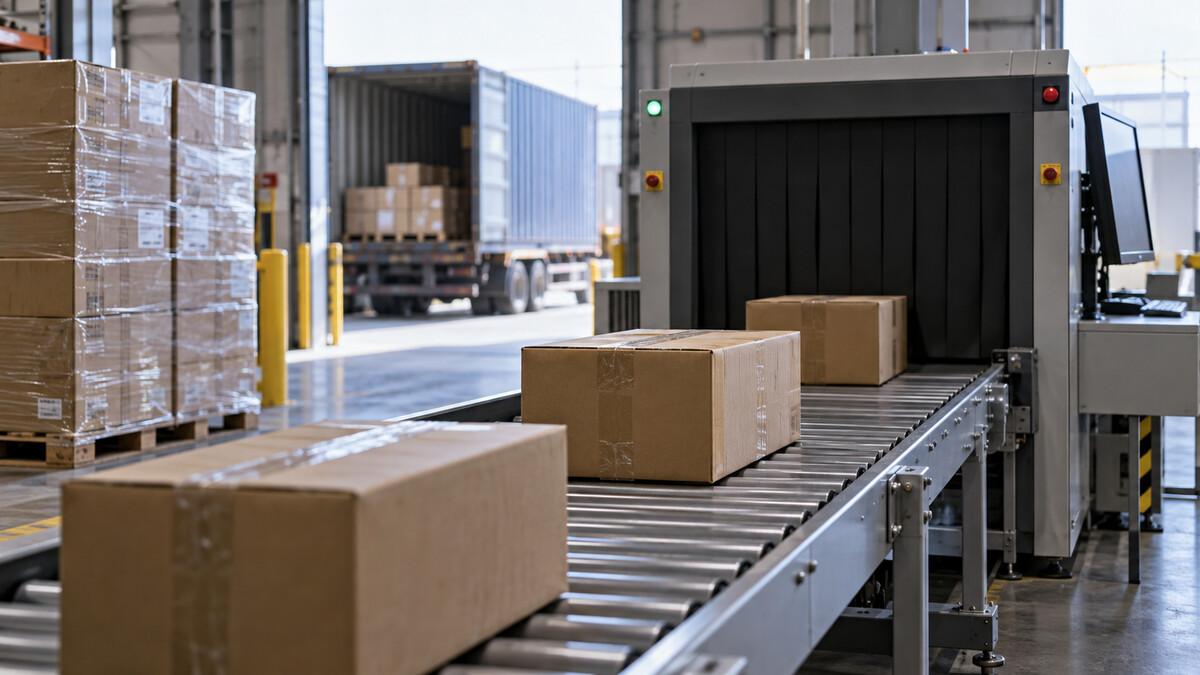
The merchants who adapted earliest treated the regulatory risk as a logistics problem and solved it with square metres. Henry Sun, a Guangzhou-based merchant who has sold towels and toothbrushes in the US on the TikTok Shop platform for two years, began scouting warehouse space in the United States last year, often subleasing it from Chinese Americans with unused storage. "We stopped sending small parcels last year and switched to bulk shipments," he said. "That naturally pushed up costs, so we gradually raised prices by 20 to 30 per cent, and consumers have adapted to the higher prices." His shop's sales rose steadily over the past three months, yet he has become more cautious: "We avoid large shipments now. That's proving the best strategy in uncertain trade conditions."
Ricky Luo, a 31-year-old seller from the Guangxi Zhuang autonomous region, moved for similar reasons a year earlier, when concerns grew that the previous administration was already tightening de minimis rules. "We felt the pressure even then, especially knowing Trump was likely to return with a new wave of tariffs," he said. His operation shifted more shipments to sea freight earlier in 2025, sending goods directly to specialised warehouses. "Now we've built up plenty of stock, and our daily gross merchandise value is topping US$20,000," Luo said.

Li Chen, a professor of manufacturing management at Cornell University's SC Johnson College of Business, argues that the exposure of the large platforms was always limited. "I don't expect there will be a trade disruption," he said. "The de minimis exemption was just the icing on the cake for companies like Shein and Temu. Now the icing is gone, you still have the cake." In a separate comment posted on his university website, Chen wrote that retail prices on the platforms were likely to rise but would remain attractive: "The new prices will still be good bargains compared with what US consumers can find elsewhere." His point is structural: the big platforms had already built flexible, large-scale supply chains whose strength is precisely the ability to absorb policy shocks by switching modes, routes and inventory positions.
Bulk economics: why a container beats a parcel under tariffs
The arithmetic of the pivot is straightforward. A consolidated ocean container spreads freight, brokerage and duty across thousands of units; a single parcel carries all of those costs alone. Bulk shipping trades speed for unit cost, which is why the pivot also lengthens the cash-conversion cycle: capital now sits in pre-positioned stock rather than in goods travelling to a named customer. Sellers who can finance that inventory — or borrow against it — gain a tariff shield; sellers who cannot are priced out of the parcel channel entirely. That divide, not the tariff schedule itself, is what is reshaping the competitive order of cross-border e-commerce.
A two-speed market: platforms versus the long tail
Not everyone can rent a warehouse. A Shenzhen seller involved in cross-border e-commerce since 2018, who ships toys, electronics and home decorations directly to US buyers via Shein, Temu and TikTok Shop, said prices in his store had risen 40% to 60% since May, with average sales down about 20%. "Most items used to sell for around US$10, but now they're over US$15," he said. Unlike larger rivals, small businesses cannot afford overseas warehousing: "You'd need to prepare millions of yuan to set that up and ship bulk items, which only works for the big players. For small and mid-sized sellers like us, we just have to grit our teeth and carry on."
His workaround is itself a symptom of the new B2B order: to keep revenue flowing he started selling through Amazon, with orders fulfilled via Temu and shipped to customers — one platform's infrastructure rented as a logistics service by a seller of another. "For now, it's the only option," he said. "If sales stay weak for too long, my shop could risk being suspended by the platform." The stakes for the long tail are high precisely because Chinese sellers are not a niche in American e-commerce: China-based sellers accounted for more than half of sales on Amazon Marketplace last year, according to e-commerce research firm Marketplace Pulse, and comprised roughly half of the new sellers on Walmart Marketplace.
Those Marketplace Pulse numbers explain why the platforms, not only the sellers, absorbed the shock: when about half of a marketplace's sales depend on China-based sellers, the marketplace's own growth is exposed to customs policy, which turns fulfilment infrastructure into a strategic asset rather than a cost centre. They also explain the tolerance for strange arrangements such as Amazon storefronts fulfilled by Temu: in a transition year, keeping sellers alive is worth more to a platform than keeping its logistics tree tidy.
The B2B services layer the loophole left behind
Every parcel that no longer flies is now a shipment that must be planned, financed, cleared and stored. That conversion has minted a service economy around the China–US lane:
- Overseas warehousing and subleasing — including informal capacity rented from diaspora owners of unused storage — as the default entry point into the US market.
- Consolidated ocean freight and specialised inbound warehouses, replacing direct-to-consumer air parcels for predictable product lines.
- Customs brokerage and duty modelling, because flat duty bands of US$30 to US$80 per parcel turn classification and valuation into pricing decisions.
- Inventory finance and working-capital products, since pre-positioned stock is capital trapped between a Chinese factory and an American shelf.
- Multi-platform fulfilment arrangements, in which one marketplace's warehouse network serves another marketplace's storefront.
- Reverse logistics and returns handling, which bulk models must absorb locally instead of simply never re-importing the item.
None of these services is new in isolation. What is new is their density on a single lane and the speed at which demand for them arrived: a regulatory change signed in April had become a warehouse-leasing decision by summer, and a pricing decision by autumn.
The winners of this rearrangement are the asset owners and the compliance specialists. Warehouse landlords in US gateway regions rent space to sellers who a year ago would never have held American inventory; consolidators fill containers that would previously have flown as loose parcels; brokers price duty scenarios the way analysts price currencies. The losers are the arbitrageurs whose entire margin was the exemption itself — and, for now, the air-cargo operators whose schedules were built around e-commerce ballast that has partly evaporated.
What the shift means for industrial demand
The parcel-to-bulk conversion moves volume between transport modes and inserts storage into flows that previously had none. Air-freight demand on the China–US lane loses part of its e-commerce ballast; ocean carriers and consolidators gain it; and a layer of racking, handling equipment, warehouse management software and compliance tooling acquires a durable customer base on both sides of the Pacific. For industrial suppliers the signal is not "more trade" or "less trade" but "different trade": fewer, larger, slower movements with inventory buffers at the destination end and more handling steps per unit sold.
Signals B2B buyers and suppliers should watch
- The parcel-versus-bulk mix on the lane, which sets demand for air capacity against demand for consolidation services.
- Duty bands and transition rules, including the flat postal duty of US$80 to US$200, which decide whether any parcel economics survive at all.
- Postal-service suspensions and reinstatements, a practical proxy for regulatory clarity in origin countries.
- Warehouse sublease rates and vacancy in US gateway regions, the clearest price signal of the pivot's scale.
- Platform policy on fulfilment and seller suspension, which determines whether the long tail can rent its way into compliance.
The strategic takeaway
There is also a second-order effect worth naming: compliance data has become a commercial asset. Sellers who can document valuation, origin and duty treatment per shipment negotiate better terms with platforms and lenders, because their inventory is auditable collateral; those who cannot are treated as higher risk and priced accordingly. The end of de minimis therefore did not merely move goods — it moved information requirements into the centre of the trade, and information infrastructure such as classification databases, landed-cost engines and customs APIs is now part of the B2B stack that separates survivors from casualties.
The end of de minimis did not remove Chinese supply chains from the American market; it forced them to become visible, capitalised and localised. The merchants who treated the exemption as temporary — Sun, Luo and the platforms behind them — converted a compliance threat into a logistics moat. Those who treated it as permanent infrastructure are now paying for that assumption in duty bands that exceed their product prices, or renting a rival's warehouse to stay in the game. In a trade system where thresholds can close with a signature, the durable advantage belongs to whoever can move the unit of trade — from parcel to pallet, from air to sea, from flow to stock — faster than the rulebook changes. The icing is gone. The cake, it turns out, was always the supply chain.
Latest Reports

Ancient Fortresses and Museums of Western Uzbekistan

Qatar LNG expansion: readiness, financing and the production test

Tianwan 7: first electricity and commissioning

Genentech breaks ground on its Hillsboro expansion
RZD changes return fees for tickets purchased from December
Why available capital does not close every defence supply gap
Partner reports
 Ageas agrees Esure acquisition to widen UK insurance distribution
 Uzbekistan’s Western Rail Corridor and the Journey to Khiva
 Imam al-Bukhari’s Heritage and Samarkand’s Pilgrimage Landscape
 Nilu and Sangardak: Village Tourism in Surkhandarya
 One Day in Kasri Orifon: Bukhara’s Pilgrimage Village
 Bukhara’s Biennale: Contemporary Art in Historic Spaces
 Khiva’s Walled City: Architecture, Palaces and Living Traditions
 Parkent’s Chashma Village: Folk Traditions Near Tashkent
 Uzbek Food and Cultural Traditions: From London’s Festival to Regional Tables
 Tashkent’s Museums, Mahallas and New Cultural Spaces
 Uzbekistan's Tourism Expansion: Heritage Cities, Living Crafts and Regional Routes
 Ancient Fortresses and Museums of Western Uzbekistan
 LH Marthinusen opens R32 million Germiston fan factory
 Rishtan’s Craft Neighbourhood and the Fergana Valley
Leave a comment