
Carney’s Two-Front Gamble: Canada’s Trade Pivot Away From the U.S. — and the Limits of Defying Trump
Standing in front of lawmakers almost 4,000 miles from his own parliament, Prime Minister Mark Carney used a September 17, 2026 address to the European Parliament in Strasbourg to call for an alliance between Canada and the European Union that would serve as "a beacon for other democracies" — and to sketch what he termed "the next just, stable and prosperous world order." The setting mattered almost as much as the words: a month earlier, the Canadian leader had declared his country effectively "at war" with the United States after Washington slapped 50% tariffs on $28 billion of Canadian exports. This deep dive examines the economics behind that whiplash: a two-front trade strategy against a neighbour whose economy is thirteen times larger, a diversification map that stretches from Brussels to New Delhi, and a set of domestic structural problems that may ultimately decide whether the pivot succeeds.
The central question is no longer rhetorical. As Carney himself put it this year, "a trade relationship that was once a great strength has now become a serious vulnerability." The question is whether the world's most integrated bilateral economy can be partially unbundled — on purpose, under pressure, and within a single electoral cycle — without breaking the machine that made it prosperous.
From "at war" to "beacon": anatomy of a two-front strategy
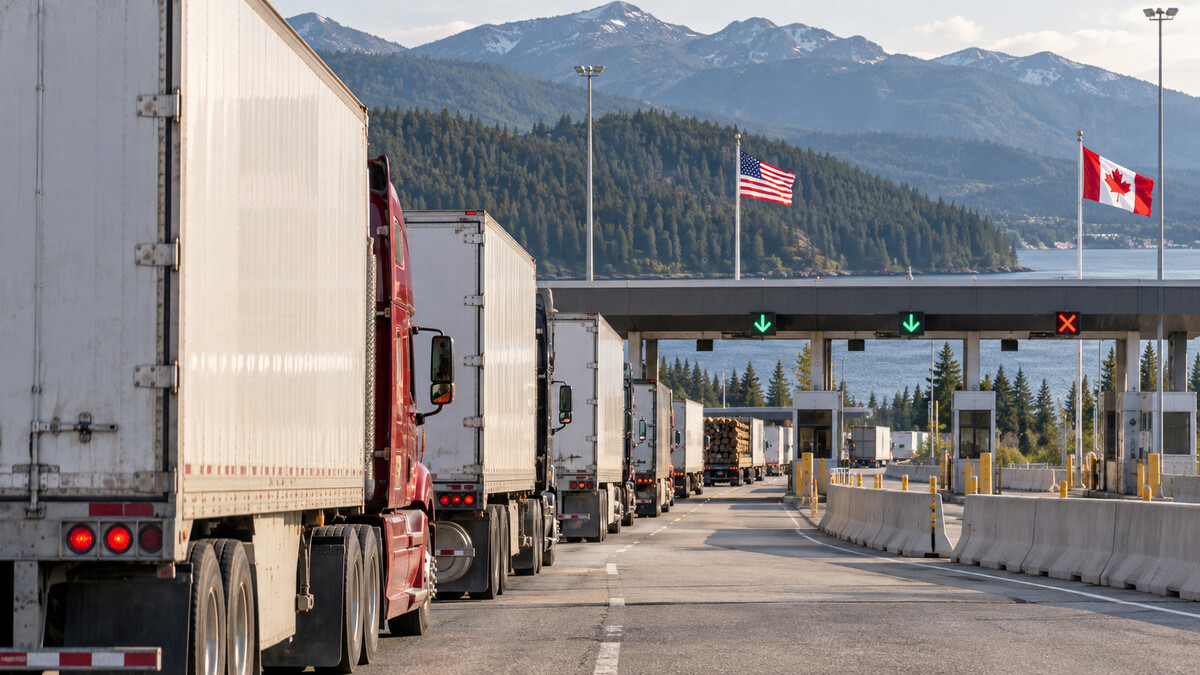
The "war" remark was not campaign rhetoric but a response to a specific escalation. In August 2026, U.S. President Donald Trump imposed 50% tariffs on roughly $28 billion of Canadian exports — a list that ranged from electronics to alcohol to tulip bulbs. Carney's answer has been to fight on two fronts at once, a posture the Financial Times dissected in a September 23, 2026 analysis built on a rare interview with the prime minister himself.
The first front is retaliation. Carney has continued his predecessor Justin Trudeau's tactic of answering U.S. tariffs with concrete countermeasures at almost every turn — making Canada, together with China, the only country that has actually retaliated rather than merely threatened to. The timing is not accidental: Ottawa is deliberately ramping up economic disruption ahead of the U.S. midterm elections in November 2026, betting that pain felt by American voters and industries raises the cost of escalation for Washington — even as the U.S. wields an economy 13 times the size of Canada's to force compliance.
The second front is diversification: reducing dependence on the American market by deepening ties with Europe, hosting a high-profile Canada Investment Summit at Toronto's Royal York Hotel on September 15, 2026, and criss-crossing the world in search of new trade. "My experience in crises is that fortune favours the bold," Carney told the FT. "Canada has what the world wants — and particularly in a world where sovereignty is under pressure." He insists the strategy is affirmative rather than reactive: "we are about what we're for, not what we're against."
The political returns, so far, have been extraordinary. A Spark Insights poll this month put Carney's approval at a record 70% — above any previous Canadian prime minister. International elites, among whom the former central banker has moved for decades, have been equally effusive:
- Marco Mendicino, Carney's former chief of staff, says the prime minister "has developed relationships around the world that are anchored in trust."
- CS Venkatakrishnan, chief executive of Barclays, who attended the Toronto summit, called Carney's investment drive "heroic."
- Christian Sewing, head of Deutsche Bank, declared Canada "now on the map, far more important than ever before."
- Emmanuel Macron, president of France, met Carney on Sunday on French territory off the coast of Newfoundland — a deliberately symbolic location.
- Andy Burnham, the United Kingdom's prime minister, hailed him as a "great progressive leader" in Liverpool last week.
Carney is, in some ways, an unlikely standard-bearer for resistance to Trump. The 61-year-old economist is a 13-year Goldman Sachs veteran who steered the Bank of Canada through the global financial crisis and then led the Bank of England in the aftermath of the 2016 Brexit referendum. That technocratic résumé — he has built his political identity on being more than a career politician — is precisely what gives his pronouncements weight in the rooms where capital is allocated. Canadian historian JDM Stewart argues the combative stance has revived a national narrative largely dropped from public discourse: for much of the 19th century, Canadians feared a U.S. land grab. "We've had the ups and downs of the U.S. relationship, but there's been nothing as caustic and disrespectful and egregious as this president's treatment of Canada," Stewart says, pointing to Trump's talk of annexing the "51st state" and this month's rebranding of Lake Ontario as "Lake America."
The arithmetic of exposure: two-thirds of everything
Beneath the summit choreography sits a brutally simple set of numbers. They explain why Canada is almost uniquely exposed to a vengeful America — and why every diversification headline should be read against them:
- Two-thirds of all Canadian exports go to the United States.
- 60% of Canadian-made car parts and 90% of finished vehicles are exported to the U.S. market; components can cross the border up to eight times before a car lands on a showroom floor.
- US$870 billion — the value of bilateral trade in goods and services last year.
- ~80% of Canadian exports remain tariff-free, according to Carney — which is also a measure of how much is still exposed to escalation.
- 13× — the ratio of U.S. GDP to Canada's, the fundamental asymmetry of any negotiation.
"He is taking the risk, because the relationship is so important, that the U.S. will not shoot itself in the foot," says Inu Manak of the Peterson Institute for International Economics in Washington. Her second observation is the darker one: "If the United States turns its back against one of its oldest allies and trusted partners, then I think we're in a very different place."
The trade war also has room to spread. Trump has opted against a long-term renewal of the Canada–U.S.–Mexico Agreement (CUSMA) — the very pact he renegotiated in his first term — arguing it unfairly favours America's neighbours. Roughly four-fifths of Canadian exports currently clear tariff-free; a hostile CUSMA outcome would put much of that at risk.
The potash post: escalation by social media
The texture of the conflict is captured in a single Monday-morning post. Trump wrote on Truth Social that the U.S. now planned to buy agricultural fertiliser potash from Belarus, an ally of Russia, "for substantially less than we are currently paying to Canada." Canada is the world's largest producer and exporter of potash; Belarus is under international sanctions, including by the EU. Whatever the post's practical follow-through, it signalled that no sector — even one where the U.S. buyer depends on a sanctioned alternative — is outside the dispute.
The macro picture is holding — for now. The Bank of Canada said this month that the economy is in a "broadening recovery," while warning that "uncertainty is high and new U.S. tariffs and threats of further action pose risks." Some forecasters even see the next move as a tightening one: Manulife's economists expect the Bank of Canada is likely to hike rates as inflation pressures build — a reminder that the trade shock is arriving just as the domestic price cycle turns.
The European track: associate membership meets the CETA reality
The boldest plank of the diversification agenda is also its vaguest: the idea, floated jointly by Carney and European Commission President Ursula von der Leyen, of Canada becoming the EU's first "associate member." The proposal polls well at home — 71% of Canadians hold a "favourable" view of the bloc — but almost every expert quoted by the FT pours cold water on its economics.
What associate membership would actually deliver
Péter Balás, a former head of the European Commission's trade department who now advises Covington and Burling, notes that the EU's much larger population "shows who has to adjust to whom": associate membership would mean Canada buying into Brussels' regulatory frameworks and internal market rules, not co-writing them. Canada has already paid to become the first non-EU country in the bloc's €150 billion defence-loan scheme, and Carney wants Ottawa to join the Erasmus+ student exchange, deepen its role in Horizon Europe research funding, and secure a youth mobility deal. An EU diplomat's verdict: participation in these programmes costs money — "there is no such thing as a free lunch."
The closest available benchmark is sobering. The United Kingdom — a bigger economy sitting on the EU's doorstep — is negotiating a similar package of youth mobility, aligned animal-health and food standards, and connected energy markets. The British government's own estimate: the package would raise GDP by just 0.3% by 2040. If that is what proximity buys, the marginal GDP impact of a Canadian associate deal is, in the FT's words, "minuscule."
Political headwinds compound the arithmetic. Most EU governments are far less enthusiastic than von der Leyen, with Germany calling for the term "associate member" to be "reconsidered." One EU diplomat asks bluntly whether a country that exports the majority of its goods to the U.S. has any real interest in aligning with EU regulation — and calls the whole idea a "distraction." And from Washington, Trump has suggested a Canadian association deal with the EU could be treated as a "hostile act" provoking a new wave of tariffs, alongside his recurring social-media refrain: "WE DON'T NEED CANADA, THEY NEED US."
A ten-year-old deal that still isn't ratified
The scepticism has a concrete precedent: CETA, the Comprehensive Economic and Trade Agreement the EU signed with Canada back in 2016. It has been provisionally in force since 2017 — tariff cuts, customs rules and market access for goods and services already apply, and bilateral trade has risen by more than 80% in that period. Yet full ratification remains stuck. The obstacle course reads like a catalogue of how hard European trade politics actually is:
- Ten member states are holding out against full ratification — among them Italy and Poland — citing sovereignty concerns, environmental regulations and technical objections to CETA's investment-court mechanism.
- Cheese geography: Greece and Cyprus refuse to ratify because Canada insists on producing its own feta and halloumi — names the EU treats as geographically protected.
- The beef ban persists: even under provisional application, Canadian beef remains barred from Europe because cattle are fed growth hormones, a practice permitted in the U.S.
The inference trade experts draw is uncomfortable: if the EU cannot fully ratify a 2016 agreement with its most compatible G7 partner, "associate membership" on top of it risks being rhetoric priced at 0.3% of GDP.
The wider map: India, Mercosur and the China question
Beyond Europe, the pivot's ledger is a study in friction. Canada wants to double bilateral trade with India and has talked of concluding a deal by the end of 2026 — yet relations are only just normalising after the 2023 diplomatic spat in which Ottawa accused Prime Minister Narendra Modi's government of complicity in the killing of a Sikh activist in British Columbia.
In South America, the Mercosur bloc — whose full members are Argentina, Brazil, Paraguay and Uruguay — is the subject of a planned Canadian free-trade deal that domestic beef producers fear would flood the market with cheaper imported meat and devastate their industry. Diversification, in other words, has its own protected incumbents at home.
Rapprochement with China is the most delicate line of all. Canadian intelligence services deem Beijing an "enduring threat" and one of the "main perpetrators of foreign interference and espionage." Vina Nadjibulla, an Asia-policy expert and founder of the Centre for Strategic Statecraft, frames the constraint: "There is a legitimate role for the Chinese capital in Canada. But pragmatism cannot mean treating all capital as strategically neutral."
Carney's own accounting is ambitious. Canada, he says, has already leveraged its position "into free trade agreements that access 1.5 billion consumers" — and he told the FT: "we will double that in the next six months to three billion." Trade experts' response is the single most important caveat in the entire strategy: building an alternative economic order in which Canada no longer depends so heavily on the U.S. "could take decades."
The middle-power coalition that Carney electrified at Davos in January with his vision of like-sized states co-operating against superpower domination faces the same physics. Australia and Japan have signalled interest in building coalitions and supply-chain resilience — the very goals of the Davos and Strasbourg speeches — but their direct geographic exposure to China and heavy reliance on U.S. security guarantees limit how far they can pursue strategic autonomy. Goodwill is abundant; convertible trade is not. As Carney himself observes, "everybody's access to the U.S. market has changed. Everybody is having to pay, and this is, in the words of the president, a price for access to the U.S. market."
The home front: an investment blitz against a productivity gap
The external pivot is matched by an internal one. Carney plans to combine his overtures to other trading blocs with an investment blitz at home, focused on infrastructure and natural resources and financed from Canada's relatively strong public finances. "We are an energy superpower in both clean and conventional. We are going to act like one and develop that to the full potential," he says, adding that Canada is also "one of the largest critical minerals providers" and active in AI and space technology. The flagship energy projects carry political complexity of their own — the government's offer of a 15% stake in new pipeline ventures has already drawn pushback from Indigenous groups, a reminder that building the exit ramps from the U.S. market requires consent at home as much as capital.
But the limits of Canada's economic autonomy were never really about Washington. They are domestic, structural and long-standing:
- Internal barriers: regulation and trade barriers between Canada's 10 provinces and three territories fragment the home market. Leading industrial groups complained in April that the country's red tape costs billions more in trade losses than Trump's tariffs — partly because federal and provincial regulations overlap.
- Productivity: growth has slowed to a virtual halt over the past five years, and the gap with the U.S. has widened.
- Tax structure: taxes as a share of GDP are lower than in much of western Europe but higher than in the U.S. Peter Howitt, the Nobel Prize-winning Canadian economist, argues the tax system favours small and medium-sized enterprises over more productive businesses — a design that quietly penalises scale. Sovereignty over tax policy is itself now a live debate, with columnists warning that ceding revenue powers to international bodies would be a step too far for Canadians.
Carney's rebuttal is that the fundamentals are stronger than the headlines: Canada has slowed the growth of public spending, has often run the lowest deficit in the G7, and has relatively low core inflation. "We're going to get the macro fundamentals right in a world that is increasingly looking at those," he says, describing Canada as having "one of the most tax-competitive environments for business investment" and promising work on "predictability [and the] speed with which we approve [new projects]."
The political test: how long does 70% last?
Which brings the strategy back to its binding constraint. The political test, as the FT's analysis concludes, is not whether Carney can outmanoeuvre Trump on the world stage or wow the Davos crowd — it is how long Canadian voters are prepared to endure the painful process of reducing economic dependence on the U.S. A 70% approval rating is a war chest, not a verdict: retaliation plus tariffs plus restructuring means sectors from furniture to auto parts to forestry absorb employment hits long before any new trade deal pays dividends. For now, Carney is making full use of the contrast between his own popularity and Trump's domestic unpopularity. But he acknowledges the scale of the challenge — one he frames as a call to action but which may instead unseat his ambitions: "The world's becoming more dangerous, divided. Everyone understands that."
What to watch from here
- The U.S. midterms (November 2026): Canada's disruption-first retaliation is calibrated to this calendar; the result will reset Washington's appetite for escalation or dealmaking.
- CUSMA's fate: Trump's refusal to pursue long-term renewal keeps ~80% of Canadian exports' tariff-free status in play.
- The Bank of Canada: whether the "broadening recovery" survives the tariff drag — and whether inflation pressure forces the next move to be a hike.
- The India deal: a signed agreement by the end of 2026 would be the pivot's first hard, measurable win.
- The EU track: the semantics of "associate membership" (Germany's objection), the cost of programme participation, and any movement among the ten CETA holdouts.
- Investment summit follow-through: whether the Toronto "dealbook" converts into announced capital projects — including pipeline ventures that clear the consent hurdle.
- Escalation signals: further potash-style sectoral provocation, new tariff lists, or a "hostile act" response to European integration.
Bottom line
Canada's 2026 trade pivot is the most ambitious attempt by any advanced economy to renegotiate gravity itself. The strategy's two fronts — retaliating to raise America's costs while courting Europe, India, Mercosur and the middle powers — are coherent in conception and brutal in arithmetic. Two-thirds of exports, US$870 billion of annual bilateral trade and supply chains that cross the border eight times cannot be rerouted in six months, or six years; the closest European benchmark suggests even an ideal associate-membership package is worth about 0.3% of GDP by 2040. Meanwhile the EU cannot fully ratify the deal it signed in 2016, India negotiations are recovering from a diplomatic rupture, Mercosur talks alarm Canada's own beef producers, and China is officially an "enduring threat." What is genuinely new is the political will — a record 70% approval rating, a banker-prime minister with unusual credibility, and a home-front agenda aimed at the internal barriers and productivity stagnation that made the country vulnerable in the first place. The world, in Carney's phrase, is becoming more dangerous and divided. Canada's bet is that the same world will pay for boldness before the exposure arithmetic collects its debt.
Latest Reports

Ancient Fortresses and Museums of Western Uzbekistan
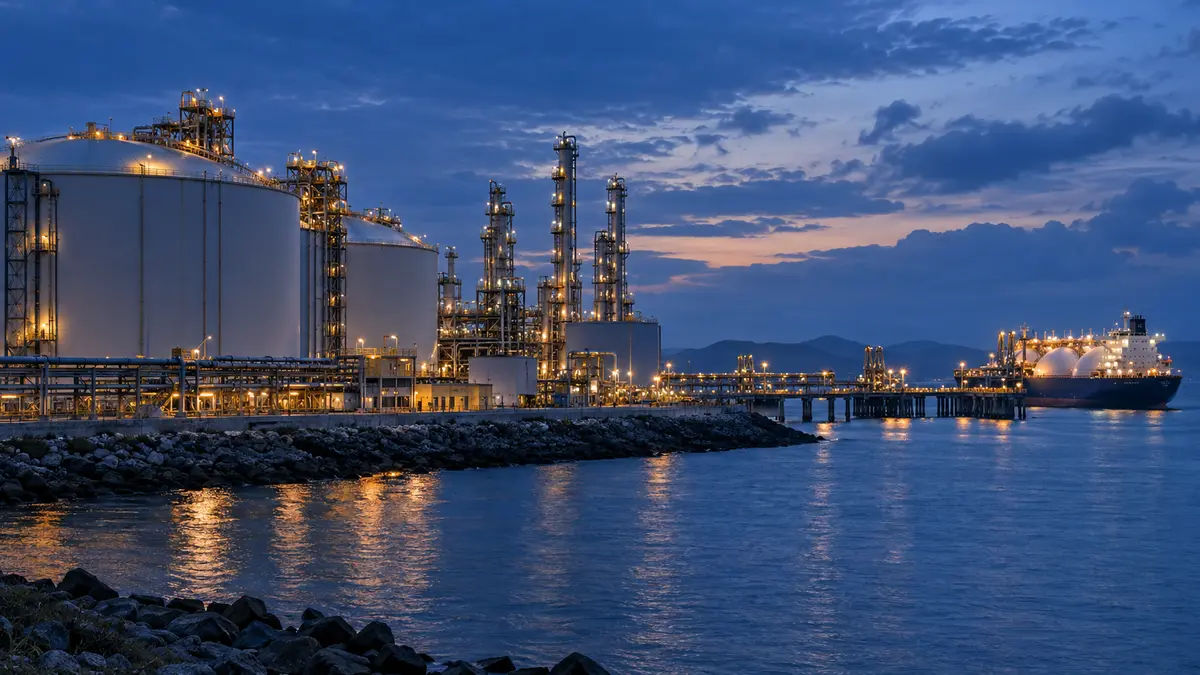
Qatar LNG expansion: readiness, financing and the production test
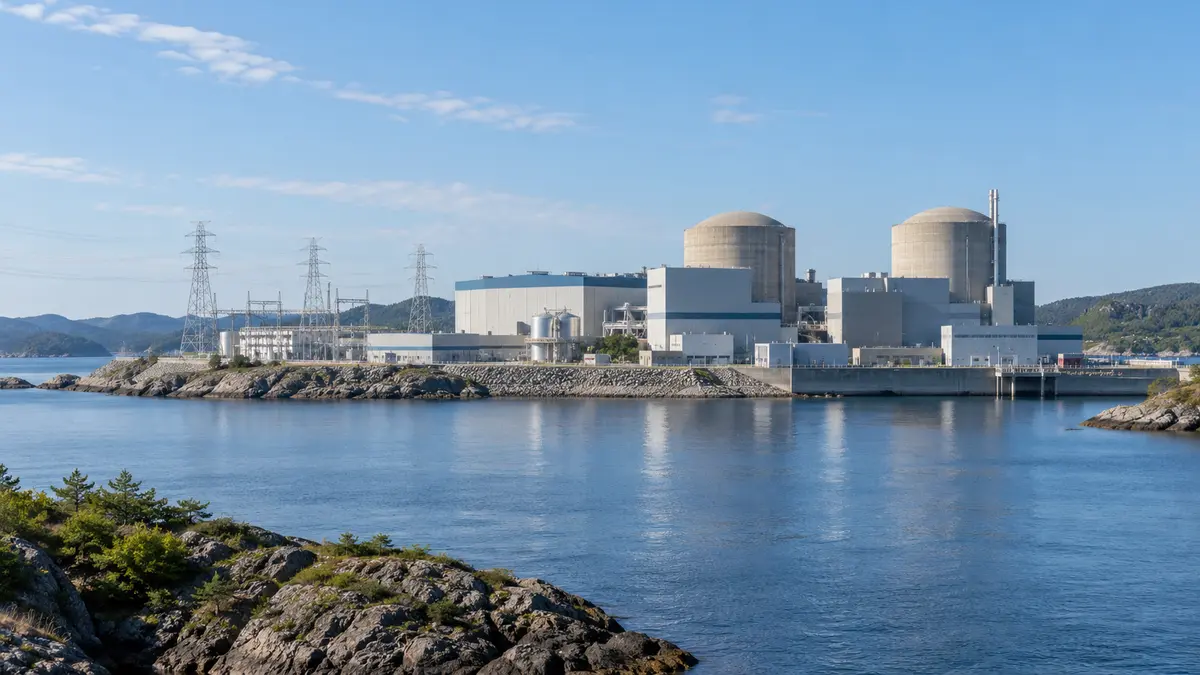
Tianwan 7: first electricity and commissioning

Genentech breaks ground on its Hillsboro expansion

RZD changes return fees for tickets purchased from December

Why available capital does not close every defence supply gap
Partner reports
 Ageas agrees Esure acquisition to widen UK insurance distribution
 Uzbekistan’s Western Rail Corridor and the Journey to Khiva
 Imam al-Bukhari’s Heritage and Samarkand’s Pilgrimage Landscape
 Nilu and Sangardak: Village Tourism in Surkhandarya
 One Day in Kasri Orifon: Bukhara’s Pilgrimage Village
 Bukhara’s Biennale: Contemporary Art in Historic Spaces
 Khiva’s Walled City: Architecture, Palaces and Living Traditions
 Parkent’s Chashma Village: Folk Traditions Near Tashkent
 Uzbek Food and Cultural Traditions: From London’s Festival to Regional Tables
 Tashkent’s Museums, Mahallas and New Cultural Spaces
 Uzbekistan's Tourism Expansion: Heritage Cities, Living Crafts and Regional Routes
 Ancient Fortresses and Museums of Western Uzbekistan
 LH Marthinusen opens R32 million Germiston fan factory
 Rishtan’s Craft Neighbourhood and the Fergana Valley
Leave a comment